

Daily Dose Of Jazz…
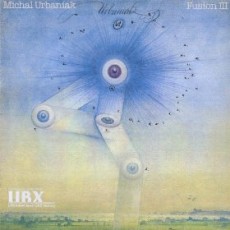
Michał Urbaniak was born on January 22, 1943 in Warsaw, Poland. He started his music education during high school and continued from 1961 in Warsaw in the violin class of Tadeusz Wronski. Learning to play the saxophone he first played in a Dixieland band, and later with Zbigniew Namyslowski and the Jazz Rockers, performing during the 1961 Jazz Jamboree festival.
The following year Michal played with Andrzej Trzaskowski band, The Wreckers, touring festivals and clubs in the USA in Newport, San Francisco, Chicago, Washington and New York City. A return to Poland saw him working with the Krzysztof Komeda Quintet from 1962 to 1964, touring Scandinavia and remaining to form his own band with Wojciech Karolak, that became starting point for the famous Michał Urbaniak Fusion.
Urbaniak returned to Poland and the violin, and created the self-named Michał Urbaniak Group, to which he invited, among others, vocalist Urszula Dudziak, pianist Adam Makowicz, bassist Pawel Jarzebski and on drums Czeslaw Bartowski. Their debut recording on the international scene was in 1970 with Parathyphus B, and during the Montreux ’71 festival, he was awarded “Grand Prix” for the Best Soloist and a scholarship to the Berklee Colege of Music, though he declined to attend.
He played his final concert in Poland in 1973 and emigrated with Urszula Dudziak to the United States, signed with Columbia Records, formed the band Fusion and released Super Constellation. His 1978 Urbanizer project fused rap, hip-hop and a R&B vocal quartet. By 1995 he was engaging a 60-piece full symphony with jazz group, rapper and Apple computer in concert and recorded both CD and DVD.
Over the course of his career he has performed and recorded with Steve Jordan, Marcus Miller, Kenny Kirkland, Tony Bun, Omar Hakim, Victor Bailey, Weather Report, Freddie Hubbard, Elvin Jones, Herbie Hancock, Chick Corea, George Benson, Billy Cobham, Joe Zawinul, Ron Carter, Kenny Barron, Buster Williams and Quincy Jones.
Violinist Michal Urbaniak played on the 1985 session of the Miles Davis Tutu album and in 2012 appeared in the Polish film My Father’s Bike. He hs recorded thirty-eight albums to date and continues to perform, record and compose.

Jazz Is Global – Share
Daily Dose Of Jazz…
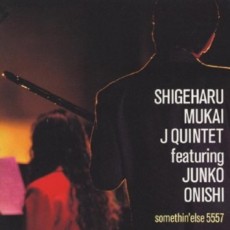
Shigeharu Mukai was born on January 21, 1949 in Nagoya, Japan. While attending Doshisha University he played trombone in the big band and won the 1970 Yamaha Light Music Contest. A move to Tokyo in 1971 saw Shigeharu career taking off in the bands of Yoshio Otomo, Fumio Itabashi, Ryo Kawasaki, Terumasa Hino, Sadao Watanabe and Yosuke Yamashita and along with Hiroshi Fukamarau, he led a band with two trombones.
In 1972 he formed his own band with which he won the Shinjuki Jazz Festival prize. Dissolving the group in 1977/78 he lived in New York City, afterwards he returned to Japan, leading various bands and working with Kazumi Watanabe, Naoya Matsuoka, Akira Sakata and again with Yosuke Yamashita. He went on to play with Elvn Jone and Billy Hart.
In 1982, he performed along with Astrud Gilberto on the album So & So: Mukai Meets Gilberto on the Denon label. He later founded the quartet Hot Session with Ryojiro Furusawa, Fumio Itabashi and Mitsuaki Furuno, and toured Japan in 1991-92.
In 1992 he released his debut album as a leader Better Day Of Shigeharu Mukai on the Japanese subsidiary label of Columbia Records along with several others by 1997. In 2004 he made the album Super 4 Records sensation, in which he created the illusion of a big band with a “horn section” of alto and tenor saxophone, trombone and trumpet.
Designated by Leonard Feather and Ira Gitler as one of the most respected trombonist on the Japanese jazz scene, Shigeharu Mukai has won several critics’ prizes from 1975-1993 in reader surveys conducted by Japan’s Swing Journal. He continues to perform, record and tour also exhibiting his mastery of Latin, Brazilian and other ethnic rhythms.
Give A Gift Of Jazz – Share
More Posts: trombone
Daily Dose Of jazz…
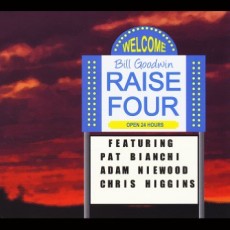
F. Bill Goodwin was born in Los Angeles, California on January 8, 1942. He is the son of announcer and actor Bill Goodwin of the Burns and Allen radio and television programs.His professional drumming career began in 1959 and has worked with Bil Evans, Dexter Gordon, Art Pepper, Jim Hall, George Shearing, Bobby Hutcherson, June Christy, Joe Williams, Tony Bennett,, Mose Allison, and the Manhattan Transfer among others.
He joined vibraphonist Gary Burton when he brought him to the East Coast in 1969. After a three year stint with Burton’s group, Bill settled in the Poconos and worked the local hotels and resorts. It was there that he and bassist Steve Gilmore met. They are both charter members of the Phil Woods Quintet, joining at the quartets inception in 1974.
In the mid-Seventies Goodwin worked with Tom Waits on his Nighthawks at the Diner album and with Steely Dan. He has been a featured performer at the W. C. Handy Music Festival as a member of the festival’s All-Stars alongside guitarist Mundell Lowe and pianists/vocalists Johnny O’Neal and Ray Reach, vibraphonist Chuck Redd and guitarist Tom Wolfe.
Drummer Bill Goodwin won a Grammy for the Phil Woods albums More Live and At the Vanguard and has produced several albums for trumpeter Tom Harrell, Keith Jarrett, Gabor Szabo, Bill Plummer and Paul Horn. He currently teaches jazz drumming at William Paterson University while continuing to perform as the drummer for the Phil WoodsQuartet/Quintet and the Little Big Band.
Jazz Is Global – Share
More Posts: drums
Daily Dose Of Jazz…
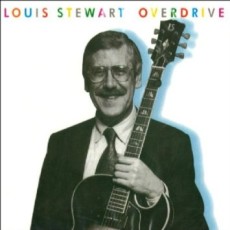
Louis Stewart was born January 5, 1944 in Waterford, Ireland. He began his professional career performing in Dublin showbands. In 1968 he performed at the Montreux International Jazz Festival with Irish pianist Jim Doherty and received the Outstanding European Soloist award.
He was offered and turned down a scholarship to attend Berklee Colege of Music for a job with Benny Goodman’s band in 1970. Stewart began recording as a leader in the 1976 with Louis the First. His sidemen have included Sam Jones, Billy Higgins, Peter Ind, Red Mitchell and Spike Robinson
During the late 1970s he began working with George Shearing, touring America, Brazil and major European festivals, and recording eight albums, including several in trio with bassist Niels-Henning Orsted-Pederson. Louis also appeared on albums with Joe Williams and J.J. Johnson.
As a leader his musical roots lean towards be-bop and material associated with Charlie Parker. Guitarist Louis Stewart has recorded twenty albums to date and has received an honorary doctorate from Trinity College Dublin and continues to perform, record and tour.
Dose A Day – Blues Away
More Posts: guitar
Daily Dose Of Jazz…
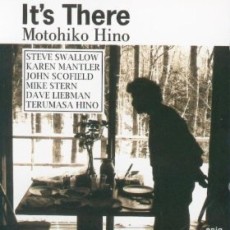
Motohiko “Toko” Hino was born on January 3, 1946 in Tokyo, Japan. His father was a dancer and musician and taught him and his brother Terumasa to tap dancing as children. At the age of ten, he began playing drums and by age 17 was playing professionally.
In the mid-1970s, Hino was repeatedly voted by Swing Journal the best jazz drummer in Japan, though from 1978 he was based in New York City. He released an album under his own name in 1971 and two more in the early 1990s.
He played with musicians such as Joanne Brackeen, Joe Hnedrson, Takehiro Honda, Karen Mantler, Hugh Masekela, John Sofield, Jean-Luc Ponty, Sonny Rollins, Jon Faddis and Billy Harper among others.
On May 13, 1999 drummer Motohiko Hino passed away of cancer.
Give The Gift Of Knowledge
More Posts: drums