

Daily Dose Of Jazz…
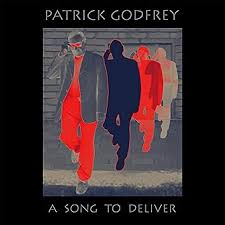
Patrick Godfrey was born in Toronto, Canada on June 25, 1948 and began playing piano for church dances at age 12. HIs early influences were Fats Domino, Henry Mancini, Leonard Bernstein and Bach. He played and sang in a number of Toronto rock bands, which led to session work with many well known Canadian musicians Bruce Cockburn, Murray McLaughlan, Raffi, Marc Jordan, Shirley Eikhard, Ben Mink, and Mendelson Joe among others.
Around 1970 he worked with singer Len Udow in Winnipeg, Canada and met Richard Condie and wrote the music for Richard’s first animation. The subsequent friendship resulted in him scoring all of his animations. Godfrey has worked with many other animators, including David Fine and Alison Snowden for whom he scored the Oscar winner Bob’s Birthday and all 52 episodes of the TV series Bob and Margaret.
In demand as a producer, Patrick has produced albums featuring artists such as Holly Cole, The Flying Bulgar Klezmer Band, The Lafayette String Quartet, and Michael Jones. His personal recording career includes eighteen albums.
Pianist Patrick Godfrey continues to perform in concert and teaches improvisation, composition and songwriting at the Victoria Conservatory of Music, Victoria BC.

More Posts: bandleader,history,instrumental,jazz,music,piano
Daily Dose Of Jazz…
Dennis Dotson was born on June 18, 1946 in Jacksonville, Florida and grew up in Rusk, Texas where he first picked up the trumpet. While attending Sam Houston State College in Huntsville, Texas and studying trumpet with Kit Reid and Fisher Tull and composition with John Butler, he began his professional career playing around Houston, Texas.
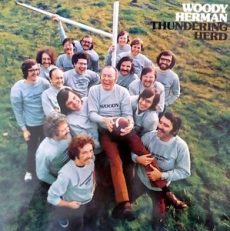
For over fifty years Dotson has played in the house bands in Las Vegas, free- lanced in New York City and Houston, and was trumpet soloist in the Woody Herman and Buddy Rich big bands. As a small group player he has performed with Joe Lovano, Joe Henderson, Marvin Stamm and David Liebman, among others. His other big band experience saw him performing alongside Carl Fontana, Bobby Shew, Tom Harrell, and Kenny Wheeler.
As an educator Dennis is jazz trumpet instructor at the University of Texas at Austin and was on the faculty at Houston Community College and the University of Houston. He has led several All-Region high school jazz bands and has been a guest soloist/ adjudicator/clinician at over forty high schools and colleges.
Trumpeter Dennis Dotson continues to be very active in jazz and commercial circles throughout the state of Texas and has been a sideman on numerous jazz recordings.
More Posts: educator,history,instrumental,jazz,music
Daily Dose Of Jazz…
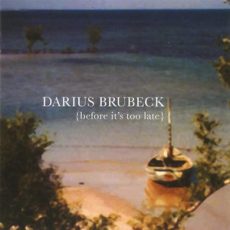
Darius Brubeck was born David Darius Brubeck on June 14, 1947 in San Francisco, California into a musical family. His father Dave and mother Iola Brubeck named after his father’s teacher and mentor, French composer Darius Milhaud. Moving from Oakland, California they settled in Wilton, Connecticut in 1960 and ultimately graduated from Wilton High School in 1965.
Darius majored in ethnomusicology and the history of religion at Wesleyan University, graduating cum laude in 1969. While there he composed and performed the music for the film Christopher’s Movie Matinee. During the next decade and into the early 1980s he would go on to lead two groups, The Darius Brubeck Ensemble and Gathering Forces, cross America as a sideman with Don McLean and record two albums with guitarist Larry Coryell. He toured the world and recorded as a member of Two Generations of Brubeck and The New Brubeck Quartet, both led by his father.
In 1983, Brubeck and his South African wife, Catherine, moved to Durban, South Africa, joined the music Department at the University of Natal and initiated the first degree course in Jazz Studies offered by an African university. In 1989, he was appointed as Professor of Jazz Studies and Director of the Centre for Jazz and Popular Music, where he taught until 2005.
A move to London, England in 2005, Darius taught courses at the Guildhall School of Music and Drama and Brunel University. Appointed as a Fulbright Senior Specialist in Jazz Studies in 2007, he taught at Yıldız Technical University in Istanbul, turkey and subsequently at the Gheorghe Dima Music Academy in Cluj-Napoca, Romania, in 2010.
His years in South Africa saw him forming five student/staff bands, record the album The Jazzanians: We Have Waited Too Long to be released in 2024, form the band Afro Cool Conceptwhich toured for nearly 15 years and recorded a live album in New Orleans.
As a composer Brubeck has written music for all types of ensemble, large and small. He has arranged and written an original composition for his father’s 80th birthday, and the Rockefeller Foundation awarded him a residency as a composer at the Bellagio Study and Conference Center in Italy.
Pianist, author, composer, arranger and educator Darius Brubeck, who has had a documentary film made by Michiel ten Kleij titled Playing the Changes: Tracking Darius Brubeck, currently leads The Darius Brubeck Quartet.
More Posts: arranger,bandleader,composer,educator,history,instrumental,jazz,music,piano
Daily Dose Of Jazz…
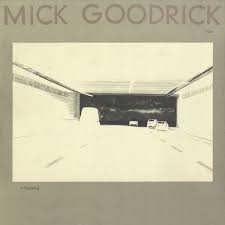
Mick Goodrick was born on June 9, 1945 in Sharon, Pennsylvania and began studying guitar in his pre-teens and was performing professionally a few years later. At sixteen he became interested in jazz at a Stan Kenton Band Camp. He moved to Boston, Massachusetts and attended the Berklee School of Music from 1963 to 1967, eventually teaching at Berklee,
After spending a few years touring with Gary Burton, he returned to Boston, he settled into a career largely as an educator. Goodrick’s notable students include Bill Frisell, Julian Lage, John Scofield, Lage Lund, Mike Stern, Avner Strauss, and Rale Micic.
During the 1980s to the late 1990s,Mick worked with Charlie Haden’s Liberation Music Orchestra, Jack DeJohnette and with Steve Swallow. He performed in a duo with Pat Metheny at the Montreal Jazz Festival in 2005 and with Wolfgang Muthspiel at the Jazz Standard in 2008.
Guitarist Mick Goodrick died November 16, 2022 from the long-term effects of Parkinson’s disease at the age of 77.
More Posts: bandleader,educator,guitar,history,instrumental,jazz,music
Daily Dose Of Jazz…
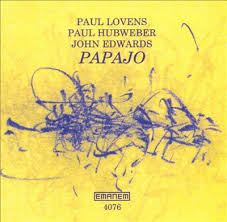
Paul Lovens was born on June 6, 1949 in Aachen, Germany. In the early 1970s, he was part of a trio with pianist Alexander von Schlippenbach. He went on to work with Cecil Taylor, Harri Sjöström, Günther Christmann, Eugene Chadbourne, Peter Brötzmann, Teppo Hauta-Aho, Mats Gustafsson, Thomas Lehn, Phil Wachsmann, Rajesh Mehta and Joëlle Léandre.
He also played with Florian Schneider and Ebehard Kranemann in an early incarnation of Kraftwerk. Since 1967, Lovens has run the record label Po Torch with Paul Lytton
Drummer Paul Lovens, who also plays percussion, singing saw, and cymbals, has performed with the Aardvark Jazz Orchestra and Berlin Contemporary Jazz Orchestra, and continues his musical endeavors.
More Posts: bandleader,cymbals,history,instrumental,jazz,music,percussion,piano,singing saw