


Daily Dose Of Jazz…
Graham Peter Hall, generally known as GP Hall was born July 15, 1943 in Hampton Hill, London, UK. Schooled in classical, flamenco and jazz, he went on to develop his skills as a guitarist in the British blues boom of the late 1960s. As a teenager, he played in the Odd Lot Band and set up the Odd Lot Club as a venue for their music, which in turn attracted more established bands and players for concerts.
As he became better known, Hall went on to play at more celebrated London venues including The Roundhouse, the Middle Earth club and took up residency at the 100 Club. He supported the likes of Deep Purple, The Hollies, and Chris Farlowe and played on stage with original American blues heroes John Lee Hooker and Sonny Boy Williamson.
In the early 1970s he studied with renowned flamenco guitarist Manitas de Plata and subsequently became involved in more avant-garde work, writing, producing and performing. GP was commissioned by the South Hill Park Arts Centre to write The Estates which was a large and complex musical piece. Scored for a large ensemble, it was recorded and released on album by Prototype Records in 1972. It was his debut recording.
At around this time, Hall’s promising career was cut short by personal trauma. This led to alcoholism, depression, periods of homelessness, loss of confidence and self worth. It would be more than a decade before he returned to music. During the 1980s he began returning to music but it was a slow process to becoming sober.
He would go on to compose, record and release seventeen albums to various labels as well as his own self-releases over the next thirty-three years. His last self-released album in 2019 is titled Be Strong. Guitarist, composer and improviser GP Hall continues to explore the realms of music.

More Posts: bandleader,composer,guitar,history,improviser,instrumental,jazz,music

Daily Dose Of Jazz…
Lembit Saarsalu was born July 8, 1948 in Roosna-Alliku, Estonia. He started playing jazz at an early age. He debuted at the Tallinn International Jazz Festival at the age of 16. He worked for many years in the State Philharmonic of the Estonian SSR , where as a paid musician he gave numerous concerts both at home and abroad. In the 1980s, Saarsalu devoted himself completely to jazz.
For decades, he has led local and international ensembles. He worked in a duo with Leonid Vintskevich, started a new international jazz festival Rainbow Jazz with music producer Merle Kollom and a competition for young musicians in Tartu.
As an educator Saarsalu introduced jazz in schools and has performed together with Olav Ehala and other well-known Estonian musicians for more than 40,000 students. Since the fall of 2016, he has been working as a saxophone and ensemble teacher in the rhythm music department of the Tartu Music School.
In the 1980s Eesti Televisioon made two films about Lembit, he has performed on Finnish and Spanish television and has made numerous recordings, numbering 200 recordings for Estonian Radio. His style ranges from blues and swing to free forms of jazz.
He has been repeatedly chosen as the best tenor saxophonist, awarded the annual prize of the Sound Art Endowment Fund of the Estonian Cultural Capital.
Saxophonist , bandleader and composer Lembit Saarsalu, who has been called the saxophone king and the calling card of Estonian jazz, continues to perform, compose and teach.
More Posts: bandleader,composer,history,instrumental,jazz,music,saxophone
Daily Dose Of Jazz…
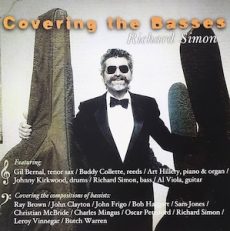
Richard Simon was born in Kansas City, Kansas on July 5, 1949 and left a comfortable position as a college English professor to take up the upright bass at age 30. He apprenticed with the elder elite of the Los Angeles, California jazz scene, including Red Callender and John Clayton, and soon began working with Buddy Collette, Teddy Edwards, Plas Johnson and Art Hillery, as well as LA Philharmonic’s Abe Luboff.
Richard has played traditional jazz with Pete Fountain, swing with Ken Peplowski, and be-bop with Richie Cole. He has recorded with Al Viola, Houston Person, Rebecca Kilgore, Gerald Wiggins and Chico Hamilton, toured Japan three times and performed twice with the King of Thailand. He worked frequently with vocalists Sue Raney, Maria Muldaur, Maxine Weldon, as well as the late vocalists Ernie Andrews, Lorez Alexandria and Keely Smith, and Rosemary Clooney.
Deeply involved in jazz education, Simonhe is the program director for JazzAmerica, a non-profit organization that provides tuition-free jazz instruction after school and in summer WorkChops.
Bassist Richard Simon continues to perform, record and educate.
More Posts: bandleader,bass,history,instrumental,jazz,music
Daily Dose Of Jazz…
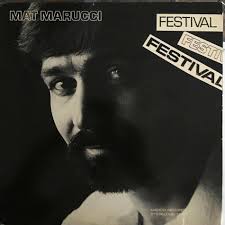
Mat Marucci was born Mathew Roger Marucci III on July 2, 1945 in Rome, New York into a musical family with his sister Mena, a concert pianist and his brother Ed, a trumpeter. He was classically trained on the piano and switched to drums at the age of 19.
After graduating high school from St. Aloysius Academy in 1963, Marucci studied drums with Dick Howard in Auburn, New York for two years. Receiving a business management degree at Auburn Community College in 1965, he relocated to the west coast four years later. Attending Sacramento City College in California, he received his associate degree in music, in 1973.
In addition to recording and performing, Marucci has authored several books on drumming for both Ashley Publications and Mel Bay Publications. His recordings and books have garnered four and five star reviews in JazzTimes, Jazziz, Modern Drummer, DownBeat and DRUM! magazines. He also wrote articles for several magazines and jazz websites.
In his role as a jazz educator, Mat has been a professor at several California colleges in Sacramento and Berkeley and an applied drum set instructor at the Sacramento Traditional Jazz Society.
Drummer Mat Marucci, who has lived between New York City, Los Angeles and Sacramento and has recorded seventeen albums as a leader and eight as a sideman, continues to explore and perform.
More Posts: bandleader,drums,educator,history,instrumental,jazz,music
Daily Dose Of Jazz…
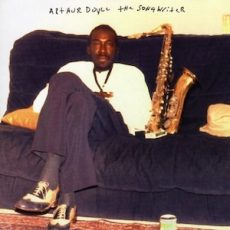
Arthur Doyle was born June 26, 1944 in Birmingham, Alabama and was inspired to play music as a child after watching Louis Armstrong and Duke Ellington on television. During his high school years, he began listening to Miles Davis, John Coltrane and Sonny Rollins, and picked up gigs as a saxophonist. While still a teenager, he played with saxophonist Otto Ford, trumpeter Walter Miller and in R&B and blues groups.
After graduating high school, Doyle attended Tennessee State University in Nashville, receiving a degree in Music Education. While there he played with trumpeter Louis Smith and singers Gladys Knight and Donny Hathaway. He briefly went to Detroit, Michigan to play with hard bop trumpeter Charles Moore. He gravitated toward free jazz after playing at a Black Panthers festival.
Moving to New York City in 1968, Doyle worked with Sun Ra and Bill Dixon, and met and befriended saxophonist Pharoah Sanders and guitarist Sonny Sharrock. The following year, he recorded with Noah Howard and while in the city he met drummer Milford Graves, who encouraged him to pursue his natural affinity for pure sound. In 1977 he recorded his debut album Alabama Feeling, his first as a leader. He began playing with guitarist Rudolph Grey, and in 1980 along with Grey and drummer Beaver Harris, they became known as The Blue Humans and recorded Live NY 1980.
At around this time, Arthur began struggling with anxiety issues, and moved to Endicott, New York, where he worked as a counselor. In 1981, he moved to Paris, France where he began an association with multi-instrumentalist Alan Silva and his Celestrial Communication Orchestra, and participated in the recording of the album Desert Mirage in 1982. The following year, while in France, he was accused of rape and imprisoned. Maintaining his innocence he was pardoned and released in 1988 and during his time in prison, he wrote over 150 songs and assembled what he called the Arthur Doyle Songbook.
In the early Nineties Doyle returned to the United States, moving back to Endicott, and restarted his involvement in music. He resumed his association with Grey, playing at CBGB and releasing Arthur Doyle Plays and Sings from the Songbook Volume One on Grey’s Audible Hiss label. Over the next decade, he played and recorded with drummers Hamid Drake, Sabu Toyozumi, and Sunny Murray, among others, and formed The Arthur Doyle Electro-Acoustic Ensemble.
Saxophonist, bass clarinetist, flutist, and vocalist Arthur Doyle, who was best known for playing what he called free jazz soul music, died on January 25, 2014 in his hometown.

More Posts: bandleader,clarinet,flute,history,instrumental,jazz,music,saxophone,vocal