

Daily Dose Of Jazz…
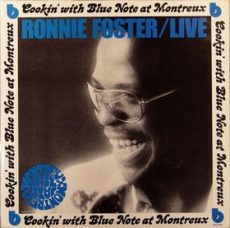
Ronnie Foster was born May 12, 1950 in Buffalo, New York and was attracted to music at the age of four. Attending Public School 8, then Woodlawn Jr. High for a year, he took music more seriously from his early teens while at McKinley Vocational High School for two years, and having his first professional gig aged fifteen, playing in a strip club. He spent his final year at Lafayette High School. The only formal musical instruction he received was a month of accordion lessons.
Foster initially performed with other local musicians before moving to New York City with his own band, and acquired a publishing company. He has performed as a sideman with a wide range of musicians, frequently working with guitarist George Benson and playing on the guitarist’s album Breezin’.
He has played organ with Grant Green, Grover Washington, Jr., Stanley Turrentine, Roberta Flack, Earl Klugh, Harvey Mason, Jimmy Smith, and Stevie Wonder. His music Mystic Brew has been sampled by A Tribe Called Quest and J. Cole.
Organist Ronnie Foster, who is also a record producer, continues to perform, record.

More Posts: bandleader,history,instrumental,jazz,music,organ,piano
Jazz Poems
SNOW
I cannot help noticing how this slow Monk sol
seems to go somehow with the snow that is coming down this morninghow the notes and the space accompany
its easy falling on the geometry of the ground, on the flagstone path, the slanted roof, and the angles of the split rail fenceas if he had imagined a winter scene
as he sat at the piano late one night at the Five Spot playing “Ruby My Dear”.Then again, it’s the kind of song
that would go easily with rain or a tumult of leaves,and for that matter it’s a snow
that could attend an adagio for strings, the best of the Ronettes, or George Thorogood and the Destroyers.It falls so indifferently
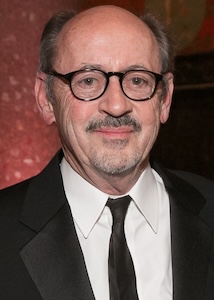
into the spacious white parlor of the world, if I were sitting here reading in silence, reading the morning paper or reading Being and Nothingness not even letting the spoon touch the inside of the cup, I have a feeling the snow would ever go perfectly with that. BILLY COLLINSfrom Jazz Poems ~ Selected and Edited by Kevin Young
More Posts: book,classic,collectible,history,jazz,library,poet
Daily Dose Of Jazz…
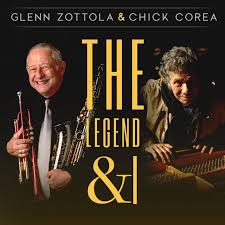
Glenn Paul Zottola was born in Port Chester, New York on April 28, 1947. He started playing jazz professionally in 1960.
Glenn is known for his work with Lionel Hampton, Benny Goodman, and Bob Wilber, and has accompanied a broad range of vocalists, including Mel Tormé, Frank Sinatra, Peggy Lee, Ella Fitzgerald, and Joe Williams.
He has recorded over 50 albums with Butch Miles, Bob Wilber, Mousey Alexander, Steve Allen, Phil Bodner, George Kelly, Peggy Lee, George Masso, George Masso, and Maxine Sullivan, among numerous others.
In 1988, was a featured soloist at the 50th anniversary of Benny Goodman’s Carnegie Hall Concert. In 1995, Zottola was bandleader on the Suzanne Somers daytime TV talk show at Universal Studios.
Trumpeter and saxophonist Glenn Zottola, who has recorded twenty-two albums as a leader, continues to perform and record.
More Posts: bandleader,history,instrumental,jazz,music,saxophone,trumpet
Daily Dose Of Jazz…
Nino Frasio was born April 26, 1950 in Milan, Italy and his introduction in music was taken in 1964 as a guitarist and banjoist. He graduated in 1976 from the Universitá degli Studi of Milano and studied with professor Enea Vallesi. Like most eenage players of the time he followed the Beatles craze, playing lead guitar where he also disastrously attempted to sing somewhat understandable English.
In 1969 he joined the Italian cast of Up With People! and played many performances on lead guitar and tenor banjo. Leaving the show in 1971, when he started his day job career, and since then has dedicated himself exclusively to classic jazz. His banjo studies had him discovering the other four string tuning and soon was doubling on tenor and plectrum banjo.
After performing on the national Italian TV network on a broadcast of Musica Insieme, he founded the New Orleans styled Olympia Ragtime Band in 1972. a pure New Orleans style band in which he played banjo. Frasio left the band in the early ’80s and started a busy musical career as a free-lance performer with the many jazz bands active in Northern Italy. By 1973 he was enlisted in the Italian Air Force where he began the study of cornet and tuba. Post discharged he chose to play the tuba.
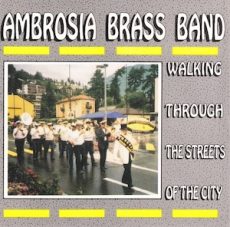
In 1984 Nino joined the Ambrosia Brass Band as a sousaphonist which gained a wide popularity all over Europe playing marches in the style of the great brass bands of New Orleans. He continued freelancing gigs on banjo and guitar, and participated in a long-lasting series of weekly live radio broadcasts.
In the mid-Nineties Frasio went back to playing classic jazz with a new project called the Odd Fellows New Orleans Quartet & Band. Three years later he joined the Jumpin’ Jazz Ballroom Orchestra on banjo and guitar and the ten piece band played a repertory of classic jazz tunes of the ’20s, ’30s and ’40s.
As he aged Nino slowed down his freelance playing and started to look for his old music pals again to play his banjo in a strict New Orleans style. He went on to become a founding member of the Pegasus Brass Band, which performed at several European jazz festivals. He played regularly with the Milano Rhythm Kings led by Giorgio Alberti, then with the Savannah Serenaders, before joining on guitar the Prefisso02 Orchestra, with its beautiful repertoire of early ’40s Italian swing.
Banjoist Nino Frasio, who also plays guitar, tuba and sousaphone, continues to perform with a series of brass bands and orchestras.
More Posts: banjo,guitar,history,instrumental,jazz,music,sousaphone,tuba
Daily Dose Of Jazz…
Jan Hammer was born in Prague, Czechoslovakia on April 17, 1948 to a mother who was a well-known Czech singer, and his doctor father who worked his way through school playing vibraphone and bass guitar. He began playing the piano at the age of four with formal instruction starting two years later. He aspired to follow his father into medicine until a family friend convinced him to develop his musical talents instead.
Forming a jazz trio in high school, he performed and recorded throughout Eastern Europe at the age of fourteen. Upon entrance to the Prague Academy of Musical Arts, he completed many compulsory classes including harmony, counterpoint, music history, and classical composition. He moved to the United States and resolved to become a citizen after receiving a scholarship at Berklee School of Music in Boston, Massachusetts. Upon completion of his studies, Jan spent a year touring with Sarah Vaughan, recorded with Elvin Jones and Jeremy Steig, then moved to New York City in 1971 and joined the original lineup of the Mahavishnu Orchestra.
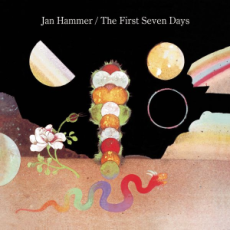
Though he previously recorded as a leader and sideman, his debut solo album, The First Seven Days, dropped in 1975. He formed the Jan Hammer Group in 1976 to support the album tour, which received good reviews from both jazz and rock critics. During the mid 70s to early 80s he recorded and played with Joni Mitchell, Billy Cobham, Santana, Tommy Bolin, Harvey Mason and Stanley Clarke.
Returning to solo work he recorded an album in 1978, formed a new band, known as Hammer, and wrote theme song for a British television series. He formed Schon & Hammer, played benefit concerts, and has received three Grammys and an Emmy nomination. By the Nineties and well into the new millennium, he continued to score and compose for film and television. In 2018 he released his first album of new material in over 10 years: Seasons – Part 1.
Keyboardist, drummer, composer, and record producer Jan Hammer continues to produce and perform.
More Posts: bandleader,composer,drums,history,instrumental,jazz,keyboard,music,producer,synthesizer