

Daily Dose Of Jazz…
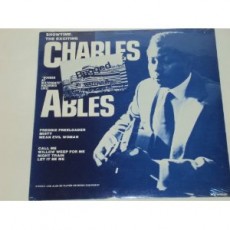
Charles Ables was born on July 23, 1943 in Mississippi and started out on his musical career playing the guitar. He worked with Ray Charles prior to switching to bass to become a member of the Shirley Horn Trio in the early Eighties. He would tour the world and record with her on Steeplechase and then Verve record labels over the next three decades
Ables is heard on guitar as well as bass on several of these, including You Won’t Forget Me, which featured guest contributions from both Miles Davis and Wynton Marsalis, Light Out of Darkness, Horn’s tribute to Ray Charles, I Thought About You, Close Enough For Love, Here’s To Life and the Grammy-winning I Remember Miles.
As well as accompanying Shirley Horn, Charles is heard with the trio on Carmen McRae’s last album in 1990, Sarah – Dedicated to You, in which Horn is featured in her often forgotten role as a pianist. He recorded in similar circumstances with Toot Thielemans on his album For My Lady, with Joe Williams and as a leader.
Bassist and guitarist Charles Ables passed away on October 8, 2001 in Washington, D. C.

Daily Dose Of Jazz…
Cynthia Scott was born July 20, 1951 in El Dorado, Arkansas, the tenth of twelve children. She started singing at the age of four, and was exposed to a wide variety of music. She grew up soaking in a myriad of influences such as Carmen McRae, Robert Flack, Aretha Franklin, Billie Holiday, Sarah Vaughan and Ella Fitzgerald.
After high school Scott moved to Dallas, Texas and while working as an airline stewardess honed her craft with James Clay, Claude Johnson, Roger Boykin, Onzy Matthews and Red Garland. In 1972 she became a Raelette, backing Ray Charles for two years. During this time they toured Europe with Oscar Peterson, Joe Pass, The Count Basie Orchestra and Joe Williams.
Following Charles’ death she would work with Hank Crawford, Marcus Belgrave, and David “Fathead” Newman. By the late 80s she was in New York’s Chelsea Place hiring a young Harry Connick Jr., turning a four-week engagement into three years. She has since headlined at such jazz spots as Birdland, Iridium, Dizzy’s Club Coca Cola and the Super Club.
Cynthia has worked with Lionel Hampton, Cab Calloway, Kevin Mahogany, The Harper Brothers, Bill Charlap, Julius LaRosa, Norman Simmons and Wynton Marsalis, the later bringing her in to be the first vocal to sing in Jazz at Lincoln Center’s Rose Room to test its acoustics.
Scott’s list of accomplishments are too long to enumerate but on the short list she has performed at festival worldwide, toured with the musical “Midnight in the Garden of Good and Evil”, was a finalist in the 1998 Thelonious Monk Vocal Competition, and the 2005 International Songwriting Competition, is a vocal teacher at The New School and City College and teaches private students and among other things has been a Jazz Ambassador for U.S. State Department.
Vocalist and educator Cynthia Scott was inducted into the Arkansas Black Hall of Fame in 2016 and she continues to perform, tour and record.
More Posts: vocal
Daily Dose Of Jazz…
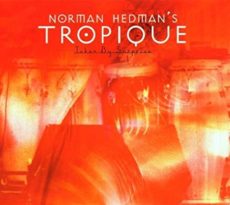
Norman Hedman was born July 17, 1945 in the West Indies and discovered his first hand drum, a conga, in a Brooklyn garbage can. Instinctively repairing the conga at age 12, he has been playing music ever since.
Hedman founded Tropique in 1995 and the percussion instruments of timbales, cowbells and congas formed his Latin jazz and island flavor sound. This first call percussionist brought together an array of talent from around the globe to create music that spanned teenage to silver generations appreciating and enjoying his music. His new and inventive concepts, clean, tight lines and original compositions were his hallmark of success.
Over the course of his career Norman composed five number one R&B hits with one receiving 5 Grammy awards, in addition to two platinum and two gold albums, composed three songs for movie soundtracks for Ali, Shaft and Dr. Doolittle 2. His One Step Closer, Taken By Surprise and Healing Hands albums by his group Norman Hedman’s Tropique were nominated for Best Latin Jazz Album.
He has worked with Arturo Sandoval, Nancy Wilson, Bobby Watson, Grady Tate, Pat Martino, Chico and Vaughn Freeman, Arthur Blythe, George Cables, John Hicks, Gary Bartz, Ahmad Alladeen, Giovannie Hidalgo, Hilton Ruiz, Horacee Arnold, Airto Moreira, Monguito Santamaria, Delmar Brown, Lew Soloff and Marcus Miller.
Percussionist, producer and composer Norman Hedman passed away from acute myeloid leukemia and pneumonia on September 29, 2008 in New York City.
More Posts: percussion
Daily Dose Of Jazz…
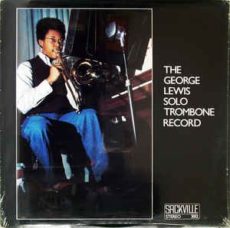
George E. Lewis was born July 14, 1952 in Chicago, Illinois. He began his musical journey playing the trombone but graduated from Yale University with a degree in philosophy. In 1971 he became a member of AACM, the Association for the Advancement of Creative Musicians.
The trombonist, composer and pioneer of computer music has recorded over two dozen albums as a leader and co-leader and some 40 as a sideman working with the likes of Muhal Richard Abrams, Gil Evans, Conny Bauer, Roscoe Mitchell, Count Basie and Anthony Braxton to name a few. He was also frequently a member of the ICP Orchestra (Instant Composer’s Pool).
As an educator in the 1970s, he succeeded Rhys Chatham as the music director of The Kitchen, a performance space in Greenwich Village, has served as a professor at Columbia University, the University of California – San Diego, and has received a MacArthur Fellowship.
Trombonist George Lewis has performed at festivals and venues throughout America and Europe, has authored a book-length history of the AACM, titled A Power Stronger Than Itself: The AACM and American Experimental Music, and continues to be active of the jazz and experimental music scene.
More Posts: saxophone
Daily Dose Of Jazz…
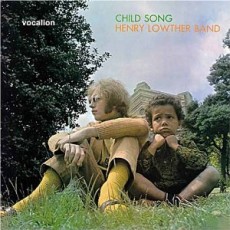
Henry Lowther was born Thomas Henry Lowther on July 11, 1941 Leicester, Leicestershire, England. Learning trumpet, his first experience was on cornet in a Salvation Army band. He studied violin briefly at the Royal Academy of Music but returned to trumpet by 1960 though he sometimes played violin professionally.
In the 1960s, he worked with pianist and composer Mike Westbrook, a relationship that lasted into the 80s, Manfred Mann, John Dankworth from 1967-77, Graham Collier, John Mayall, John Warren, and would appear with the Keef Hartley Band.
The Seventies brought work with Mike Gibbs, Kenny Wheeler, Tony Coe, Gordon Beck and Barbara in addition to his own ensemble, Quaternity. In the 80s Henry worked with the Buzzcocks, Talk Talk, Peter King, Gil Evans, Humphrey Lyttleton on a Buddy Bolden documentary.
He played with Charlie Watts’ band in the late 80s, and then led his own band, Still Waters. From the late 1980s he did much work in big bands, such as the Berlin Contemporary Jazz Orchestra and the London Jazz Composers Orchestra; in the Nineties he worked with Kenny Wheeler’s group, The Dedication Orchestra, the London Jazz Orchestra, George Russell’s Living Time Orchestra, and the Creative Jazz Orchestra. Trumpeter Henry Lowther most recently plays in the band Jazzmoss.