

Requisites
Motor City Scene ~ Thad Jones Sextet | By Eddie Carter
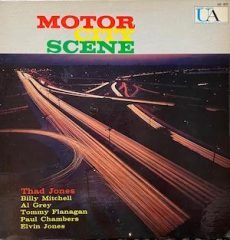
This morning’s record submitted for your consideration is Motor City Scene (United Artists UAL 4025/UAS 5025) by The Thad Jones Sextet. It hit the stores in 1959 and consists of tunes composed by the leader. Thad comes from a musical family; both his brothers were excellent musicians. His older brother Hank was a consummate pianist, and his younger brother Elvin was a dynamic drummer whose birthday was recently observed on September 9. The ensemble is Thad Jones on cornet (tracks: A1, B1, B2), and flugelhorn (track: A2), Al Grey on trombone, Billy Mitchell on tenor sax, Tommy Flanagan on piano, Paul Chambers on bass, and Elvin Jones on drums. The copy used in this report is a friend’s US original Mono deep groove album.
Side One gets underway with Let’s Play One, an easy-going blues that Tommy opens with a brief introduction that evolves into the sextet’s collective theme. Tommy starts the solos with a relaxing presentation, next Al comes in for a laid-back statement. Billy steps up next to give a marvelous reading, then Thad contributes a very pleasant presentation. Paul walks leisurely into the finale preceding the ensemble’s finish. Minor on Top picks up the pace gradually on the group’s lightly-swinging melody. Thad leads off with a charming flugelhorn statement, then Billy hits a relaxed groove on the next solo. Paul constructs a delicious bass performance next. Al delivers the next reading with absolute assurance, followed by Tommy and Elvin who share an attractive exchange into the closing chorus.
Like Old Times takes the tempo up a few notches to start Side Two with the front line leading a brisk melody. Billy takes the lead this time with a swinging solo. Tommy says his piece next in a rollicking reading. Al romps through a lively presentation next. Elvin makes a brief appearance, followed by Paul who puts together a passionate performance. Thad gets the last word and cooks on muted cornet leading to the sextet’s ending. No Refill begins with a soft introduction by Elvin segueing into the sextet’s soothing opening chorus. Thad’s first solo on muted cornet is restrained in its mood of gentle warmth and graciousness. Billy handles the second statement discreetly, and Tommy adds the exclamation point with a thoughtful performance ahead of the sextet’s ending theme and slowly fades into silence.
Motor City Scene was produced by Tom Wilson, and the man behind the dials was Lewis Merritt. I was impressed with the sound quality of the recording. The album has a superb soundstage with vivid sonics. The instruments emerge from your speakers as if the sextet’s playing in front of your favorite chair and the record is quiet for its age. Thad and his colleagues are in excellent form throughout, and this album highlights Thad’s ability as a composer. If you’re a Hard-Bop fan, I invite you to check out Motor City Scene by The Thad Jones Sextet, the next time you’re out shopping for records. It may be hard to find, as the few LPs I’ve seen online are already at collector’s prices, but your diligence will be rewarded with a great album for your library that’s highly recommended!
© 2022 by Edward Thomas Carter
More Posts: choice,classic,collectible,collector,cornet,history,instrumental,jazz,music
Requisites
Introducing Johnny Griffin ~ Johnny Griffin | By Eddie Carter
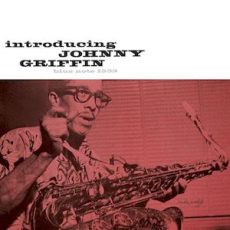
Submitted for your approval this morning is the 1956 debut by tenor saxophonist, Johnny Griffin. Introducing Johnny Griffin aka Chicago Calling (Blue Note BLP 1533/BST 81533) is the first of three releases he made as a leader for Alfred Lion’s label. The other two are A Blowing Session (1957) and The Congregation (1958). Johnny was nicknamed The Little Giant for his small size, but he possessed a robust sound and dazzling technique that kept him recording and in demand as a leader and sideman for over sixty years. For his first album, Griff’s working with three of the best musicians in the business, Wynton Kelly on piano, Curly Russell on bass, and Max Roach on drums. My copy used in this report is the 2002 Classic Records Mono audiophile deep groove reissue sharing the original catalog number.
Side One opens briskly with Mil Dew, the first of three tunes by Johnny Griffin. Max begins the fireworks with a brief introduction. Johnny grips you right away from a fast-moving opening chorus and a wild ride on the first solo. Wynton stokes the fire with fierce heat next, then Max aggressively exchanges notes with Griff ahead of Curly’s vigorous comment during the closing chorus. Chicago Calling, also by the leader, is listed as the album’s title tune and the quintet begins the melody in a relaxed groove. Johnny eases into the opening statement leisurely, then takes the tempo up for the remainder of his reading. Wynton meets the challenge with a nimble solo that’s absolutely stunning; next Griff returns with a delightfully carefree interpretation leading to the climax.
These Foolish Things by Harry Link, Eric Maschwitz (using the pseudonym Holt Marvell), and Jack Strachey made its debut in the British musical comedy, Spread It Abroad (1936). Wynton introduces the song tenderly, segueing into a heart-warming opening chorus and lead solo by Griff. Kelly delivers a delicate interpretation that’s beautifully constructed to match Russell and Roach’s sultry support preceding Johnny’s beautiful finale. The Boy Next Door by Ralph Blaine and Hugh Martin begins with a light-hearted theme by the quartet. Griff opens the solos expressing great joy on the first interpretation. Wynton steps up next with a very satisfying performance. Griff swings soulfully for a few more verses before the foursome reassembles for the ending.
Side Two starts with the group inviting us to get comfortable and enjoy a breezy blues by Griffin that’s Nice and Easy. The saxophonist takes the listener to a notably relaxed atmosphere on the melody and opening statement. Wynton offers a carefree interpretation that’s just right, followed by Curly who gives a delightfully mellow performance into the ensemble’s finale. It’s All Right With Me by Cole Porter takes off at a blistering pace from the quartet’s opening chorus into Griffin’s ferociously speedy first flight that ascends to a peak of intensity. Kelly continues soaring into the stratosphere with equally explosive verses, then Griff comes back with a few final fiery choruses leading to the melody’s reprise and abrupt conclusion.
Lover Man by Jimmy Davis, Roger Ramirez, and James Sherman opens with a sensitive introduction by Kelly that blossoms into Johnny’s hauntingly beautiful melody. Griff swings gently on the opening solo, then Wynton enhances the song’s intimacy with a lovely reading. Johnny adds a few tenderly expressed thoughts into the close.
Introducing Johnny Griffin was remastered by Bernie Grundman who knocks it out of the park with a breathtaking soundstage from Rudy Van Gelder’s original tapes. The highs sparkle, the midrange is clean and crisp, and the bass is deep. The album is pressed on 200 grams of Quiex SV-P Super Vinyl and is quiet until the music starts. If you’re a fan of tenor sax or are new to the music of Johnny Griffin, I highly recommend Introducing Johnny Griffin for a spot in your library. It’s a great album for anyone who loves jazz that gets better with repeated listening!
~ A Blowing Session (Blue Note BLP 1559), The Congregation (Blue Note BLP 1580) – Source: Discogs.com ~ These Foolish Things, Lover Man – Source: JazzStandards.com ~ The Boy Next Door – Source: Wikipedia.org © 2022 by Edward Thomas Carter
More Posts: choice,classic,collectible,collector,history,instrumental,jazz,music,saxophone
Daily Dose Of Jazz…
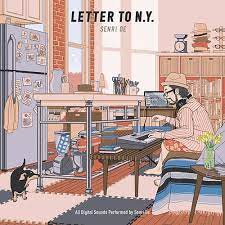
Senri Oe was born on September 6, 1960, in Fujiidera city, Osaka, Japan. He began playing piano at the age of three, and was trained by his junior high school teacher Yumi Nara, who would go on to become an acclaimed opera singer. After each of the lessons, Nara would encourage him to improvise, and eventually he began to compose.
Upon being introduced to music by The Carpenters, Captain & Tenille and Gilbert O’Sullivan, Oe decided to become a singer-songwriter. Soon after, Oe’s music repertoire expanded to include jazz musicians such as Chris Conor, Bill Evans, Thelonious Monk, Antonio Carlos Jobim, Winton Kelly, Miles Davis and Charlie Parker.
In 1975 at 15 Oe intended to study jazz but after participating in the final Yamaha Popular Song Contest POPCON, in 1980 he entered Kwansei Gakuin University majoring in economics while simultaneously beginning to pursue a professional music career. He formed his first band during his time at university, was scouted by Sony Music and signed to Epic Sony Japan in 1981. His pop career unexpectedly took off and he chose to put his jazz aspirations on hold.
At the New School for Jazz, in 2008 Senri moved to Manhattan, New Yorkand later He went on to start a prolific carrer as a pop singer/songwriter but in 2007 he began his serious study of jazz. After graduating from The New School for Jazz, he launched his jazz record label, Peace Never Die Records, in 2012. His jazz debut album was Boys Mature Slow the same year. As of 2021 he has released another six albums under the PND label.
Oe’s work towards composing for a drum-less trio was titled Collective Scribble, with saxophone, piano and upright bass. He has recorded as a leader with Sheila Jordan, Jon Hendricks, Theo Bleckmann and Lauren Kinhan. His Answer July was nominated for a Grammy in the Best Jazz Album category in 2017.
Pianist, composer, producer, actor, singer, and songwriter Senri Oe continues to compose, perform and stretch the realms of his jazz imagination, while writing and producing music for other artists and film soundtracks.

More Posts: bandleader,history,instrumental,jazz,music,piano,producer,vocal

Daily Dose Of Jazz…
John Zorn was born September 2, 1953 in New York City, New York and attended the United Nations International School, where he studied piano, guitar and flute from an early age. Exposed by his families musical tastes in classical, world, jazz, French chansons, country doo-wop and rock and roll records, he spent his teenage years exploring classical and film music, listening to The Doors and playing bass in a surf band. He explored experimental and avant-garde music as well as cartoon soundtracks and film scores. He went on to teach himself orchestration and counterpoint by transcribing scores and studied composition under Leonardo Balada.
After discovering Anthony Braxton’s album For Alto when he was studying composition at Webster College in St. Louis, Missouri, Zorn began playing saxophone and attended classes taught by Oliver Lake. While at Webster, he incorporated elements of free jazz, avant-garde and experimental music, film scores, performance art and the cartoon scores of Carl Stalling into his first recordings.
Leaving Webster after three semesters, John lived on the West Coast before returning to Manhattan where he gave concerts in his apartment and other small NY venues, playing saxophone and a variety of reeds, duck calls, tapes, and other instruments. He immersed himself in the underground art scene, assisting Jack Smith with his performances and attending plays by Richard Foreman
Zorn entered New York City’s downtown music scene in the mid-1970s, collaborating with improvising artists while developing new methods of composing experimental music. Over the next decade he performed throughout Europe and Japan and recorded on independent US and European labels. In 1986 he received acclaim with the release of his radical reworking of the film scores of Ennio Morricone, The Big Gundown, followed by Spillane, an album featuring his collage-like experimental compositions. Spy vs Spy and Naked City both demonstrated his ability to merge and blend musical styles in new and challenging formats.
Having spent time in Japan in the late 1980s and early ’90s John returned to Lower East Side Manhattan to establish the Tzadik record label in 1995, enabling him to establish independence, maintain creative control, and ensure the availability of his growing catalog of recordings. He prolifically recorded and released new material for the label, issuing several new albums each year, along with recordings by many other artists.
He performs on saxophone with the groups Naked City, Painkiller, and Masada but more often conducts bands like Moonchild, Simulacrum and several of his Masada-related ensembles. He composes concert music for classical ensembles and orchestras, produces music for opera, sound installations, film and documentary, and tours Europe, Asia, and the Middle East. Composer, conductor, saxophonist, arranger and producer John Zorn continues his exploration of music and adds to his diverse repertoire.
Bestow upon an inquiring mind a dose of a New York City composer to motivate the perusal of the genius of jazz musicians worldwide whose gifts contribute to the canon…
More Posts: arranger,bandleader,composer,history,instrumental,jazz,music,saxophone

Daily Dose Of Jazz…
Hilde Hefte was born on September 1, 1956 in Kristiansand, Norway and received much of her musical education from the Barratt Due Institute of Music in Oslo, Norway with piano as primary and vocals as secondary instruments. She played saxophone and clarinet for ten years when she was young, apprenticing with her father who was saxophone teacher and musician. She also trained as an actor, landing numerous roles.
During a period of years she taught music at Agder musikkonservatorium before she started as a full-time musician. She released her debut solo album Round Chet’s Midnight in 1999 to great reviews, from song others Down Beat Magazine. Hefte went on to quickly release five more albums under her own name, and has written lyrics and composed music to both her own albums and for a host of other artists.
Never far from acting, Hilde continues her leading roles at the theatre, among others, the main role as Edith Piaf. She has written and arranged music for various local theatre productions. To date she has recorded eight solo albums as a leader highlighting the music of Chet Baker, Bill Evans and bossa nova, as well as an album with the Prague Philharmonic Orchestra and inclusion in the Putamayo compilation Brazil Around The World.
With already ten collaborative albums under her belt with no sign of stopping, vocalist Hilde Hefte founded and runs Norsk Jazzforlag in 2003 and the record label Ponca Jazz Records the following year.
Bestow upon an inquiring mind a dose of a Kristiansand vocalist to motivate the perusal of the genius of jazz musicians worldwide whose gifts contribute to the canon…
More Posts: bandleader,history,instrumental,jazz,music,vocal