


Daily Dose Of Jazz…
Rabih Abou-Khalil ربيع أبو خليل, was born August 17, 1957 in Beirut, Lebanon and studied the oud at the Beirut Conservatory with oudist Georges Farah. After moving to Munich, Germany at 21, he studied classical flute at the Academy of Music under Walther Theurer.
Combining elements of Arabic music with jazz, rock, or classical music, he has earned praise as a world musician years before the phrase became a label. Along with Tunisian oud virtuosos Anouar Brahem and Dhafer Youssef, he has helped establish the oud as an important instrument of Ethno jazz and world fusion.
Among other musicians, Abou-Khalil has worked with ARTE Quartett, Alexander Bălănescu, Luciano Biondini, Milton Cardona, Sonny Fortune, Michel Godard, Joachim Kühn, Howard Levy, Charlie Mariano, Ricardo Ribeiro, Steve Swallow, Kenny Wheeler. He has recorded for ECM, Enja, MMP, Granit, and World Village record labels.
Rabih has hosted the 13 part documentary television series Visions of Music, that explores the blending of jazz with different music styles of the world. The music of the TV-series was released on the album Visions of Music – World Jazz by Enja Records.
Oudist Rabih Abou~Khalil continues to be active in music, composing, recording and performing worldwide.

More Posts: bandleader,composer,instrumental,music,oud

The Quarantined Jazz Voyager
Taking the high road and staying safe, socially distanced and listening to great music. This week I am choosing A Flower Is a Lovesome Thing is the second studio album by pianist Vince Guaraldi, credited to the Vince Guaraldi Trio. It was recorded at Fantasy Recording Studios in San Francisco, California on April 16, 1957 and released in the U.S. the following year on the Fantasy Records label. Ralph J. Gleason wrote the liner notes and in 1994, Phil De Lancie produced the digital remastering.
Track Listing | 34:40 Side One- A Flower Is A Lovesome Thing (Billy Strayhorn) ~ 5:37
- Softly, As In A Morning Sunrise (Oscar Hammerstein II, Sigmund Romberg) ~ 3:28
- Yesterdays (Jerome Kern) ~ 4:00
- Like A Mighty Rose aka Room At The Bottom (Vince Guaraldi) ~ 4:30
- Looking For The Boy (George & Ira Gershwin) ~ 4:06
- Autumn Leaves (Joseph Kosma) ~ 4:21
- Lonely Girl (Bobby Troup) 3:23
- Willow Weep For Me (Ann Ronell) ~ 5:14
- Vince Guaraldi – piano
- Eddie Duran – guitar
- Dean Reilly – double bass

More Posts: adventure,album,club,genius,jazz,museum,music,piano,preserving,restaurant,travel
The Quarantined Jazz Voyager
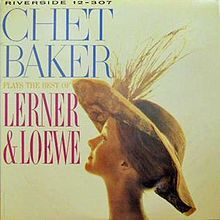
CHET BAKER PLAYS THE BEST OF LERNER & LOEWE
The fat lady has not received her phone call to even begin warming up as the country races back to the way things were more than a year ago. It took three years to get past the Spanish Flu pandemic a hundred years ago because people didn’t want to adhere to the systems put in place. The Delta variant is here with a vengeance causing 21+ thousand new cases here in Florida this past weekend and the numbers are still being counted. I’ve had friends exposed to this variant with fortunate test results clearing them. I am socially distancing when out, wearing my mask and quarantining myself at home. I hope you are doing the same.
This week’s pick is the 1959 album Chet Baker Plays the Best of Lerner and Loewe. The trumpeter features show tunes by the composer and lyricist, and was released on the Riverside label. The recording sessions were produced by Orrin Keepnews at the Reeves Sound Studios in New York City. Tracks 2,6,7,8 were recorded on July 21st and 1,3,4,5 took place on July 22, 1959.
Track Listing | 43:02
- I’ve Grown Accustomed to Her Face ~ 4:16
- I Could Have Danced All Night ~ 3:43
- The Heather on the Hill ~ 5:04
- On the Street Where You Live ~ 8:37
- Almost Like Being in Love ~ 4:53
- Thank Heaven for Little Girls ~ 4:35
- I Talk to the Trees ~ 5:51
- Show Me ~ 6:30
Personnel
- Chet Baker ~ trumpet
- Herbie Mann ~ flute, tenor saxophone
- Zoot Sims ~ tenor saxophone, alto saxophone
- Pepper Adams ~ baritone saxophone
- Bob Corwin (tracks 1 & 3-5), Bill Evans (tracks 2 & 6-8) ~ piano
- Earl May ~ bass
- Clifford Jarvis ~ drums
More Posts: adventure,album,club,genius,jazz,museum,music,preserving,restaurant,travel,trumpet
Daily Dose Of Jazz…
Albert Laurence Di Meola was born July 22, 1954 in Jersey City, New Jersey and grew up in Bergenfield, New Jersey where he got his education through high school. When he was eight years old, he was inspired by Elvis Presley and the Ventures to start playing guitar. His teacher directed him toward jazz standards.
Attending Berklee College of Music in the early 1970s, by nineteen he was hired by Chick Corea to replace Bill Connors in the pioneering jazz fusion band Return to Forever with Stanley Clarke and Lenny White. He recorded three albums with the band, all of which cracked the Top 40 U.S. Billboard pop albums chart. After the group disbanded in 1976, Al set out on a solo recording career demonstrating his mastery of jazz fusion, flamenco, and Mediterranean music.
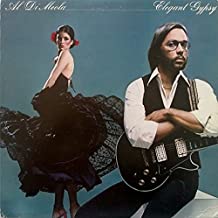
His debut solo album Land of the Midnight Sun in 1976 led to his follow-up His 1977 sophomore album Elegant Gypsy that went gold. His early albums were influential among rock and jazz guitarists. He went on to explore Latin music within jazz fusion, the electronic side of jazz, and along with Jan Hammer and Jeff Beck composed the Miami Vice theme.
Throughout his career he explored his acoustic side, world music and modern Latin styles in addition to jazz and rediscovering his love of the electric guitar in 2006, In 2018, Di Meola was awarded an honorary doctorate of music from his alma mater, Berklee College of Music.
Guitarist Al Di Meola, who cites his jazz influences as guitarists George Benson, Kenny Burrell, Clarence White and Doc Watson, continues to push the envelope with his music.

More Posts: bandleader,composer,guitar,history,instrumental,jazz,music
Daily Dose Of Jazz…
Ellen Radka Toneff was born on June 25, 1952 in Oslo, Norway. She was the daughter of the Bulgarian folk singer, pilot and radio technician Toni Toneff, and grew up in Lambertseter and Kolbotn. She studied music at Oslo Musikkonservatorium (1971–75), combined with playing in the jazz rock band Unis.
From 1975 to 1980 she led her own Radka Toneff Quintet, with a changing lineup including musicians like Arild Andersen, Jon Balke, Jon Eberson and Jon Christensen, among others. From 1979 she cooperated with Steve Dobrogosz, and in 1980 she participated in the Norwegian national final of the Eurovision Song Contest with the song Parken by Ole Paus.
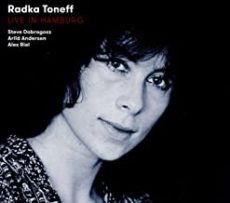
Toneff was awarded the Spellemannsprisen 1977 in the category best vocal for the album Winter Poem, and posthumously received the Norwegian Jazz Association’s Buddypris in 1982. The Radka Toneff Memorial Award is funded with royalties from the albums Fairytales and Live in Hamburg. A biography of her life was published in 2008.
Her 1982 album Fairytales was voted the best Norwegian album of all time. Vocalist Radka Toneff, considered one of Norway’s greatest jazz singers, committed suicide with an overdose of sleeping pills and was found in the woods of Bygdøy outside Oslo on October 21, 1982.

More Posts: history,instrumental,jazz,music,vocal