

The Quarantined Jazz Voyager
Having adapted to this new paradigm of social distancing and self-quarantining from the continuous spikes in the corona virus by those who refuse to wear a mask and are congregating, gives me a certain amount of uninterrupted time to kick back, relax and listen to music.
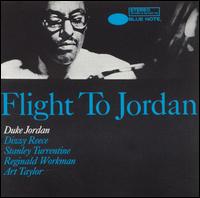
The album I am choosing to place on the turntable today is the studio album Flight To Jordan recorded August 4, 1960 at the Van Gelder Studio in Englewood Cliffs, New Jersey by pianist Duke Jordan.
The album was produced by Alfred Lion and released later the same year on the Blue Note record label. All compositions are by Duke Jordan.
Track List | 38:21
- Flight to Jordan ~ 5:32
- Star Brite ~ 7:49
- Squawkin’ ~ 5:00
- Deacon Joe ~ 8:43
- Split Quick ~ 5:11
- Si-Joya (No Problem) ~ 6:46
- Duke Jordan – piano – solo track 8
- Dizzy Reece – trumpet
- Stanley Turrentine – tenor saxophone
- Reggie Workman – bass
- Art Taylor – drums
This pandemic is here for the long run but those of us who are smart and vigilant are going to come out on the otherside healthy and ready to jetset around the world. That’s when I will be hitting the friendly skies once again. In the meantime, stay vigilant, wear masks and remain healthy.

More Posts: adventure,club,genius,jazz,museum,music,preserving,restaurant,travel
Daily Dose Of Jazz…
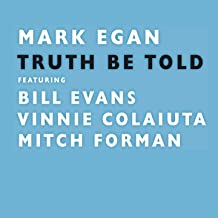
Mark Egan was born on January 14, 1951 in Brockton, Massachusetts and was influenced by his father, studying trumpet at age 10. Playing the trumpet throughout high school, he began playing the bass when he was fifteen. While attending the University of Miami’s Frost School of Music, initially a trumpet student, he studied with Jerry Coker. He switched from trumpet to bass part way through the program. His teachers included Jaco Pastorius, Dave Holland, and Andy LaVerne. While in Miami he became friends and performed with Ira Sullivan, Pat Metheny, Danny Gottlieb, Clifford Carter.
After graduate school, in 1975 Egan went on tour with Eumir Deodato and the Pointer Sisters and recorded with David Sanborn. Two years later, working as a studio musician in New York City, he met Joe Beck and Steve Khan. He then joined the Pat Metheny Group until 1981, before starting the jazz fusion band Elements with the Group’s drummer, Danny Gottlieb. They were joined by saxophonist Bill Evans and keyboardist Clifford Carter. They recorded and toured through the 1990s. During the 1980s and Nineties, he was a member of the Gil Evans Orchestra.
He founded his own record label, Wavetone Records and has made three music videos: Om Yoga & Meditation, Music on the Edge, and Bass Workshop. He has appeared on the soundtracks of movies including Two Moon Junction, The Object of My Affection, You’ve Got Mail, The Color of Money, Rollover, Quick Change, Blown Away, and A Chorus Line. He recorded an album, Urge, with trumpeter Forrest Buchtel, Jr., featuring, among other things, the theme from CNN Headline News.
Egan has toured and recorded with jazz artists including Stan Getz, Gil Evans, John McLaughlin, Larry Coryell, Pat Martino, Pat Metheny, Michael Franks, Jim Hall, Bill Evans, Lew Soloff, Paul Shaffer, rock and pop musicians and The Pointer Sisters, Sting, Arcadia, Roger Daltrey, Joan Osborne, Marianne Faithfull, Carly Simon, Art Garfunkel, Judy Collins, Sophie B. Hawkins, Bryan Ferry, Joe Beck, as well as Brazilians Airto Moreira, Flora Purim, and Toninho Horta.
Bassist and trumpeter Mark Egan continues to perform and record.
More Posts: bandleader,bass,history,instrumental,jazz,music,trumpet
The Quarantined Jazz Voyager
It’s a new year and it’s been ten months since the quarantine and social distancing has been instituted. Some of us, unfortunately, are still not fully adapting to life with the virus, desiring their comfort zone to be as it was before the pandemic. For those of us who have taken this life interruption to no longer be an inconvenience, we relax and find new engagements for our senses.
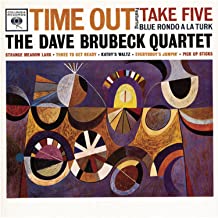
With that in mind, this week I’ve selected the classic studio album Time Out by the Dave Brubeck Quartet. Recorded at Columbia’s 30th Street Studio in New York City on June 25, July 1, and August 18, 1959, it was released on December 14, 1959 on Columbia Records. It is based upon the use of time signatures that were unusual for jazz and is a subtle blend of cool and West Coast jazz.
The producer on the album was Teo Macero, and Fred Plaut engineered the sessions. S. Neil Fujita had the responsibility for creating the cover artwork, and Seth Rothstein was the project director.
The album peaked at No. 2 on the Billboard pop albums chart, and was the first jazz album to sell a million copies. The single Take Five off the album was also the first jazz single to sell one million copies. By 1963, the record had sold 500,000 units, and in 2011 it was certified double platinum by the RIAA, signifying over two million records sold. The album was inducted in the Grammy Hall of Fame in 2009.
Columbia president Goddard Lieberson took a chance to underwrite and release the album. Although it received negative reviews from critics upon its release, it became a popular recording by fans globally. In 2005, it was one of 50 recordings chosen that year by the Library of Congress to be added to the National Recording Registry. It was also listed in the book 1001 Albums You Must Hear Before You Die. In 2009 the album was inducted into the Grammy Hall of Fame.
Track List | 38:30
All pieces composed by Dave Brubeck, except Take Five by Paul Desmond.
Side One- Blue Rondo à la Turk ~ 6:44
- Strange Meadow Lark ~ 7:22
- Take Five ~ 5:24
- Three to Get Ready ~ 5:24
- Kathy’s Waltz ~ 4:48
- Everybody’s Jumpin’ ~ 4:23
- Pick Up Sticks ~ 4:16
- Dave Brubeck – piano
- Paul Desmond – alto saxophone
- Eugene Wright – bass
- Joe Morello – drums
As you all know, the moment the world becomes safe and opens back up for Americans to travel, I will be back jet setting around the globe. In the meantime, stay vigilant, wear masks and remain healthy.
More Posts: adventure,club,genius,jazz,museum,music,piano,preserving,restaurant,travel
Daily Dose Of Jazz…
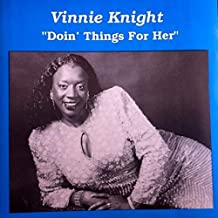
Vinnie Knight was born on January 5, 1958 in Harlem, New York and later moved to the borough of Brooklyn. At an early age, she sang in church choirs and performed in school plays and her father was a singer and guitarist who traveled the world. She studied dance with La Rocque Dance theater and music at the Juilliard School Of Music and Kings Borough Community College.
Knight recorded the songs of composer Duke Ellington, performed in Nairobi, Kenya, and starred with Oliver Jackson and the Harlem Big Band of New York, touring Germany, Switzerland, Holland, and Turkey. Returning to New York she performed with Clark Terry on the SS Norway cruise line, then played the Rapos Nightclub in Japan.
She has recorded, performed and collaborated with the best jazz musicians. In 1997 Vinnie moved to Virginia Beach, Virginia and began singing at such noted venues as Uncle Louie’s, The Jewish Mother, Bienville Grill, House of Jazz, as well as resorts, museums, concert halls and private events in Hampton Roads.
Her love for music theater had her writing and producing a musical revue called Black Pearls (The Speakeasy) songs from the 1920’s thru the 40’s; followed by the sequel Black Pearls and White Diamonds. In 2002, she performed a tribute to Ruth Brown and Pearl Bailey. Vocalist Vinnie Knight continues to perform, tour and record.
More Posts: bandleader,composer,history,instrumental,jazz,music,vocal
The Quarantined Jazz Voyager
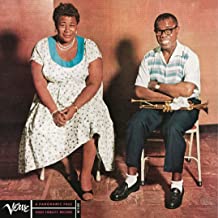
Ella and Louis is a 1956 studio album by Ella Fitzgerald and Louis Armstrong, accompanied by the Oscar Peterson Quartet, This was the first of three albums that they were to record together for Verve Records, later followed by 1957’s Ella and Louis Again and 1959’s Porgy and Bess. All three were released as The Complete Ella Fitzgerald & Louis Armstrong on Verve.
Norman Granz, the founder of the Verve label, selected eleven ballads for the duo, mainly played in a slow or moderate tempo. Recording began August 16, 1956, at the new, and now iconic, Capitol Studios in Hollywood, California. Though Granz produced the album, Armstrong was given final say over songs and keys. Val Valentin was the session engineer and the photography was taken by Phil Stern.
Tracklist
Side One
- Can’t We Be Friends? (Paul James, Kay Swift) ~ 3:47
- Isn’t This A Lovely Day? (Irving Berlin) ~ 6:16
- Moonlight In Vermont (John Blackburn/Karl Suessdorf) ~ 3:42
- They Can’t Take That Away From Me (George & Ira Gerrshwin) ! 4:39
- Under A Blanket Of Blue (Jerry Livingston/Al J. Neiburg/Marty Symes) ~ 4:18
- Tenderly(Walter Gross/Jack Lawrence) ~ 5:10
- A Foggy Day (George & Ira Gershwin) ~ 4:32
- Stars Fell On Alabama (Mitchelll Parish/Frank Perkins) ~ 3:34
- Cheek To Cheek (Irving Berlin) ~ 5:53
- The Nearness Of You (Hoagy Carmichael/Ned Washington) ~ 5:42
- April In Paris (Vernon Duke/Yip Harburg) ~ 6:33
- Ella Fitzgerald – vocals
- Louis Armstrong – vocals, trumpet
- Oscar Peterson – piano
- Herb Ellis – guitar
- Ray Brown – bass
- Buddy Rich – drums

More Posts: adventure,album,club,genius,jazz,museum,music,preserving,restaurant,travel,vocal