


Daily Dose Of Jazz…
Chris Flory was born November 13, 1953 in New York City, New York and began playing guitar in his early teens. Around that time he heard his first jazz album, Forest Flower by Charles Lloyd. He was influenced by seeing live performances of Jimi Hendrix, B. B. King, and Rahsaan Roland Kirk during the late 1960s. Through his friend Scott Hamilton he met musicians and while babysitting the children of Gil Evans he listened to albums by Nat King Cole, Miles Davis, Charlie Parker, and Lester Young. His music has been inspired by Charlie Parker, Charlie Christian, T-Bone Walker.
In his early teens Flory played in rock bands but three years later had a couple jazz lessons with guitarist Tiny Grimes. In the early 1970s he studied at Hobart College, and performed with Hamilton intermittently from 1975 through the early 1990s. He began to record his own albums as a leader after Hamilton’s quintet broke up.
From 1977 to 1983 Chris played in the Benny Goodman Sextet, then worked with Ruby Braff, Judy Carmichael, Roy Eldridge, Illinois Jacquet, Buddy Tate, Bob Wilber, Milt Hinton, Hank Jones, Duke Robillard, and Maxine Sullivan.
Guitarist Chris Flory, who has recorde six albums as a leader and as a sideman twenty-eight, continues to perform and record.

More Posts: bandleader,history,instrumental,jazz,music

On The Bookshelf…
The Story Of Jazz | Marshall W. Stearns
Beginning with the African musical heritage and its fusion with European forms in America, Marshall Stearns’s history of jazz guides the reader through work songs, spirituls, ragtime, and the blues, to the birth of jazz in New Orleans, Louisiana and its adoption through the Great Migration by St Louis, Chicago, Kansas City, and New York.
The effect of jazz upon American culture and the American character has been all pervasive. This superlative history is the first and the most renowned systematic outline of the evolution of this Black American musical phenomenon. The book follows its course through the era of swing and bop to the beginnings of rock in the 50s, vividly depicting the great innovators, and covering such technical elements as the music’s form and structure.
The Story Of Jazz: 1956 | Marshall W. Stearns Oxford University Press

Daily Dose Of Jazz…
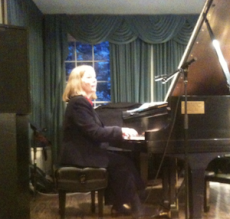
Lucy Galliher was born in Washington, D.C. on November 11, 1954. He graduated from Maret High School, received her BA in Music from Oberlin College and received a National Endowment for the Arts grant to study jazz piano with Joanne Brackeen. She went on to study at BMI Jazz Composer’s Workshop with Manny Albam, Roger Kellaway, Jim McNeely and also studied piano with Art Lande, Mark Levine, Barry Harris, and Hansi Alt.
She is on the faculty of Brooklyn-Queens Conservatory of Music and the Greenwich House Music School. She has held the position of East Coast Editor of Jazz Now Magazine, has performed on Broadway, cruise ships, recorded albums, and performed live in a variety of settings.
Pianist Lucy Galliher, who currently is an online Jazz Reviewer, continues to perform and record.
More Posts: bandleader,history,instrumental,jazz,music,piano
Daily Dose Of Jazz…
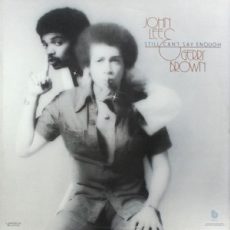
Gerry Brown was born on November 9, 1951 in Philadelphia, Pennsylvania. He began playing the drums at the age of five and played with soul groups and played in high school with bassist John Lee, with whom he attended music academy in 1970.
In 1971, he moved to New York City where he played with Lionel Hampton. In 1972 he moved to the Netherlands with Lee to join Chris Hinze’s rock jazz group. They recorded a series of albums in the 1970s. Alongside Lee, he also worked for Jasper van ‘t Hof, Toto Blanke, Charlie Mariano, Eef Albers and Gary Bartz mid-decade. Subsequently, they were members of Larry Coryell’s The Eleventh House for two years; Brown also played for Stanley Clarke and Chick Corea. In 1979, he accompanied Didier Lockwood at the Montreux Jazz Festival.
Settling in Berlin, Germany for some time in 1982 and worked with George Gruntz, with Joachim Kühn, and with Chris Beckers, Herb Geller, Anne Haigis and Kraan until he returned to the United States. As a sideman Gerry has worked with including ones with George Benson, Michał Urbaniak, Urszula Dudziak, Marcus Miller, Lionel Richie, Sonny Fortune, Alphonso Johnson, Roberta Flack, Joe Sample, Tom Harrell, Dave Samuels, and Chuck Loeb, among others.
Drummer Gerry Brown continues to perform and record.
More Posts: drums,history,instrumental,jazz,music
Daily Dose OF Jazz…
Quinten H. “Rocky” White Jr. was born in 1952 in Hays, Texas near San Marcos. When he was a child, the family moved to Houston. Graduating from San Jacinto High School, where he began playing drums, he attended Texas Southern University and played in the school jazz band. In 1970 he married his high school sweetheart, Erma Green.
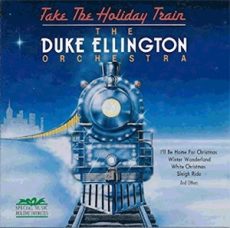
While at TSU he met Barrie Hall, who in 1973 joined the Ellington orchestra. It was about a month later that Ellington told Hall he needed another drummer and asked if he knew of one and he recommended Rocky. Joining the orchestra in the summer of 1973, he was one of the last musicians that Ellington hired before he died in 1974.
Drummer Quinten “Rocky” White Jr., whose last appearance with the orchestra was a performance of sacred music in 2007 at Williams Trace Baptist Church, died from cancer on June 4, 2008 in Houston. He was 56.
More Posts: drums,history,instrumental,jazz,music