


Requisites
Open House~Jimmy Smith | By Eddie Carter
During his time at Blue Note, any album by Jimmy Smith was considered something special to have in one’s library. Jimmy knew his instrument and his contributions to help popularize the Hammond B3 organ in Hard-Bop and Soul-Jazz are a notable achievement. Open House (Blue Note BLP 4269/BST 84269) was recorded in 1960 but remained shelved until 1968. The gentlemen joining Jimmy for this informal session are Blue Mitchell (tracks: A1, B1) on trumpet, Jackie McLean (tracks: A1, B1, B2) on alto sax, Ike Quebec (tracks: A1, A2, B1) on tenor sax, Quentin Warren on guitar, and Donald Bailey on drums. This lineup also appears on the companion album, Plain Talk, and my copy used in this report is the 1970 US Stereo reissue.
Side One starts with a visit inside Jimmy’s Open House. The ensemble builds the melody gradually with Jimmy alternating sections with the front line. Blue opens the lead solo with a relaxing informality, then Jackie takes over in low gear on the second reading, building steadily to a satisfying groove. Ike comes in next for a delightful interpretation and Jimmy wails on the closing statement preceding the ending theme and fadeout. Old Folks by Willard Robison and Dedette Lee Hill is one of the prettiest jazz standards ever recorded. It was composed in 1938 and Quebec gets the honors as the only horn, backed by the trio. Ike’s deeply thoughtful stating the pensive theme and also gives a tender first statement. Jimmy closes with a reflective comment before Quebec returns to take the song out with a tender ending.
The sextet begins Side Two with a visit to Jimmy’s Sista Rebecca. After a brief collective theme by the ensemble, Ike moves into a steady medium tempo on the opening chorus with the trio comfortably backing him. Blue follows, sailing smoothly with a sassy groove that’s sure to get the listener to snap their fingers and tap their toes. Jackie’s alto flows nicely on the third reading and Jimmy adds the final touch with some down-home country cooking leading to the theme’s reprise and fadeout. A pretty introduction and melody by McLean begins the 1928 song, Embraceable You by George and Ira Gershwin. The altoist creates a romantic atmosphere with a dreamy lead solo, then Jimmy briefly conveys a loving sentiment into an elegant ending.
Open House was produced by Alfred Lion and engineered by Rudy Van Gelder. The good news is the musicians are excellent, the music features great solos from the principals and solid support from Warren and Bailey. The issue I have with the record is the microphone placement for Jimmy’s organ has a tone of harshness as he’s playing on two of the tunes (tracks: A1, B1). I think that’s the reason the album wasn’t released after the session was recorded. That issue aside, if you’re a fan of Jimmy Smith, Soul-Jazz, or enjoy jazz organ, I invite you to audition Open House for a spot in your library. It’s one of the albums deserving greater recognition and with a stellar supporting cast of Blue Mitchell, Jackie McLean, and Ike Quebec is worth the price of admission! ~ Plain Talk (Blue Note BST 84296) – Source: Discogs.com ~ Embraceable You, Old Folks – Source: JazzStandards.com © 2021 by Edward Thomas Carter

More Posts: choice,classic,collectible,collector,history,instrumental,jazz,music,organ
The Quaratined Jazz Voyager
Still not all that anxious to mingle as safeguards are being lifted and society is comfortable in bigger groups. I am staying to my schedule of grocery, doctor visits, home.
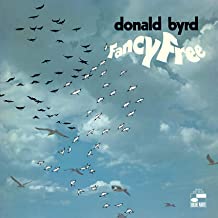
The album I’ve chosen for this week is the 1970 Blue Note album Fancy Free by trumpeter Donald Byrd. It was recorded May 9, and June 6, 1969 at Van Gelder Studio in Englewood Cliffs, New Jersey. The album was produced by Duke Pearson.
This album has Byrd leading a large ensemble that prominently featured Frank Foster on tenor, Lew Tabackin and Jerry Dodgion on flute, along with several percussionists. This date has Duke Pearson playing electric piano and marks the first time Byrd utilized the instrument. On this project the trumpeter concentrated more on grooves and beats, accompanying them on his trumpet rather than being driven by them.
Track Listing | 39:10- Fancy Free (Donald Byrd) ~ 12:06
- I Love the Girl (Donald Byrd) ~ 8:48
- The Uptowner (Mitch Farber) ~ 9:16
- Weasil (Charles Hendricks) ~ 9:00
- Donald Byrd – trumpet
- Julian Priester – trombone
- Frank Foster – tenor and soprano saxophone
- Jerry Dodgion (#1, 3) – flute
- Lew Tabackin (#2, 4) – flute
- Duke Pearson – electric piano
- Jimmy Ponder – guitar
- Roland Wilson – bass guitar
- Joe Chambers (#2, 4), Leo Morris (#1, 3) – drums
- Nat Bettis – percussion
- John H. Robinson Jr. – percussion
More Posts: adventure,album,club,genius,jazz,museum,music,preserving,restaurant,travel,trumpet
Requisites
Consequence, as defined in the Merriam-Webster Dictionary, is “something that happens as a result of a particular action or set of conditions”. In effect, that’s a perfect way to describe this morning’s choice from the library, Consequence (Blue Note Classic LT-994). Alto saxophonist Jackie McLean’s two previous releases, One Step Beyond and Destination Out expressed an abstract style toward progressive jazz and both were still selling well. I think this is why Alfred Lion didn’t release the album after it was recorded. However, this 1965 date pairs McLean with one of his favorite collaborators, Lee Morgan on trumpet. The rhythm section is equally stellar, Harold Mabern on piano, Herbie Lewis on bass, and Billy Higgins on drums. My copy used in this report is the original 1979 Stereo LP.
Bluesanova, the first of two tunes by Morgan starts Side One with a dazzling theme led by the front line. Lee takes off first on an enthusiastic rhythmic flight succeeded by Jackie who wails with exciting freshness. Harold weaves a happy spell on the closing performance, then the front line makes one final comment each before the ensemble dissolving into nothingness. Consequence, also by McLean is a speed demon from the outset of the brisk opening chorus. The leader opens the soloing like a meteorite streaking across the sky. Morgan raises the temperature to the searing heat of a tropical summer on the second reading. Mabern delivers a ferocious statement next, then Higgins has a rapid-fire exchange with Lee and Jackie into an abrupt climax.
My Old Flame by Sam Coslow and Arthur Johnston made its debut in the 1934 film, Belle of The Nineties. The lyrics of this beautiful ballad describe a woman recalling a former lover with reflective affection, and the group presents a passionately tender interpretation. Jackie takes the first step with a touching opening statement. Harold and Lee turn in two beautifully expressed readings before Jackie appears again for a delicately elegant ending. A festive mood gets Side Two underway with McLean’s Tolypso, a danceable mid~tempo tune providing the ideal setting for a graciously inviting lead presentation by the altoist. Morgan adds some hot and spicy sauce to this festive occasion and Mabern sizzles with an effervescent spontaneity before the trio leads the partygoers into a fadeout.
Slumber is by Lee Morgan and during the melody, I thought I’d heard it before and was experiencing déjà vu. It turns out I did recognize it because it was recorded two years later on The Procrastinator (1978) as Soft Touch. After the ensemble’s unhurried melody, Lee opens the first solo expressing an enjoyable, relaxed mood. Jackie’s alto swings brightly next and Harold captivates on the closing reading. McLean’s Vernestune was originally recorded as The Three Minors in 1962 for an album that was shelved until its release in Japan, Jackie McLean Quintet (1977). It begins with a speedy main theme in unison. McLean provides plenty of fireworks on the first solo, then Morgan answers with a quick attack. Mabern blazes brightly on the closing presentation with a ferocious determination that doesn’t stop until the upbeat exit.
McLean and Morgan were a perfect match together and Alfred Lion utilized their talents whenever he could. Jackie performed on Lee’s LP’s: Leeway (1961), Cornbread (1967), Charisma (1969), The Sixth Sense (1970), Tom Cat (1980), and Infinity (1981). Lee returned the favor on Jackie’s album Jacknife (1975). The sound of the original recording by Rudy Van Gelder is quite good without a bit of harshness from top to bottom. I did an A-B listening comparison between Consequence and Record Five of The Complete Blue Note 1964-66 Jackie McLean Sessions (1993), which duplicates the LP song sequence. The sound of the Mosaic album is exceptional with a significant improvement in the highs, midrange, and bass. If you like jazz or are a fan of Jackie McLean, Consequence is a solid straight-ahead session with an extraordinary supporting cast that you can’t listen to without tapping your feet. Together, they create thirty-six minutes of enjoyable listening worthy of occupying a spot in any Hard-Bop or Post-Bop library!
Charisma (Blue Note BST 84312), Destination Out (Blue Note BLP 4165/BST 84165), Infinity (Blue Note Classic LT-1091), Jacknife (The Blue Note Reissue Series BN-LA457-H2), Leeway (Blue Note BLP 4034/BST 84034), One Step Beyond (Blue Note BLP 4137/BST 84137), The Complete Blue Note 1964-66 Jackie McLean Sessions (Mosaic Records MQ6-150), Jackie McLean Quintet (Blue Note LNJ-80118), The Procrastinator (Blue Note Classic Jazz Series BN-LA582-J2), Tom Cat (Blue Note Classic LT 1058) – Source: Discogs.com
~ My Old Flame – Source: JazzStandards.com ~ Belle of The Nineties – Source: Wikipedia.org ~ Bluesanova – https://www.youtube.com/watch?v=pBEDJ1Ke5l0 ~ Consequence – https://www.youtube.com/watch?v=-YKe7O6KDxM © 2021 by Edward Thomas Carter
More Posts: choice,classic,collectible,collector,history,instrumental,jazz,music,saxophone
The Quarantined Jazz Voyager
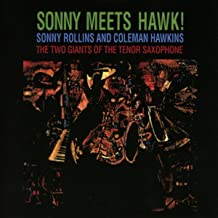
For those of us who foresaw that we would still be social distancing that we would be listening to great music in the safety of our homes. This week I’ve taken the liberty of enjoying listening to Sonny Rollins and Coleman Hawkins on their 1963 album titled Sonny Meets Hawk! Released on RCA Victor. Recorded in the RCA Victor Studio B in New York City on July 15 & 18 1963, the album features some of Sonny’s most avant-garde playing.
The album was produced by George Avakian and marked the first time the two saxophonists recorded studio together, although they had appeared on stage together briefly that same year at the Newport Jazz Festival.
Track List | 41:21- Yesterdays (Jerome Kern, Otto Harbach) ~ 5:13
- All the Things You Are (Jerome Kern, Oscar Hammerstein II) ~ 9:33
- Summertime (DuBose Heyward, George Gershwin, Ira Gershwin) ~ 5:58
- Just Friends (John Klenner, Sam M. Lewis) ~ 4:40
- Lover Man (Oh Where Can You Be?) (Jimmy Davis, Roger “Ram” Ramirez, James Sherman) ~ 8:54
- At McKies’ (Rollins) ~ 7:03
- Sonny Rollins – tenor saxophone
- Coleman Hawkins – tenor saxophone
- Paul Bley – piano
- Roy McCurdy – drums
- Bob Cranshaw – bass (tracks 1, 2, and 5) – recorded July 15
- Henry Grimes – bass (tracks 3, 4, and 6) – recorded July 18

More Posts: adventure,album,club,genius,jazz,museum,music,preserving,restaurant,travel
The Quarantined Jazz Voyager
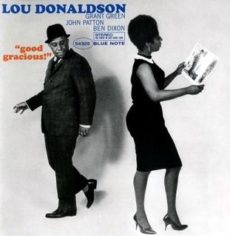
Fourteen months and the end of social distancing and mask wearing is not in sight, and remains the fare for the times as does my continual joy of listening to music. So going into my music room I’ve selected for this week’s enjoyment from the shelves the album Good Gracious!. The studio album was recorded on January 24, 1963 at the Van Gelder Studios in Englewood Cliffs, New Jersy and released on the Blue Note label by saxophonist Lou Donaldson. The album was produced by Alfred Lion and released in the early part of June 1964.
If you’re a fan of Donaldson’s you will notice that his tone is richer and fuller than it is on many of his early-’60s records. He connects with the laid-back R&B grooves and soul-jazz vamps and it remains one of his best soul-jazz sessions.
Track List | 41:59
All compositions by Lou Donaldson except where noted- Bad John ~ 8:18
- The Holy Ghost ~ 8:38
- Cherry (Don Redman) ~ 5:17
- Caracas ~ 7:19
- Good Gracious ~ 6:52
- Don’t Worry ‘Bout Me (Rube Bloom, Ted Koehler) ~ 5:35
- Lou Donaldson – alto saxophone
- Grant Green – guitar
- Big John Patton – organ
- Ben Dixon – drums
More Posts: adventure,album,club,genius,jazz,museum,music,preserving,restaurant,saxophone,travel