

Requisites
The Paris Concert, Edition One ~ Bill Evans | By Eddie Carter
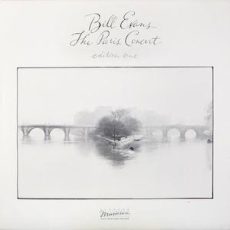
Ever since I’ve been a jazz fan, the piano has always been one of my favorite instruments, and one of my favorite pianists is Bill Evans. My introduction to his playing began with Explorations (1961), Kind of Blue (1959), and Waltz For Debby (1962). Several of his originals have become jazz standards, and many of his albums still resonate with listeners and musicians today. Bill steps into the spotlight of this discussion with the first of two entertaining live dates. The Paris Concert, Edition One (Elektra Musician E1 60164) captures his trio’s performance at L’Espace Cardin on November 26, 1979. He’s joined on stage by Marc Johnson on bass and Joe LaBarbera on drums. My copy used in this report is the 1983 US Stereo album.
The concert opens with the ensemble’s touching rendition of I Do It For Your Love by Paul Simon. Bill begins with a delicately tender introduction segueing into a very pretty melody. Evans embodies a feeling and spirit of enduring love in the song’s only solo with an elegantly graceful interpretation. Marc and Joe supply the soft supplement ahead of the pianist ending the song sweetly. Quiet Now is a lovely tune by Denny Zeitlin. Evans takes the lead again in a hauntingly beautiful introduction ahead of the trio’s peaceful theme. Bill is provided with an excellent showcase to deliver a presentation of luxurious beauty with Johnson and LaBarbera complimenting him perfectly into the group’s affectionate finale.
Noelle’s Theme by Michel Legrand is a moving solo performance that Bill performs with heartfelt warmth and sensitivity in the melody and during his statement that not only touches the crowd but the listener as well. My Romance by Richard Rodgers and Lorenz Hart begins with a lively introduction by Evans, then the pace picks up for the group’s main theme. The highlight is the skillful construction of the first two readings by LaBarbera and Johnson who take turns on their alternate verses with impeccable brushwork and splendid bass lines. Evans unlocks a rich variety of creative ideas next, then LaBarbera adds a few final comments into the pianist’s vivacious closing chorus which receives enthusiastic approval from the crowd at its conclusion.
Side Two gets underway with I Loves You Porgy by George and Ira Gershwin, and DuBose Heyward. It made its debut in the 1935 Broadway opera, Porgy and Bess, and later became a jazz standard. Bill has the stage to himself in a second solo showcase of melodic beauty that he performs with the greatest assurance and sensitive delicacy. Up With The Lark by Jerome Kern and Leo Robin is the first of two duets of piano and bass. Evans and Johnson operate in perfect communication during the opening chorus. Bill takes the lead and delivers an illustrious solo that’s pure magic. Marc provides the exclamation point in an exquisite performance preceding Bill’s ending theme and the audience’s appreciative applause.
The duo returns for All Mine (Minha) by Ruy Guerra and Francis Hime. Bill instills the melody and song’s only statement with expressive beauty, anchored by Marc’s subtle accompaniment into an ending of perfect tranquility. The ensemble returns to full form for Beautiful Love by Wayne King, Victor Young, Egbert Van Alstyne, and Haven Gillespie, which Bill first performed on Explorations. A brief introduction sets the tone for the group’s lively theme. Bill soars over the rhythm section with a vigorous romp on the opening solo. Marc cuts loose with some scintillating notes on the second statement. Bill and Joe unleash a dazzling exchange of infectious riffs and explosive brushwork before Bill swings into the climax. The album concludes with excerpts from a conversation between Bill and Harry Evans.
The Paris Concert, Edition One was produced by Helen Keane, and Yves Abiteboul produced the concert for radio broadcast. This concert was recorded by Radio France and the recording engineer was Stew Romaine. This is a first-rate recording with a superb soundstage that makes the listener feel like they’re in the audience as the trio is performing. If you’re a fan of Bill Evans and are in the mood for something soothing after a long day or week, I invite you to check out The Paris Concert, Edition One on your next vinyl shopping trip. It’s an enticing invitation to explore a remarkable live album by Bill Evans that’s an assortment of delights you’re sure to enjoy!
Explorations (Riverside RLP 351/RLP 9351), Kind of Blue (Columbia CL 1355/CS 8163), The Paris Concert, Edition Two (Elektra Musician E1-60311), Waltz For Debby (Riverside RLP 399/RLP 9399) – Source: Discogs.com
~ I Loves You Porgy, My Romance – Source: JazzStandards.com ~ Beautiful Love – Source: Wikipedia.org © 2022 by Edward Thomas Carter

More Posts: choice,classic,collectible,collector,history,instrumental,jazz,music,piano
Requisites
Something For Lester ~ Ray Brown | Carl Anthony
This week I am standing in for our regular Requisites host and writer Eddie Carter, who is on an anniversary vacation. He will return next Sunday with another prolific review of an album for your collection.
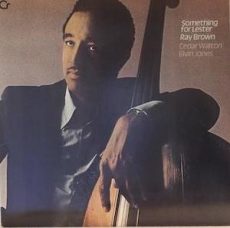
This week I have selected Something for Lester, an album by bassist Ray Brown that was recorded on June 22, 23 & 24 1977 at Contemporary’s Studio in Los Angeles, California. The session was recorded in the bop and cool jazz genres and was released on the Contemporary label the following year.
The producers on the sessions were John Koenig and Lester Koenig. The photograph was taken by Bret Lopez, the design was provided by George Kershaw, with liner notes by Leonard Feather and the recording and sound was performed by the Koenig brothers and Roy DuNann.
Of the seven compositions presented here by the trio, four are classics, two are by Cedar Walton and one was composed by Brown. The conversation between the players is easy and comfortable as they navigate through each song. If you enjoy small group sessions you’ll find these consummate musicians will deliver what you like.
Tracks | 41:10
- Ojos de Rojo (Cedar Walton) – 5:16
- Slippery – 7:27 (Ray Brown)
- Something in Common (Walton) – 4:50
- Love Walked In (George Gershwin, Ira Gershwin) – 5:25
- Georgia on My Mind (Hoagy Carmichael, Stuart Gorrell) – 7:11
- Little Girl Blue (Richard Rodgers, Lorenz Hart) – 6:17
- Sister Sadie (Horace Silver) – 4:54
- Ray Brown – bass
- Cedar Walton – piano
- Elvin Jones – drums
More Posts: bass,choice,classic,collectible,collector,history,instrumental,jazz,music
Daily Dose Of Jazz…
Bob Reynolds was born in Morristown, New Jersey on September 29, 1977. His family moved to Jacksonville, Florida where he started playing saxophone at age 13. Attending high school at Douglas Anderson School of the Arts he became part of the well-known jazz band. After graduating, he attended Berklee College of Music where he studied with George Garzone and Hal Crook.
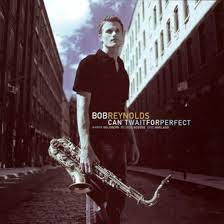
He played with John Mayer’s band for five years, then worked with Brian Blade, Aaron Goldberg, Gregory Hutchinson, and Tom Harrell. A solo recording artist since the turn of the century, his 2006 album Can’t Wait for Perfect was voted Best Debut in the Village Voice jazz poll.
As a member of the popular genre-bending instrumental group Snarky Puppy since 2014, he has won Grammy Awards with the band for the albums Culcha Vulcha and Live at the Royal Albert Hall.
Tenor saxophonist Bob Reynolds has received four ASCAP Young Jazz Composer awards, and Berklee’s Billboard Magazine Endowed Scholarship, and continues to performa and record.

More Posts: bandleader,history,instrumental,jazz,music,saxophone

Daily Dose Of Jazz…
Samuel “Savoirfaire” Williams was born on September 22, 1973 in Chicago, Illinois. At the age of three he began playing violin at his parents’ church and two years later joined a group of child prodigies under the tutelage of Suzuki Violin instructor, Betty Haag. His first performance was at Chicago’s Orchestra Hall during a public television broadcast which became an annual event spanning more than 35 years.
He attended the Merit School of Music in Chicago, studying music theory while participating in youth orchestras including the City Youth Symphony, Chicago Youth Symphony Orchestra, Protégé, All-City and All-State. He took private lessons from Afro-Panamanian musician Joseph Williams when he was 16. During this time he played lead for the City Youth String Ensemble’s viola section, then received a scholarship at Interlochen where he sat in with vibraphonist Milt Jackson.
Meeting and performing with Wynton Marsalis while working at the Chicago Symphony Center, Williams continued his studies and busked on the streets to pay for violin lessons. During one of his street performances, guitarist Kenny Burrell observed his skill and invited him to collaborate with himself, Willie Pickens and Larry Gray on a Bebop performance at Chicago’s Jazz Showcase.
In 2000, he was voted into the Chicago Chapter of the Association for the Advancement of Creative Musicians (AACM), which earned him the moniker “Savoirfaire.” That same year, he began an apprenticeship with luthier Martin Sheridan to learn the art of violin-making, later owning the violin shop and managing it for three years.
After self-releasing three live albums, Bob Koester discovered his work and in 2004 Delmark Records produced the internationally acclaimed release Running Out of Time. Over the years, Savoirfaire has been invited to record with a plethora of artists in various genres and at international Jazz festivals.
In 2015, Williams founded the Chicago Gypsy Project with guitarist Dave Miller and bassist Charlie Kirchen. He continues to perform with his group Savoirfaire Jazz Quartet as well as busking on the streets, and in various venues throughout Chicago.
More Posts: bandleader,history,instrumental,jazz,music,violin
Requisites
Swiss Nights, Vol. 2 ~ Dexter Gordon Quartet | By Eddie Carter
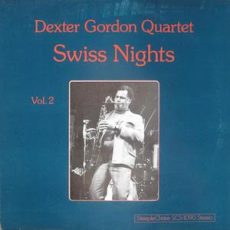
I begin September with a return to The Zürich Jazz Festival ’75 for this morning’s discussion of Swiss Nights, Vol. 2 (SteepleChase Records SCS-1090) by The Dexter Gordon Quartet. The tenor saxophonist’s back on stage with Kenny Drew on piano, Niels-Henning Ørsted Pedersen on bass, and Alex Riel on drums. My copy used in this report is the 1978 SteepleChase Records German Stereo Audiophile release.
Dexter opens the set introducing There’s No Greater Love by Isham Jones and Marty Symes. The quartet launches into an exciting melody, stepping aside for Dexter who leads off the first solo vigorously. Kenny shows off his creative powers in the second reading, next Niels-Henning walks the bass enthusiastically. Dexter trades thoughts with Alex leading to his final solo ahead of the reprise and finish.
Sticky Wicket, the first of two tunes by Dexter eases the throttle back to a comfortable pace on the foursome’s opening chorus. Gordon leads off the solos with a relaxed statement. Drew continues cruising to a carefree beat, then Pedersen takes a laid-back stroll with his bass. Gordon and Riel share a brief exchange preceding the reprise and the audience’s approval.
Side Two opens to a timeless standard from The Great American Songbook, Darn That Dream by Jimmy Van Heusen and Eddie Lange. Dexter and the trio introduce the song with a delicately gentle theme. Dexter’s tenor sax is the epitome of graceful elegance on the opening solo, next Kenny compliments him with a mellow reading of soft warmth. Niels-Henning and Alex hold everything together as Dexter returns for the climax.
Montmartre is Dexter Gordon’s tribute to the Copenhagen jazz club and is off to the races from the foursome’s opening theme. The leader kicks off the solos with a robust performance that gains momentum as it unfolds. Drew has a very good time on the second statement, next Gordon and Riel exchange a few ideas, then the drummer gets the spotlight briefly. The quartet returns to take the song out with an abrupt finish, followed by the group’s theme and musician introductions to great applause.
Nils Winther produced Swiss Nights, Vol. 2, and Helmuth Kolbe recorded and mixed the album. The soundstage is excellent, placing the listener in a front row seat to enjoy the quartet at work. The record is pressed on 180 grams of audiophile vinyl and is very quiet until the music starts. Like its two companions, Swiss Nights, Vol. 2 is a great live album by The Dexter Gordon Quartet with tight musicianship and outstanding sound. If you’re a fan of Dexter Gordon, it’s definitely worth adding to your library!
~ Swiss Nights, Vol. 1 (SteepleChase Records SCS-1050), Swiss Nights, Vol. 3 (SteepleChase Records SCS-1110) – Source: Discogs.com ~ There’s No Greater Love, Darn That Dream – Source: JazzStandards.com © 2022 by Edward Thomas Carter
More Posts: choice,classic,collectible,collector,history,instrumental,jazz,music,saxophone