

Requisites
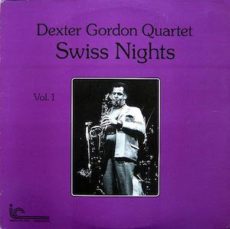
Swiss Nights, Vol. 1 ~ Dexter Gordon Quartet | By Eddie Carter
The Dexter Gordon Quartet steps into the spotlight for this morning’s discussion with Swiss Nights, Vol. 1 (SteepleChase SCS-1050), the first of three albums recorded live at The Zürich Jazz Festival ’75. Dexter’s joined on stage by an all-star rhythm section, Kenny Drew on piano, Niels-Henning Ørsted Pedersen on bass, and Alex Riel on drums. My copy used in this report is the 1976 US Stereo release (Inner City Records IC 2050).
Side One starts with Gordon introducing the first number, an uptempo rendition of Tenor Madness by Sonny Rollins. The quartet launches the melody briskly, and Dexter gets things off to a rousing start on the lead solo. Kenny maintains the momentum on a swiftly paced performance next. Niels-Henning lays down a rocking beat on the third reading. Alex sizzles in a brief exchange with the leader ahead of the ending and the audience’s ovation.
Wave by Antônio Carlos Jobim is one of his most beautiful compositions. Jobim first recorded it as the title tune of his 1967 album. After Dex’s introduction, the rhythm section gently sets the mood for this bossa nova. Gordon shines brightly on the melody and cooks with conviction on the opening statement. Drew is up next with a delightfully creative interpretation, then Pedersen delivers a melodic, rich-toned reading. Gordon returns for a few final comments into the closing chorus.
Side Two begins with Dexter quoting a few of the lyrics to announce You’ve Changed by Bill Carey and Carl Fischer. This is a poignant story beautifully told by the quartet with a delicately gentle melody. Dexter makes the opening solo his own with a glowingly tender performance. Kenny responds with an emotionally touching reading, then the leader returns for an especially moving closing statement that’s very nice.
The set ends with Days of Wine and Roses by Henry Mancini and Johnny Mercer. This old favorite is the title song from the 1962 film and the ensemble opens with an infectious opening chorus. Gordon is up first expressing pleasure on the first statement. Drew swings easily on the following interpretation, then Pedersen takes great delight on the next reading. Dexter reappears briefly preceding the quartet’s closing theme and exit. Swiss Nights, Vol. 1 was produced by Nils Winther. The recording and mixing engineer is Helmuth Kolbe. The album transports the listener to the festival with a solid soundstage that doesn’t disappoint and captures The Dexter Gordon Quartet in fine form. Now that I have Swiss Nights, Vol. 1 in my library, I’ll certainly be seeking out the two remaining volumes in this series. If you’re a fan of Dexter Gordon and love live jazz, this is one I highly recommend!
~ Swiss Nights, Vol. 2 (SteepleChase Records SCS-1090), Swiss Nights, Vol. 3 (SteepleChase Records SCS-1110), Wave (A&M records SP-3002) – Source: Discogs.com
~ Days of Wine and Roses, Wave – Source: JazzStandards.com
~ You’ve Changed – Source: Wikipedia.org
© 2021 by Edward Thomas Carter

More Posts: choice,classic,collectible,collector,history,instrumental,jazz,music,saxophone
The Quarantined Jazz Voyager
History has proven that it took three plus years to eradicate the Spanish flu because people back in 1918 took the same stance of not wanting to abide by the wisdom of professionals to mask, social distance and quarantine. We are heading towards another tipping point as we see a rise in Delta and Omicron running rampant through the country. People are walking around unmasked like it’s 1999, and I remain vigilant in protecting myself. It’s a choice and a responsibility to self.
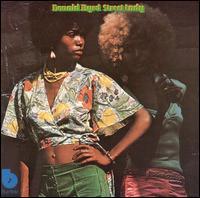
This week I’m reaching back to the Seventies for one of my favorites and pulling off the shelves the jazz~funk~fusion album Street Lady by trumpeter Donald Byrd. Recorded on June 13~15, 1973 at The Sound Factory in Hollywood, California, the album was released on the Blue Note label in July 1973. Once again Byrd steps away from his jazz purity and engages producer Larry Mizell on the heels of his successful production of its predecessor, Black Byrd.
The vocal arrangements were by Fonce Mizell, Fred Perren and Larry Mizell and George Butler executive produced this project.
Tracks | 42:12 All compositions by Larry Mizell/Byrd except as indicated
- Lansana’s Priestess ~ 7:39
- Miss Kane ~ 6:20
- Sister Love ~ 6:11
- Street Lady (Larry Mizell, Fonce Mizell) ~ 5:40
- Witch Hunt” – 9:42
- Woman of the World (Larry Gordon, Larry Mizell) ~ 6:51
- Donald Byrd – trumpet, flugelhorn, solo vocals
- Roger Glenn – flute
- Jerry Peters – piano, electric piano
- Fonce Mizell – clavinet, trumpet, vocals
- Fred Perren – synthesizer, vocals
- David T. Walker – guitar
- Chuck Rainey – electric bass
- Harvey Mason – drums
- King Errisson – congas and bongos
- Stephanie Spruill – percussion
- Larry Mizell – vocals, arranger, conductor
- Mike Salisbury ~ Art Direction, Cover
- Norman Seeff ~ Liner Photography
- Reggie Andrews ~ Electronic Consultant
- Chuck Davis ~ Technical Director
- Chuck Davis, John Arias ~ Engineer Assistant
- John Mills ~ Recording Engineer
- Chuck Davis, John Arias, John Mills ~ Remix Engineer

More Posts: adventure,album,club,genius,jazz,museum,music,preserving,restaurant,travel,trumpet
Requisites
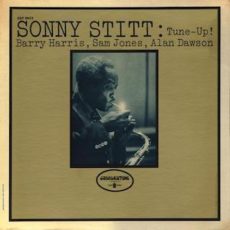
Tune~Up! ~ Sonny Stitt | By Eddie Carter
Sonny Stitt was equally fluent on alto sax (tracks: A2, A4, B2, B3) and tenor sax (tracks: A1, A3, B1, B3) with a pure tone that could be carefree, fiery, or seductive. This morning’s choice from the library is a superb example of him at his best. Tune-Up! (Cobblestone CST 9013) is an excellent 1972 quartet session anchored by Barry Harris on piano, Sam Jones on bass, and Alan Dawson on drums. Stitt’s birth name was Edward Hammond Boatner, Jr. and he came from a musical family. Sonny’s father sang baritone, was a composer, and was a college music professor. His mom taught piano, and his brother was a classically trained pianist. He was later adopted by a family named Stitt and gave himself the name Sonny. The musicians he’s played with reads like the encyclopedia of jazz. Stitt’s also recorded over one hundred albums as a leader and sideman. My copy used in this report is the original US Stereo album.
Side One opens with a speedy rendition of Tune-Up by Miles Davis. Sonny’s tenor sax is emotionally charged from the start of the melody. He launches a ferocious workout on the first statement at breakneck speed. Barry is up next for a vigorously energetic reading leading to a final heated discussion by the leader before the quartet’s exit. I Can’t Get Started by Vernon Duke and Ira Gershwin is a gorgeous song from the film, Ziegfeld Follies of 1936. Stitt’s on alto sax for this tune and shows profound respect to the standard beginning with a thoughtfully tender opening chorus and lyrically beautiful serenade. Harris indulges in nostalgic reminiscing and reflection on the second interpretation and Jones follows with a delicately pretty performance. Stitt makes a genuinely touching and gracefully poignant presentation into the group’s charming climax.
Idaho by Jesse Stone was composed in 1942 and pays homage to the state. This original starts at a jaunty tempo with a cheerful melody. Sonny steps up first with a high-spirited opening statement. Barry takes the reins next for a concise performance of nimble agility. The saxophonist adds a brief bit of fire to the tune with a fitting closer ahead of the quartet’s exit. Side One closes on an upbeat note with a popular song about two lovers who are now Just Friends. It was written in 1931 by John Klenner and Sam M. Lewis. Stitt leads the group through a brisk melody, then kicks it up a notch on the opening chorus with combustible bop chops. Harris fills the second solo with a restless, bristling energy, matched by the rhythm section’s swinging support. Stitt brings out the best on a few final vivacious thoughts preceding the quartet’s closing moments.
Side Two opens on the saxophonist’s slow blues tribute to Lester Young and Charlie Parker, Blues For Prez and Bird. The trio begins with a soulful introduction, then Sonny applies an appropriately warm tone to the melody and first interpretation. Barry is especially endearing on a short statement that swings softly. Stitt arrives at a beautiful conclusion after speaking with deep emotion on the finale. Dizzy Gillespie’s Groovin’ High is a 1945 uptempo standard from the book of Bebop. The quartet comes out cooking on the opening chorus, then Stitt shifts into another gear with a dazzling reading of sheer exuberance. Harris also shows remarkable nimbleness on the second performance matching the saxophonist step for step. Stitt slices through the closing statement with razor-sharpness before the ensemble’s vigorous climax.
I Got Rhythm by George and Ira Gershwin is a jazz standard that was introduced in the musical Girl Crazy (1930). The ensemble deceptively starts slowly at the song’s bridge, rather than the beginning. Sonny has the first solo, erupting on tenor sax with the dynamic force of an active volcano. Barry takes over on the second statement with a fierce intensity, then Stitt kicks up a storm on alto sax for the next presentation. Jones makes a concise comment preceding Stitt ending the song on tenor the way it began. Tune-Up! was produced by Don Schlitten and recorded by Paul Goodman. The album has an exceptionally good soundstage with great clarity throughout the highs, midrange, and bass. If you’re in the mood for an outstanding album of alto and tenor sax, I proudly recommend and submit for your consideration, Tune-Up! by Sonny Stitt. He’s in top form here, and every track’s a winner!
~ I Can’t Get Started, Just Friends, Groovin’ High, I Got Rhythm – Source: JazzStandards.com © 2021 by Edward Thomas Carter
More Posts: choice,classic,collectible,collector,history,instrumental,jazz,music,saxophone

Daily Dose Of Jazz…
Duane Andrews was born November 30, 1972 in Carbonear, Newfoundland and Labrador and grew up exposed to the island’s mélange of cultural influences and his development as a guitarist reflects that. After graduating from the Jazz Studies program at St. Francis Xavier University with honours, he spent several years studying contemporary music composition at the Conservatoire International de Paris and at the Conservatoire National de Region in Marseille, France.
He combines traditional Newfoundland folk music with jazz similar to the way that guitarist Django Reinhardt infused jazz with Manouche influences. He is a composer for film and television, and has recorded thirteen albums as he continues to compose and explore music.

More Posts: bandleader,composer,guitar,history,instrumental,jazz,music

Daily Dose Of Jazz…
Ariel de la Portilla was born on November 10, 1975 in Matanzas, Cuba where he lived until immigrating with his parents to Miami, Florida when he was five. Growing up in the Little Havana neighborhood he was surrounded by the sounds of Cuban and Brazilian music as well as simultaneously experiencing American music and culture that gave his childhood a distinctly unique dichotomy that later proved to have become a crucial aspect of his life, education, and musical identity.
After graduating from high school in 1994, he left Miami to pursue his interests in the double bass. Awarded a music scholarship to the Cincinnati Conservatory of Music at the University of Cincinnati, he dedicated most of his time to studying classical bass and jazz. He remained at CCM until recruited by the University of Miami in 1996 to study under the instruction of Don Coffman, Matt Bonnelli and Lucas Drew.
Since arriving in New York City, he has performed with jazz and Latin musicians including Ray Vega, Dave Valentin, Patato Valdez, Candido Camero, Edy Martinez, Willie Martinez, Peter Erskine, Eddie Daniels, and Sonny Bravo.
Bassist Ariel De La Portilla is currently a member of the Ze Luis Quartet and a new conceptual guitar trio, Lengua Moderna.
More Posts: bandleader,bass,history,instrumental,jazz,music