

Requisites
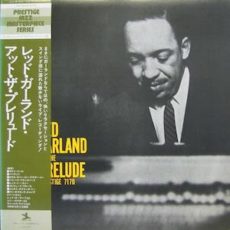
Red Garland at The Prelude | By Eddie Carter
This morning’s discussion is by one of my favorite pianists. Red Garland at The Prelude (Prestige PRLP 7170) is the first of three live albums, plus a fourth containing two live tracks documenting a single night’s performance by The Red Garland Trio. The other LPs are Lil’ Darlin’ (1959), Red Garland Live! (1965), and Satin Doll (1971). Red is supported on this date by Jimmy Rowser on bass, and Charles “Specs” Wright on drums. My copy used in this report is the 1978 Prestige Jazz Masterpieces Series Japanese Mono reissue (Prestige SMJ-6581). The album gets underway with Satin Doll by Duke Ellington, Johnny Mercer, and Billy Strayhorn. The trio opens with an irresistible toe-tapping beat on the melody. Red is up first and picks up the pace with a lively opening solo, then engages in a cheery conversation with “Specs” ahead of the group’s vibrant ending.
The crowd has only a moment to catch its breath before the ensemble jumps into a vigorous rendition of Perdido by Juan Tizol, Ervin Drake, and Hans Lengsfelder. In Spanish, the title means lost, but Juan’s tune is named for the New Orleans street. Garland takes charge from the opening chorus and chews up even more terrain on the first solo. Wright has a short statement and reappears during the climax. The group turns to a popular song from the 1942 film Iceland next, There Will Never Be Another You by Harry Warren and Mack Gordon. The trio takes us to a happy place on the melody and everyone gets a solo opportunity. The pianist takes off first, providing scintillating energy on the opening statement. Jimmy comes in next and walks his bass with authority, and “Specs” has the final word in an effervescent exchange with Red preceding the trio’s exit.
popular standard, Bye Bye Blackbird by Ray Henderson and Mort Dixon brings the first side to a close with a marvelous rendition by the trio. Garland was a member of the Miles Davis Quintet when he recorded it on Round About Midnight (1956). The trio is magical on the melody, and Red begins with a thrilling interpretation inspired by the rhythm section’s backing. Rowser follows with a short statement that’s joyous and carefree before Red returns to take the song out. Side Two starts at a speedy pace with Let Me See by Count Basie, Harry “Sweets” Edison, and Jon Hendricks. Red flies out of the gate rapidly on the song’s theme, then continues swinging hard on an energized opening solo. Jimmy soars into the next presentation swiftly, and “Specs” shares a second heated discussion with Red leading to the threesome’s quick finish.
Prelude Blues is the pianist’s contribution to the set and slows things down for him to have the solo spotlight to himself. Garland delivers a reading as succulent as soul food with Rowser and Wright adding the tasty ingredients to make this delicious meal complete. Just Squeeze Me by Duke Ellington and Lee Gaines brings the beat back to midtempo and the group swings easily on the melody. Red gets the most solo space and does the tune justice with a statement of sheer delight. Jimmy is heard briefly during the closing chorus. This set ends with a vivacious rendition of Count Basie’s theme, One O’Clock Jump. Red and “Specs” bring the song to life with a short introduction, then the pianist attacks the only solo with an intense groove while Rowser and Wright maintain the aggressive beat until the climax and the trio’s short signoff.
Red Garland at The Prelude was originally recorded by Rudy Van Gelder, and Victor Musical Industries has done a superb job mastering the original tapes. The album has a marvelous soundstage with a great definition from each instrument that transports your listening room to the club as the trio is on stage. Now that I have this record in my library, I’ll be on the hunt for the other three to complete the entire night’s performance. If you’re a fan of Red Garland, I invite you to audition Red Garland at The Prelude for a spot in your library. If you love jazz, this is an album you should treat yourself to!
~ Lil’ Darlin’ (Status Records ST 8314), Red Garland Live! (Prestige New Jazz NJLP 8326), Round About Midnight (Columbia CL 949/CS 8649), Satin Doll (Prestige P-7859) – Source: Discogs.com
~ Bye Bye Blackbird, Just Squeeze Me, One O’Clock Jump, Perdido, Satin Doll, There’ll Never Be Another You – Source: JazzStandards.com © 2022 by Edward Thomas Carter

More Posts: choice,classic,collectible,collector,history,instrumental,jazz,music,piano
The Quarantined Jazz Voyager
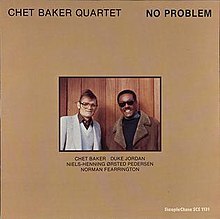
My choice this week is the album No Problem by the Chet Baker Quartet featuring Duke Jordan. The album was produced by Nils Winther, recorded at Sweet Silence Studios, Copenhagen, Denmark on October 2, 1979 and released the following year on the Steeplechase label. The recording engineers were Freddy Hansson and Thomas Brekling, with Tom West holding down the assisting engineer role.
This session came during Baker’s resurgence from losing his embouchure from a beating that broke his tooth, more than likely related to an attempted drug buy, though the story is a bit hazy. After getting dentures he developed a new embouchure in the Seventies and began a more mellow and wavering playing style. There’s always his signature vocals present during this period in his career.
Track List | 51:19 All compositions by Duke Jordan- No Problem ~ 9:45
- Sultry Eve ~ 7:04
- Glad I Met Pat ~ 5:08
- Kiss of Spain ~ 7:15
- The Fuzz ~ 6:05
- My Queen Is Home to Stay ~ 7:13
- Jealous Blues ~ 8:48 (Bonus Track On CD)
- Chet Baker ~ trumpet
- Duke Jordan ~ piano
- Niels-Henning Ørsted Pedersen ~ bass
- Norman Fearrington ~ drums

More Posts: bandleader,history,instrumental,jazz,music,piano,trumpet

Daily Dose Of Jazz…
Clotilde Rullaud was born March 1, 1978 in Reims, France and was immersed in the performing arts of music, theatre and dance from early childhood. At five, she began studying flute and singing at the conservatoire, before going on to complete her studies in jazz and improvised music at IACP in Paris, France and EDIM in Cachan, France. She explored opera singing with the tenor singer, Peterson Cowan.
Her musical identity developed through her travels through the Balkans, Ireland, Lebanon, the United States. Clotilde’s study of vocal techniques, inspired by Meredith Monk, fado, tango, Romani music, Turkish music, Persian music, Inuit throat singing and Bulgarian voices were also great influences.
She has recorded three albums as a vocalist and flutist, her 2007 debut with Hugo Lippi, Live au 7 Lézards She has also directed and produced a short film, and written and directed a multidisciplinary performance. With a repertoire spanning jazz, free improvisation and folk music, her career as a musician has led her to perform in France, Germany, Australia, Burkina Faso, China, South Korea, Japan, Luxembourg, the Netherlands, Switzerland, Taiwan, the United Kingdom and the United States.
Since 2007, Rullaud has taught at Martina A. Catella’s school, Les Glotte-Trotters in Paris, and conducted workshops for the festival Les Suds in Arles and for the Ateliers d’ethnomusicologie (ADEM) in Geneva, Switzerland. Moving to New York City in 2017 she collaborated with American pianist Chris McCarthy, producing Pieces of a Song, a repertoire of dark and beautiful pieces based on the writings of Diane di Prima, poetess of the Beat Generation.
She has performed with Olivier Hutman, Dano Haider, Antoine Paganotti, Tristan Macé, Albin Lebossé, Emmanuel Bex, Yann Cléry, Laurent Salzard, Gautier Garrigue, and Alexandre Saada, the latter collaboration produced A Woman’s Journey, a homage to American female protest songstresses.
She has received numerous awards for her work in both jazz and film. Vocalist, flutist and composer Clotilde Rulllaud, who is also an artistic director, filmmaker, producer and facilitator, continues to pursue the limits of her creativity.
More Posts: composer,flute,history,instrumental,jazz,music,vocal
Requisites
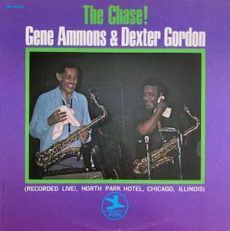
The Chase ~ Gene Ammons & Dexter Gordon | By Eddie Carter
Throughout the chronicles of jazz, there have been many great tenor sax duos who have recorded some legendary battle albums that are among some of the greatest records ever made. Gene Ammons and Sonny Stitt, Arnett Cobb and Buddy Tate, Al Cohn and Zoot Sims, Dexter Gordon and Wardell Gray, Coleman Hawkins and Don Byas, Illinois Jacquet and Lester Young to name a few. This morning’s choice from the library is an exciting live date by Gene Ammons (A1, B1, B2) and Dexter Gordon (A1, A2, B1). The Chase (Prestige PRST 10010) was recorded live at the North Park Hotel before an enthusiastic audience on the afternoon and evening of July 26, 1970, during Gordon’s cross-country tour. The quintet is anchored by Jodie Christian (A1, B1), John Young (A2, B2) on piano, Rufus Reid (A1, B1), Cleveland Eaton (A2, B2) on bass, Wilbur Campbell (A1, B1), Steve McCall (A2, B2) on drums, and Vi Redd (B1) on vocals. My copy used in this report is the original 1971 Stereo album.
Side One opens with the title tune, The Chase is Dexter Gordon’s uptempo tribute to the great tenor duels beginning with a high-spirited, energetic theme. Dexter has the lead solo and produces an exceptionally high level of creativity including his famous big top circus quotes. Gene delivers an aggressive workout on the next reading, then Jodie swings strongly on a brief statement. Wilbur gets the final word in a vigorous conversation with both horns into the lively finale. Polka Dots and Moonbeams by Jimmy Van Heusen and Johnny Burke is a quartet tune with Young, Eaton, McCall, and Dexter as the solitary horn. The quartet starts with a slow-paced, sensuous melody by Gordon, who picks up the pace slightly on the subtly stated first solo. Young follows with a luxuriously, lovely statement, then Dexter delivers a few more rhythmically relaxing verses into the elegant ending and appreciative approval of the audience.
Lonesome Lover Blues is a mid tempo reworking of Blowing The Blues Away by Billy Eckstine and George Valentine. Both Gene and Dexter decided to do a new vocal version utilizing the talents of Vi Redd who was in the audience during their set. Vi gives the crowd and listener an imaginative improvised vocal with Christian, Reid, and Campbell returning to the stage. Gordon and Ammons exchange a few choruses before Dexter takes an extended interpretation. Gene gets busy on the next performance and Jodie lays down a soulful groove preceding both horns returning for the finale. The Happy Blues by Art Farmer debuted on Hi Fidelity Jam Session (1956), and Gene is the lone horn backed by Young, Eaton, and McCall. John opens with a swinging solo segueing into Gene’s invigorating opening chorus and first statement. Cleveland takes a short reading before the quartet’s vivacious finale and the crowd’s ovation.
The Chase was produced by Joe Segal, founder of The Jazz Showcase and one of the best places to hear jazz in Chicago. The man behind the dials is Leon Kelert who has worked on blues and jazz albums for Blackbird, Delmark Records, and G.H.B. Records. The sound quality on the album is quite good with the instruments providing an impressive treble, midrange, and bass soundstage that transports the listener to the audience as each performance is happening. Dexter Gordon is at his peak, and Gene Ammons is in exquisite form throughout. The stellar musicianship of their bandmates makes The Chase a splendid choice to add to your jazz library and well worth the listening time, once you do!
~ Hi Fidelity Jam Session (Prestige PRLP 7039/PRST 7654) – Source: Discogs.com ~ Polka Dots and Moonbeams – Source: JazzStandards.com © 2022 by Edward Thomas Carter
*The remastered cd added two bonus tracks not on the original album ~ Wee Dot & Ballad Medley
More Posts: choice,classic,collectible,collector,history,instrumental,jazz,music,saxophone

Requisites
No Blues ~ The Horace Parlan Trio | By Eddie CarterThere’s nothing I enjoy more than listening to a piano trio album and that’s what prompted this morning’s discussion. The Horace Parlan Trio steps into the spotlight with their 1976 album, No Blues (SteepleChase Records SCS-1056). Horace was born in Pittsburgh, Pennsylvania, and was stricken with polio as a child, partially paralyzing his right hand. As a result, he developed a left-hand chord-voicing style and an ability to play with the right hand effectively. Parlan was discovered by Charles Mingus and spent two years with his Jazz Workshop. Over his lengthy career, he recorded with some of the elite musicians in jazz as a leader and sideman. On this date, Horace is joined by a burning rhythm section, Niels-Henning Ørsted Pedersen on double bass, and Tony Inzalaco on drums. The copy used in this report is a friend’s original Danish Stereo release.
Side One gets underway with the trio’s mid~tempo theme on Miles Davis’ No Blues. Horace swings blissfully into the opening solo with flawless execution. Niels-Henning bounces into the second statement with efficient ease, and Tony executes some nifty drumming in a conversation with the piano ahead of the threesome’s reprise and exit. My Foolish Heart by Victor Young and Ned Washington is one of the prettiest jazz standards in The Great American Songbook. Parlan has the solo showcase to himself and applies an equal amount of warmth and tenderness with Pederson and Inzalaco gracefully moving in the background towards a gentle ending. The tempo moves up rapidly for Richard Rodgers and Lorenz Hart’s Have You Met Miss Jones? Tony takes flight first on a brief intro, then Horace kicks off the melody swiftly. Parlan and Inzalaco make it a brightly swinging affair with two energetic readings before the close.
A Theme For Ahmad is Horace’s very moving tribute to Ahmad Jamal. As the song’s only soloist, he gives an elegant performance that’s quite beautiful with Niels-Henning and Tony adding their subtle support into a gorgeous finale. Side Two starts with one of the best-known tunes by Randy Weston, Hi-Fly. Parlan begins with a very pretty introduction segueing into the threesome’s laid-back and tasty opening chorus. Horace takes the lead and swings easily with sprightly notes, then Tony adds a short soulful statement ahead of the ending theme. Up next is a beautiful song by Austin Wells, West of Eden. The rhythm has a bouncing beat and tropical flavor that the ensemble portrays on the melody. Parlan has the only solo spotlight again and gives a delightful interpretation preceding the group’s slow disappearance into nothingness.
The pace picks up for the album’s closer, Holy Land by Cedar Walton. The trio gets into a good groove from the outset of the melody. Horace gives a vivid impression with a fleet lead reading, then Niels-Henning keeps things moving with a joyful excursion into the trio’s reprise and exit. No Blues was produced by Nils Winther and the recording engineer was Freddy Hansson. The sound quality is crystal-clear with superb fidelity that’s audiophile class and the interaction between the trio is exceptional. If you’re a fan of jazz piano or are just discovering Horace’s music for the first time, I invite you to audition No Blues by The Horace Parlan Trio for a spot in your library. It’s an album of beautiful music that’s sure to please your ears with each listen!
~ Darn That Dream, My Foolish Heart, Have You Met Miss Jones? – Source: JazzStandards.com ~ Hi-Fly – Source: Wikipedia.org © 2021 by Edward Thomas Carter
More Posts: choice,classic,collectible,collector,history,instrumental,jazz,music,piano