


Daily Dose Of Jazz…
Nick Lyons was born in New York City on November 7, 1982. He graduated from Oberlin Conservatory of Music in Oberlin, Ohio, then lived and actively played in the San Francisco Bay Area. Returning to New York he settled in Brooklyn in 2005 and collaborated with pianist and mentor Connie Crothers until her passing in 2016. This had a profound effect on his approach to music and improvisation. His other significant teachers and mentors have included Donald Byrd, Donald Walden, and Gary Bartz.
In 2022 he toured as a solo performer in Denmark and Germany, participated in 2 residencies in France and 1 in the US with the Paris-based group Mobke, appeared on 2 CD releases, “Triple Exposure” under his own name with Gene Perla and John McCutcheon and “Another Spring” with vocalist Cheryl Richards, performed often with bassist Adam Lane’s quartet, performed with pianist Harvey Diamond and bassist Cameron Brown.
In 2020 he joined the improvising ensemble Concerts from Cars which traveled the streets of NYC as a car caravan and performed from the street. They have performed at clubs all over New York. Lyons has been a sideman with William Parker, Sam Ospovat, Adam Caine and Federico Ughi as well as a duet with pianist Carol Liebowitz.
Among the many he has performed with are pianists Connie Crothers and Kazzrie Jaxen; trio with clarinetist Bill Payne and flutist Robert Dick, tenor saxophonist Jimmy Halperin, bassists Michael Bisio, Ken Filiano, Hill Greene, and Ratzo Harris, and drummers Roger Mancuso, Michael Wimberly, Billy Hart, and Billy Mintz.
Nick Lyons, who is an improvising alto saxophonist and composer has earned a reputation among peers for his musical imagination and original approach to playing both standard tunes and pure improvisation.

More Posts: bandleader,composer,history,instrumental,jazz,music,saxophone
On The Bookshelf
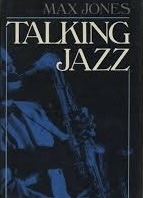
Talking Jazz | Max Jones
Max Jones, known affectionately as “the Boswell of bebop” by Time Out, was famed in England for nearly four decades of insightful, ardent writing on jazz. With this luminous collection of interviews, his work will at last be widely accessible to American readers. Here are the voices of jazz — Coleman Hawkins, Johnny Hodges, Billie Holiday, and Mary Lou Williams, to name but a few — in conversation with Jones, who could turn a casual chat into an indelible portrait and who gives American readers a view of these musicians they have never had before.
In this book, the author Max Jones tells the story of jazz from its roots in the African-American community to its development as an international art form. Jones covers a variety of topics, including the development of improvisation, the influence of Louis Armstrong and Duke Ellington, and the rise of bebop. He also provides historical context and examines the different styles of jazz, from ragtime to free jazz. This book is an excellent resource for students interested in learning more about jazz and its history.; B & W Photographs; 8vo; 293 pages
Talking Jazz: 1987 | Max Jones
Anchor Brendon Limited

Requisites
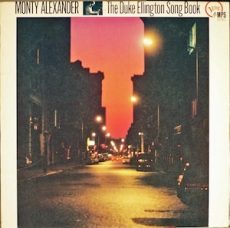
The Duke Ellington Song Book ~ Monty Alexander | By Eddie Carter
This morning’s selection from the library is by one of my favorite pianists. The Duke Ellington Song Book (MPS Records 821 151-1) by Monty Alexander is a sincere tribute to one of jazz’s legendary composers in a duet setting. Monty was born on June 6, 1944, in Kingston, Jamaica, and he discovered the piano at age four. He could pick out melodies by ear and became interested in jazz piano at fourteen. He attended DeCarteret College in Mandeville, then continued his education at Jamaica College. He later began playing in clubs and recording with Clue J & His Blue Blasters, subbing for his hero, Aubrey Adams, when he was unable to play. Monty Alexander is heard here on a Steinway Concert Grand Piano, and John Clayton is on bass. It was initially released in Germany, and my copy of this album is the 1984 U.S. Stereo release (Verve – MPS Series 821-151-1).
The album opener, I Let A Song Go Out Of My Heart by Duke Ellington, Irving Mills, Henry Nemo, and John Redmond, is a happy swinger that takes off with the duo’s spirited melody. The pianist continues dazzling on the first interpretation, then John flexes his muscles in a short statement before the theme’s reentry dissolves slowly. Sophisticated Lady by Duke Ellington, Irving Mills, and Mitchell Parish begins with a soft musical conversation with Clayton stating the tender theme, while Alexander’s pensive restraint supports him. Monty’s opening statement is especially moving and perfectly executed, and John responds with a gentle, understated reading, ahead of the melody’s thoughtful reprise and conclusion.
Things Ain’t What They Used To Be by Mercer Ellington and Ted Parsons was one of the Ellington orchestra’s most-played tunes, and the duo begins with a lively prance through the melody. Monty takes the solo and delivers a stimulating performance that builds to a peak before descending into the closing chorus. Up next is Love You Madly by Duke Ellington and Billy Strayhorn. Here, the duo provides another example of how the right notes delivered with impeccable timing can transform a classic into a fresh conversation between piano and bass. Their interplay is equally elegant and unhurried, allowing each verse to breathe and every nuance to shine into the theme’s restatement and soft ending.
Monty Alexander has always had a remarkable knack for selecting fresh material, steering clear of overplayed standards, and he does just that with Phil Moore’s Eastside, Westside. The duo opens with a thoughtful introduction and melody, with Alexander immediately making a memorable impact in his initial interpretation. Clayton responds with a subtle, tasteful bass line, then Monty brings everything together with a final flourish, leading into a gentle fadeout. The duo starts Side Two with In A Mellow Tone by Duke Ellington and Milt Gabler, and their introduction and jaunty melody are sure to get your body moving and your toes tapping. Monty takes the opening solo, showing off his considerable technical fluency, while John follows with a performance as enjoyable as a morning stroll in the sunshine.
Caravan, by Duke Ellington, Juan Tizol, and Irving Mills, offers Monty Alexander an expansive space for a brilliant solo performance. The pianist approaches the well-known tune with energetic enthusiasm, reimagining it through his own perspective, culminating in its reprise and conclusion. Just Squeeze Me, by Duke Ellington and Lee Gaines, expresses a longing for affection while also declaring unwavering love, even across distances. Clayton’s introduction gets things started, then Alexander joins in to complete the melody. Monty delivers the opening solo with lovely, sentimental melodic lines. John follows with a deep, thoughtful presentation until the duo gently revisits the theme, allowing the song to fade out slowly.
In A Sentimental Mood, by Duke Ellington, Manny Kurtz, and Irving Mills, is one of the most beautiful jazz standards ever written. Monty and John set a serene mood with a theme of refined grace. Alexander’s delicate touch during the sole solo showcases his remarkable talent for interpreting ballads filled with romantic feeling. Clayton adds a cozy, velvety layer under the piano, leading to a tender, heartfelt finale. The album’s cheerful closing note comes with Duke Ellington’s C Jam Blues, featuring Alexander and Clayton’s spirited opening. Alexander takes the spotlight with a lively, medium bounce that naturally swings, while Clayton adds some playful steps during a brief walk, and both musicians bring the song to a joyful end.
Hans Georg Brunner-Schwer was at the helm as producer and recording engineer for The Duke Ellington Song Book. The album’s sound quality is exceptional, creating a vivid listening experience that places the performers right in the sweet spot of your listening room with remarkable precision. Whether you're already familiar with Monty Alexander’s rich body of work or just discovering him, I highly recommend seeking out The Duke Ellington Song Book during your next record-shopping trip. This album delivers an outstanding introduction for new listeners and serves as a brilliant highlight for longtime fans!
~ C Jam Blues, Caravan, I Let A Song Go Out of My Heart, In A Mellow Tone, In A Sentimental Mood, Just Squeeze Me, Sophisticated Lady, Things Ain’t What They Used To Be – Source: JazzStandards.com © 2025 by Edward Thomas Carter
More Posts: choice,classic,collectible,collector,history,instrumental,jazz,music,piano
On The Bookshelf
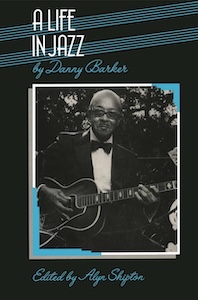
A Life In Jazz | Danny Barker
Since the 1950s, when Nat Hentoff and Nat Shapiro published Heah Me Talkin’ to Ya, an oral history of jazz which drew heavily on Danny Barker’s reminiscences, jazz buffs have waited impatiently for Barker’s full account of his life in jazz.
Danny Barker was born January 13, 1909 when jazz was still in its infancy, and by the time of his death he was known as both a master of the idiom and a guardian of its history. Storyteller, researcher, songwriter, performer, and mentor, Barker was a true griot – an elder statesman of jazz and an international representative of New Orleans and African American culture.
In more than 60 years as a working musician, he followed the evolution of jazz from its New Orleans roots to mainstream success during the swing era to canonization as America’s first wholly original art form. In his career as a songwriter, which yielded the hit Don’t You Feel My Leg, Barker combined traditional song forms with sly humor about sex and human nature.
More than any other jazz artist, he worked to document the music’s history and to tell the stories of its people. A Life in Jazz, first published in 1986 and edited by British jazz scholar Alyn Shipton, captures the breadth of Barker’s knowledge and the scope of his vision as a storyteller.
His carefully crafted set pieces range from hilarious to harrowing, and he shares memories of jazz greats such as Jelly Roll Morton, Cab Calloway, and Dizzy Gillespie. Barker’s prose reflects the freedom and creativity of jazz while capturing the many injustices, both casual and grand, of life as a Black man in mid-century America.
This illustrated edition of A Life in Jazz brings Barker’s autobiography back into print by the Macmillan Press Ltd., accompanied by more than 100 images that bring his story to life. Gwen Thompkins, host of public radio’s Music Inside Out, reflects on Barker’s legacy in her introduction, and the complete discography and song catalog showcase the breadth of Barker’s work.
Danny Barker died on March 13, 1994. Through his struggles, triumphs, escapades, and musings, A Life in Jazz reflects the freedom, complexity, and beauty of this thoroughly American, Black music tradition.
On The Bookshelf
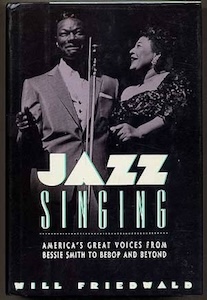
Jazz Singing | Will Friedwald
The four hundred and fifty five page book is a testament to America’s great voices from Bessie Smith to bebop and beyond. Friedwald has over the past two decades, emerged as the single most recognized authority on jazz singers. His liner notes have enhanced hundreds of vocal reissues, and his books and newspaper columns are equally perceptive.
As the title promises, Friedwald has broadened his scope to 210 singers that are not exclusively jazz but now include pop singers, such as Elvis Presley, Johnny Mathis and Patti Page. For serious jazz vocal fans, he gives us seminal performers Ella Fitzgerald, Sarah Vaughan, Louis Armstrong and Sinatra, whose analysis of specific albums is consistently enlightening. There are lesser lights-Jackie Paris, David Allyn, Edythe Wright, Irene Reid and several dozen others. The list also reminds us of Doris Day, Jack Jones, Steve Lawrence, Eydie Gormé, Judy Garland and Martha Raye.
Read at your leisure, dive in for one story or two and discover precious nuggets to add to your understanding of a time when jazz was king..