

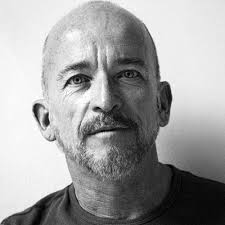
Jazz Poems
ALMOST BLUE
Chet Baker, 1929-1988
If Hart Crane played trumpet
he’d sound like you, your horn’s dark city
miraculous and broken over and over,
scale-shimmered, every harbor-flung hour
and salt-span of cabled longing,
every waterfront, the night-lovers’ rendezvous
This is the entrance
to the city of you, sleep’s hellgate,
and two weeks before the casual relinquishment
of your hold—light needling
on the canal’s gleaming haze
and the buds blaming like horns—
two weeks before the end, Chet,
and you’re playing like anything,
singing stay little valentine
stay
and taking so long there are worlds sinking
between the notes, this exhalation
no longer a voice but a rush of air,
brutal, from the tunnels under the river,
the barges’ late whistles you only hear
when the traffic’s stilled
by snow, a city hushed and
distilled into one rush of breath,
your, into the microphone
and the ear of that girl
in the leopard-print scarf,
one long kiss begun on the highway
and carried on dangerously,
the Thunderbird veering
on the coast road glamor
of a perfectly splayed fender,
dazzling lipstick, a little pearl of junk,
some stretch of road breathless
and traveled into… Whoever she is
she’s the other coast of you,
and just beyond the bridge the city’s
long amalgam of ardor and indifference
is lit like a votive
then blown out. Too many rooms unrented
in this residential hotel,
and you don’t want to know
why they’re making that noise in the hall;
you’re going to wake up in any one of the
how many ten thousand
locations of trouble and longing
going out of business forever everything must go
wake up and start wanting.
It’s so much better when you don’t want:
nothing falls then, nothing lost
but sleep and who wanted that
in the pearl this suspended world is,
in the warm suspension and glaze
of this song everything stays up
almost forever the long
glide sung into the vein,
one note held almost impossibly
almost blue and the lyric takes so long
to open, a little blood
blooming: there’s no love song finer
but how strange the change
from major to minor
everytime
we say goodbye
and you leaning into that warm
haze from the window, Amsterdam,
late afternoon glimmer
a blur of buds
breathing in the lindens
and you let go and why not
MARK DOTY
from Jazz Poems ~ Selected and Edited by Kevin Young

More Posts: book,classic,collectible,history,jazz,library,poet
Daily Dose Of Jazz…
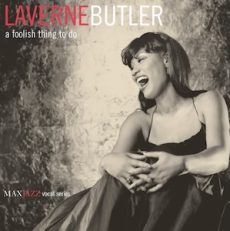
LaVerne Butler was born on February 25, 1962 in Shreveport, Louisiana. The daughter of saxophonist Scott Butler, she was extensively exposed to jazz and rhythm and blues music and with a lot of encouragement from her father.
Leaving Shreveport for New Orleans, Louisiana she attended the University of New Orleans. During this period LaVerne became a fixture in the city’s Dixieland and bebop venues singing with Ellis Marsalis, Alvin Batiste, Henry Butler ( no relation) and James Black, among others. A move to New York City in 1984 had her working as an English teacher, singing in clubs and studying with jazz veteran Jon Hendricks.
Her musical influences were Nancy Wilson and Sarah Vaughan. In 1992 she recorded her debut album No Looking Back for Chesky Records. Her sophomore album for the label was Day Dreamin’ , then planned on signing with Herbie Mann’s Kokopelli label in 1997, but that fell through when the company experienced financial problems. She then was brought into the MaxJazz label for two albums and finally landed with HighNote Records for her 2012 release Love Lost and Found Again.
Vocalist LaVerne Butler, who has yet to receive the recognition her talent deserves, continues to perform around the country.

More Posts: bandleader,history,instrumental,jazz,music,vocal
Daily Dose Of Jazz…
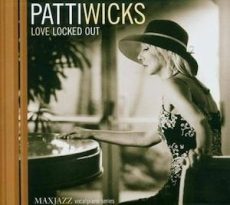
Patti Wicks was born Patricia Ellen Chappell on February 24, 1945 and began playing the piano at the age of three. She later attended the Crane School of Music at the State University of New York at Potsdam.
Influenced by Bill Evans, she began to perform professionally and moved to New York City, where she played in small ensembles. She founded her own trio featuring bassists such as Sam Jones, Richard Davis, Brian Torff, and Mark Dresser, and drummers Curtis Boyd, Louis Hayes, Mickey Roker, and Alan Dawson.
In the 1970s, Wicks moved to Florida where she worked as a musician with, among others, Clark Terry, Larry Coryell, Frank Morgan, Ira Sullivan, Flip Phillips, Anita O’Day, Rebecca Parris, Roseanna Vitro and Giacomo Gates.
As an educator she taught jazz piano at colleges and gave private lessons. In 1997, Patti released her debut album Room at the Top: The Patti Wicks Trio. She was a guest on Marian McPartland’s NPR program Piano Jazz.
Vocalist and pianist Patti Wicks died on March 7, 2014.
More Posts: bandleader,history,instrumental,jazz,music,piano,vocals
Requisites
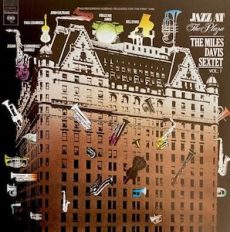
Jazz at The Plaza, Volume 1 ~ The Miles Davis Sextet | By Eddie Carter
Submitted for your approval this morning is the first of two unique 1973 albums, capturing an unforgettable event. Jazz at The Plaza, Volume 1 (Columbia C 32470) is a live recording of a jazz party hosted by Columbia Records in The Persian Room of New York City’s Plaza Hotel on September 9, 1958. This celebration represented a significant moment in Columbia’s history, acknowledging the impressive talent of jazz artists on the label’s roster. The guests enjoyed a performance by The Miles Davis Sextet during the first set: Miles Davis on trumpet, Julian “Cannonball” Adderley (tracks: A1, B2) on alto sax, John Coltrane (A1, B1, B2) on tenor sax, Bill Evans on piano, Paul Chambers on bass, and Jimmy Cobb on drums. My copy is the original U.S. Stereo release.
The album opener is misidentified as Jazz at The Plaza on the back cover and record label, but it is Thelonious Monk’s Straight, No Chaser. The song’s brisk pace sets the stage for the sextet’s lively introduction and theme. Miles delivers a vigorous opening statement, followed by John’s adventurous interpretation. Cannonball provides an energetic solo next. Bill makes a concise contribution before the ensemble returns for the finale and a brief presentation of the sextet’s theme. The pace slows for Bill’s introduction to the Rodgers and Hart classic My Funny Valentine. This highlight of the quartet sees Miles switching to the mute for the gentle melody and a beautiful solo. Bill follows with an enchanting statement, and Paul walks delicately toward the closing chorus and sensitive climax.
If I Were a Bell by Frank Loesser opens the second side with a short piano introduction that segues into the ensemble’s medium melody. Miles takes the lead with an agile, muted opening statement. John continues wailing in a spirited performance. Bill sinks his teeth into a captivating interpretation next, leading to the theme’s restatement and conclusion. Oleo by Sonny Rollins raises the tempo for Miles’s muted introduction, which leads to the sextet’s quick theme. Miles starts the opening statement with infectious heat, while John fuels the following performance with electrifying notes. Cannonball launches into a furiously hard-driving solo next, and then Bill keeps the fire burning with a concise comment. Paul has his turn in a short interlude before Miles guides the way to a speedy culmination.
Teo Macero and Irving Townsend produced Jazz at The Plaza, Volume 1, with recording engineer Russ Payne capturing the event for posterity. While the sound quality may not meet Columbia’s usual high standards, its unique charm conveys the exhilarating energy of the group’s performances. After listening to this album, I’ll be looking to find its companion, Jazz at The Plaza, Volume 2, featuring Duke Ellington and His Orchestra, Billie Holiday, and Jimmy Rushing. If you appreciate the trumpeter’s work from the fifties, I recommend exploring Jazz at The Plaza, Volume 1 by The Miles Davis Sextet, on your next record hunt. It offers a compelling snapshot of the ensemble’s fiery live performance and should make a worthy addition to any jazz enthusiast’s library!
Postscript: The owners of the long-out-of-print Mosaic Records box set, The Complete Columbia Recordings of Miles Davis With John Coltrane, also has a copy of Jazz at The Plaza, Volume 1.
~ Jazz at The Plaza, Volume 2 (Columbia C 32471), The Complete Columbia Recordings of Miles Davis With John Coltrane (Mosaic Records MQ9-191) – Source: Discogs.com
~ Straight, No Chaser – Source: JazzStandards.com
~ If I Were a Bell – Source: Wikipedia.org
© 2025 by Edward Thomas Carter

More Posts: choice,classic,collectible,collector,history,instrumental,jazz,music,trumpet

Daily Dose Of Jazz…
Barry Martyn was born Barry Martyn Godfrey in London, England on February 23, 1941. He began learning drums in 1955 and was leading his first band the following year. His first recordings were made in 1959.
His first visit to New Orleans, Louisiana was in 1961 where he studied under Cie Frazier, and founded Mono Records. He toured Europe with many famed New Orleans jazz personnel, including George Lewis, Albert Nicholas, Louis Nelson, Captain John Handy, and Percy Humphrey.
Moving to Los Angeles, California in 1972 he founded the Legends of Jazz, an ensemble which made several worldwide tours and recorded extensively. Returning to New Orleans in 1984 he worked with George Buck, reissuing much of the Circle Records back catalogue. He played with Barney Bigard in 1976, and recorded many dates as a leader.
Drummer Barry Martyn died on July 17, 2023 at the age of 82.
More Posts: bandleader,drums,history,instrumental,jazz,music