
Daily Dose Of Jazz…
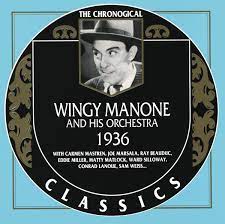
Conrad Lanoue was born on October 18, 1908 in Cohoes, New York. He started on piano when he was ten years old and attended the Troy Conservatory.
Beginning his career in his 20s, he played piano at hotels in his hometown. Conrad recorded with Red McKenzie in 1935, and under the combined leadership of trumpeter Eddie Farley and trombonist Mike Riley in 1935–36. During the 1930s he worked for Louis Prima, then Wingy Manone from 1936 to 1940 followed by playing with pianist Joe Haymes.
From the 1940s to the 1960s, he was a member of bands led by Lester Lanin, Charles Peterson, and Hal Landsberry. He also wrote big band arrangements. Pianist and arranger Conrad Lanoue, who never recorded as a leader, retired in 1968 due to illness and transitioned in Albany, New York on October 15, 1972.

Three Wishes
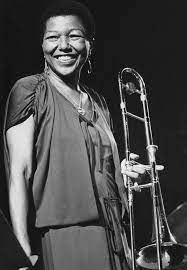
While in conversation with Melba Liston, girl talk turned to the granting of three wishes and she told Pannonica that she would wish for:
- “One thing I’m concerned about is the youth music program. Kids don’t have the opportunity they should have – kids with talent, I mean. There’s an awful lot of talking, but not enough doing. There should be a workshop, or a place where they’d have a chance to learn something besides rock “n’ roll. I would love to be able to do something about that.”
- “The other things are personal…. I wish I had lots of money.”
- “I wish I had equal opportunity according to energy, ability, and desire. And sex. Mainly sex.”
*Excerpt from Three Wishes: An Intimate Look at Jazz Greats ~ Compiled and Photographed by Pannonica de Koenigswarter

More Posts: arranger,baroness,composer,history,instrumental,jazz,music,pannonica,three,trombone,wishes
Daily Dose Of Jazz…
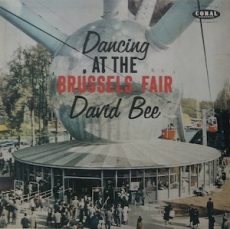
David Bee was born on October 17, 1903 in Brussels, Belgium. He was a multi-instrumentalist adept on clarinet, harp, piano, and alto and tenor saxophone. For a year in 1924 he played with the group Bistrouille ADO before co-founding an ensemble with Peter Packay called Red Beans. The group toured widely throughout western Europe.
After returning to Belgium, David joined Robert De Kers’s band, and also played in Paris, France at Chez Florencewith Benny Carter and Willie Lewis. He recorded with Gus Deloof in the early Forties and after World War II he played with Robert Bosmans and Chas Dolne later in the decade. He led his own bands and groups at various times in the 1950s and continued recording late into the decade and the 60s.
As a composer, Bee pennedr the tunes High Tension recorded by Luis Russell) and Obsession recorded by Ted Heath and Reg Owen.
Clarinetist, harpist, pianist, alto and tenor saxophonist, arranger and composer David Bee, also known as Ernest Craps, Ernie Sparks, and Manuel Travo, transitioned in 1992.
More Posts: arranger,clarinet,composer,harp,history,instrumental,jazz,music,saxophone

Daily Dose Of Jazz…
Anthony Kerr was born in Belfast, Northern Ireland on October 16, 1965. From 1981 till 1984 he received his education at the Belfast School of Music. Moving to New York City after graduating, he studied vibes and marimba with David Friedman and Kenny Werner. He won a scholarship to the New School of Jazz and Contemporary Music in 1987.
Returning to Ireland, Anthony went on to work as a percussionist with the RTE Symphony Orchestra. There was a period of time when he was employed with the UK’s National Theater.
Kerr later worked as a jazz musician with John Taylor, Louis Stewart, Peter King, Norma Winstone, Mike Westbrook, a bandleader he toured with around Europe. He worked with Charlie Watts and Georgie Fame, while simultaneously leading his own group and conducting jazz workshops in Belfast.
He toured with the Irish Youth Jazz Orchestra and worked with BBC Big Band and collaborated with Ian Shaw and a saxophonist Dale Barlow. He leads his own quartet and the Mallet Band with Justin Woodward, Stewe Brown and Geoff Gascoyne.
In 1994 Kerr was voted best instrumentalist at the British Jazz Awards and the following year received the Young Jazz Musician of the Year. He also won nominations in the Rising Star category in 1995, 1996 and 1998.
His first album “First Cry” was made in collaboration with singer / lyricist Jacqui Dankworth. His second album, “Now Hear This” which was recorded live at Ronnie Scott’s Club, was released in 1997.
Vibraphonist Anthony Kerr currently teaches vibraphone and jazz improvisation at the Royal College of Music in London, produces and records music from his home studio in Hertfordshire, England.
More Posts: bandleader,educator,history,instrumental,jazz,music,vibraphone
Requisites
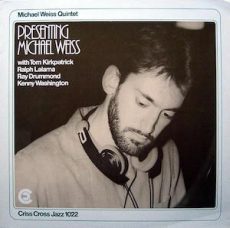
Presenting Michael Weiss ~ Michael Weiss Quintet | By Eddie Carter
It’s always a pleasure when I discover a new pianist, and this morning’s subject is a recent addition to my library by a young man named Michael Weiss. Presenting Michael Weiss (Criss Cross Jazz 1022) is his first album as a leader and was released in 1986. Michael was born in Dallas, Texas, and began studying music at Indiana University, where he earned his degree. Michael later moved to New York, where he played with Jon Hendricks and as a sideman in some of the best jazz groups. He’s joined here by Tom Kirkpatrick on trumpet, Ralph Lalama on tenor sax, Ray Drummond on bass and Kenny Washington on drums. My copy is the original Netherlands Stereo album.
My Melancholy Baby by Ernie Burnett and George A. Norton starts with the quintet’s mid-tempo theme. Tom leads off with a relaxing interpretation. Ralph gets to the song’s heart in the next reading. Michael responds with a comforting solo. Ray makes a concise comment, and the front line engages in a conversation ahead of the finale. Washington introduces the pianist’s Après Vous, segueing into the ensemble’s brisk melody. Lalama takes the song’s first energetic flight, followed by Kirkpatrick’s dazzling tone in the second solo. Weiss heads to new heights next, and Washington delivers the finale in an exchange with both horns until the conclusion.
Enigma is a beautiful ballad by J.J. Johnson that Michael brings to life with a passionately tender introduction, which blossoms into the song’s gorgeous opening chorus. The pianist has the spotlight to himself in the song’s only solo and delivers an exceptionally gentle reading preceding the ensemble’s delicate climax. Side Two starts with the tempo moving back upward for Tom Kirkpatrick’s blues, B.G.O. After the quintet’s leisurely paced theme, Kirkpatrick establishes a happy groove on the opening solo. Lalama returns the compliment on the next reading, and then Weiss takes a delightful turn. Washington shares the finale with the front line, leading to the reprise and finish.
Riverbed by Joe Zawinul is a very pretty song and the album’s only trio performance. Michael takes the lead on the melody and opening statement. Ray comes in next for a few flowing lines, and Kenny keeps perfect time in the closer before the trio takes the song out. Gallop’s Gallop is one of Thelonious Monk’s little-known tunes, and the quintet pays homage to him with a quirky melody reminiscent of Monk himself. Weiss steps up first for a delightful performance, and then Kirkpatrick has a bit of fun on the following solo. Lalama serves up a delicious reading next. Drummond takes a short walk with the bass, and Washington provides the final treat into the closing chorus.
Gerry Teekens produced Presenting Michael Weiss, and Rudy Van Gelder was the recording engineer. The album’s sound quality is excellent, with an outstanding soundstage that’s stunning from start to finish and gives the listener the best seat in the house as the musicians are playing. Michael Weiss recorded five releases as a leader and appeared on just a few more as a sideman. However, if you’re in the mood for post-bop and are a jazz piano fan, I invite you to check out Presenting Michael Weiss on your next record-shopping trip. It’s a wonderful album of great playing and tight musicianship that’s sure to whet any jazz fan’s appetite to hear more!
~ My Melancholy Baby – Source: JazzStandards.com © 2023 by Edward Thomas Carter

More Posts: choice,classic,collectible,collector,history,instrumental,jazz,music,piano