

Requisites
Heavy Soul ~ Ike Quebec | By Eddie Carter
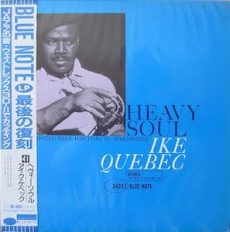
A few nights ago, I was thinking about my mom and reflecting on some of the records she loved to play while cooking dinner when my sister and I were younger. I listened to one of her favorite albums by tenor saxophonist Ike Quebec, which led me to this morning’s choice from the library. Heavy Soul (Blue Note BLP 4093/BST 84093) is a quartet date and the third of four records the label released in 1962. His bandmates on this record are Freddie Roach on organ, Milt Hinton on bass, and Al Harewood on drums. Their first appearance together was on an earlier release that year; It Might As Well Be Spring. My copy is the 1990 Toshiba-EMI Limited Japanese Stereo reissue sharing the original catalog number.
Side One kicks off with the first of three originals by Ike Quebec. Acquitted is a catchy tune that begins with a lively groove for the quartet’s theme. Ike kicks off the solos with a driving rhythm, and Freddie treats the listener to a zesty performance. The leader returns to share a few more thoughts preceding the ending theme, fading into nothingness. Just One More Chance by Sam Coslow and Arthur Johnston first appeared in the 1931 featurette, One More Chance. Quebec and company make an indelible impression on the melody, then the saxophonist leads off with a stylish performance. Freddie adds a deep sense of nostalgia in the second statement, leading to the tenor’s elegant conclusion.
Que’s Dilemma, also by Quebec, moves the beat upward for the saxophonist’s agile melody. He begins the song’s only solo with Milt and Al in the background, Freddie joins the festivities next, and Ike completes his invigorating statement into the closing chorus and disappearance. Brother, Can You Spare A Dime? by Jay Gorney and E.Y. Harburg poignantly gives a glimpse into the times during the Great Depression. The quartet presents the melody with a sad simplicity that serves as a springboard into Ike’s deeply affecting opening solo. The following presentation by Freddie is equally gentle and stunningly executed with Milt and Al’s assistance. Ike sums up the song’s story with a gorgeous reprise and finish.
Side Two gets underway with George, and Ira Gershwin’s, The Man I Love. The ensemble states the theme slowly; next, the tempo quickens for Ike to wail on the song’s only interpretation. The group slows the beat down for the closing chorus and finale. Ike’s third tune, Heavy Soul, is a down-home blues that commences with an introduction, first by Milt. Then, Ike, Al, and Freddie enter with subtly conceived statements to complete the theme. Ike draws an exceptionally tender tone from his tenor sax in the first presentation. Freddie maintains a therapeutic mood with one of his most relaxed performances. Milt has the last word and effectively walks toward the saxophonist’s ending theme, which disappears into oblivion.
I Want a Little Girl by Murray Mencher, and Billy Moll is a beautiful ballad that hasn’t been over-recorded. Ike and the rhythm section establish an affectionately exquisite theme, and he continues telling a sensitive story in the opening interpretation. Freddie emerges next with a delicately expressed reading, then Ike returns to add a heartfelt exclamation preceding the quartet’s return for the gentle climax. The album’s closing track, Nature Boy by Eden Ahbez, is a two-instrument conversation between tenor and bass. Ike creates an enchanting illustration on the opening and closing melody, and Milt provides supportive warmth and sensitivity into a charming finale. Alfred Lion produced the initial session, and Rudy Van Gelder was the recording engineer.
The reissue’s sound quality is fantastic, with a spacious soundstage that’s clear and detailed. Toshiba-EMI has also done an excellent job on the remastering, and the vinyl is quiet until the music begins. Ike Quebec was an accomplished dancer and pianist before taking up the tenor sax in his twenties. In 1940, his recording career began with the Barons of Rhythm, and he’s performed with Cab Calloway, Benny Carter, Roy Eldridge, Ella Fitzgerald, Coleman Hawkins, Hot Lips Page, and Trummy Young. Most of Ike’s discography as a leader and sideman is on Blue Note, and he also served as an arranger and talent scout for the label. He occasionally recorded during the fifties due to heroin addiction but began a comeback in 1959. Four years later, he lost his battle with lung cancer on January 16, 1963, at age forty-three.
If you’re in the mood for mellow tenor sax, I invite you to add Heavy Soul to your list the next time you are out vinyl shopping. It’s an excellent place to start discovering the music of Ike Quebec and a delightful album perfect for late-night listening or long drives with the windows down. The fast numbers crackle with excitement, and the slow tunes reveal the depths of Ike Quebec’s creative ingenuity, resulting in an easy choice for any jazz lover’s library that’s hard to beat!
~ It Might As Well Be Spring (Blue Note BLP 4105/BST 84105) – Source: Discogs.com ~ Nature Boy, The Man I Love – Source: JazzStandards.com ~ Ike Quebec, Brother, Can You Spare a Dime? – Source: Wikipedia.org ~ © 2022 by Edward Thomas Carter

More Posts: choice,classic,collectible,collector,history,instrumental,jazz,music,saxophone
Daily Dose Of Jazz…
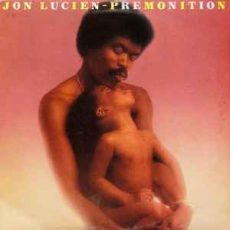
Lucien Leopold Harrigan, professionally known as Jon Lucien was born on January 8, 1942 in Tortola in the British Virgin Islands but was raised in St. Thomas. His father was a musician whose main instrument was a three-coursed Latin guitar-like chordophone known as a Tres. As a teenager, he played bass in his father’s band.
During the 1960s he moved to New York City and while performing at a party, he was discovered by an executive from RCA. He released his debut album (I Am Now in 1970 with a mix of pop and jazz standards. His sophomore album, Rashida, contained only songs written by Lucien, with Lady Love receiving radio airplay, and Dave Grusin receiving a Grammy Award nomination for his arrangements. He went on to record two albums for Columbia and made guest appearances on Yesterday’s Dreams by Alphonso Johnson and Mr. Gone by Weather Report.
After his daughter drowned in 1980 Jon spent much of the decade struggling with drug addiction. He returned to music in the Nineties with the albums Listen Love and Mother Nature’s Son. When a second daughter died tragically in the crash of TWA Flight 800, Lucien dedicated his album Endless Love to her.
Vocalist and composer Jon Lucien transitioned from respiratory failure in Orlando, Florida on August 18, 2007.

More Posts: bandleader,history,instrumental,jazz,music,vocal
Daily Dose Of Jazz…
Bob Zurke came into the world as Boguslaw Albert Zukowski on January 7, 1912 in Hamtramck, Michigan. By the age of 16 he was already using the name Bob Zurke professionally when he first recorded with a group led by pioneering female jazz bassist Thelma Terry. At that time, Zurke also began to work as a copyist for the Detroit-based booking agency run by Jean Goldkette.
Through the end of 1936, he worked in various Detroit, Michigan clubs, mostly as a band pianist, but he occasionally went on tour with other groups. During this period he developed a long friendship with pianist Marvin Ash, who would later go on to record some of Zurke’s compositions.
1937 saw Bob was hired by bandleader Bob Crosby to fill in for Joe Sullivan, then ailing with tuberculosis and it was here that he gained notice, contributing arrangements to the band’s book and as a featured soloist.
As an arranger his arrangement of Meade Lux Lewis’ Honky Tonk Train Blues, became a hit. In 1938 he was named the winner in the piano category in the DownBeat Reader’s Poll. By 1939 Sullivan was back with the Bob Crosby Orchestra and Zurke subsequently worked with the William Morris Agency to form his own band. They debuted at an RCA Victor recording session that same year as Bob Zurke and his Delta Rhythm Orchestra. His alcohol dependency, alleged drug use and unreliability and volatility led to the group disbanding.
After a period of wandering from job to job Zurke settled in Los Angeles, California in mid-1942 and began an engagement at the Hangover Club in Los Angeles that he held until the end of his days. In 1943, he made one final recording, synchronizing an original piano part to the Walter Lantz cartoon Jungle Jive (in the Swing Symphony series), one of his most difficult and challenging solos.
He published two folios of jazz piano solos and several sheet music editions of single pieces; in addition to that, 14 original compositions from Zurke are known to exist.
Pianist, arranger, composer and bandleader Bob Zurke, who was considered one of the finest boogie~woogie pianists of the time, collapsed at the Hangover Club and was taken to the hospital where he transitioned on February 16, 1944 from complications of pneumonia, aggravated by acute alcohol poisoning. He was 32.
More Posts: arranger,bandleader,composer,history,instrumental,jazz,music,piano
Daily Dose Of Jazz…
Lee Abrams was born Leon Abramson on January 6, 1925 in New York City, New York and was raised in Brooklyn, New York. His father played the violin and clarinet, his brother Ray played tenor saxophone.
Joining the United States Army in 1943 he spent three years until he was discharged in 1946. During his career, Abrams played with Roy Eldridge, Eddie Heywood, Andy Kirk, Hot Lips Page, Lester Young, Illinois Jacquet, Horace Silver, Wynton Kelly, Al Haig and others.
On 52nd Street, he played with Coleman Hawkins, Eddie Lockjaw Davis and Jay Jay Johnson. Drummer Lee Abrams transitioned on April 20, 1992 in New York City.
More Posts: drums,history,instrumental,jazz,music

Daily Dose Of Jazz…
Cees See was born on January 5, 1934 in Amsterdam, Netherlands. He worked in the 1950s with Freddy Logan and Jack Sels, however by the early Sixties he was performing with Rolf Kühn, Pim Jacobs, and Herman Schoonderwalt. He also played with an ensemble formed for Sender Freies Berlin, whose members included Herb Geller and Jerry van Rooyen.
In the second half of the 1960s he played with Teddy Wilson, Klaus Doldinger, Volker Kriegel, Dusko Goykovich, Nathan Davis, and Jan Hammer. He was a member of the New Jazz Trio with Manfred Schoof and Peter Trunk from 1970 to 1972. In the early 1970s he continued to work with Kriegel and Goykovich, as well as with Wolfgang Dauner and Chris Hinze.
Drummer Cees See transitioned on December 9, 1985 in The Hague, Netherlands.
More Posts: drums,history,instrumental,jazz,music