

Daily Dose Of Jazz…
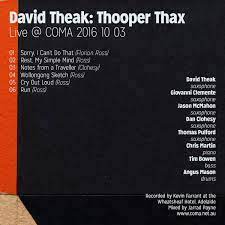
David Theak was born on November 10, 1970 in Sydney, New South Wales, Australia and was raised in a house of impromptu parties. His childhood found him listening to his downstairs neighbor teaching piano every afternoon which led to lessons and a piano for Christmas. His bandmistress at Mona Vale PS introduced him to the saxophone but paid his dues on the baritone horn for a couple of years. After a brief stint at the Conservatorium High School, he returned to the local high school with some enthusiastic music teachers. They encouraged us to improvise and created opportunities for us to play in jazz and rock bands.
he following years saw David practicing, composing, gigging, releasing his own albums and organizing tours of Australia & Europe for his quartet, theak-tet, but with limited opportunities in the 90’s, he became involved with a musician led organization, the Jazzgroove Association, which received NSW and Federal government funding that allowed presentation of new music every week as well as create a record label and form an original creative jazz orchestra, The Jazzgroove Mothership Orchestra.
He went on to become involved with SIMA, WAYJO and the formation of the Australian National Jazz Orchestra and ANJO Youth Big Band. David has been running a boutique international jazz festival for the past five years, is currently a Senior Lecturer in Jazz at the Sydney Conservatorium of Music, Artistic Director of the Australian National Jazz Orchestra, an advisory panel member of the Western Australian Youth Jazz Orchestra, President of the Sydney Improvised Music Association and Artistic Director of the Sydney Con Jazz Festival.
Jazz saxophonist, composer, bandleader, educator, festival director and jazz protagonist, David Theak, who continues to compose, perform and tour, is the artistic director of the Jazzgroove Mothership Orchestra and collaborates with a who’s who of international jazz musicians.

More Posts: bandleader,composer,educator,history,instrumental,jazz,music,saxophone
Daily Dose Of Jazz…
Brian Leake was born November 9, 1934 in South Wales, Wales. He first played the clarinet in Mike Harris’ jazz band while studying architecture. After completing his military service, he moved to London, England where he worked full-time as a salesman. He was also active in the British trad jazz scene from the early 1960s and his first recordings were made in 1962 with Mick Mulligan and George Melly on At the Jazz Band Ball.
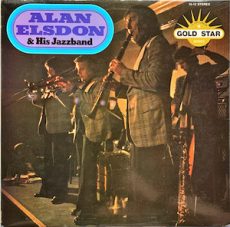
He also played with Dick Charlesworth on P&O ships and in 1964 he appeared on the BBC program Jazz Club with Charlesworth and His City Gents. By the end of the decade it was owned by Alan Elsdon & His Jazz Band. Leake led a mainstream jazz sextet called Sweet & Sour with the bassists Paul Bridge and Ron Rubin were members. He led the Al Fresco Marching Band, in which he played alto saxophone.
He was involved in recordings by The Nottingham Barbers’ Shop Quartet and singer Clinton Ford. Recordings of Leake’s BBC radio appearances from 1979 to 1990 appear on the album Benign Jazz. As a pub pianist, he appeared in an episode of the television series Nick Lewis, Chief Inspector .
Pianist, saxophonist, clarinetist Brian Leake, who composed traditional jazz, transitioned on November 10, 1992.
More Posts: bandleader,clarinet,history,instrumental,jazz,music,piano,saxophone

Three Wishes
When Nica queried Budd Johnson as to what he would wish if given the opportunity to have three wishes granted and he related this to her:
-
- “That’s a very good question. First of all, I would love to play my instrument – I mean, give it all I have to give. I would love to get recognition. And play my horn the way I know I could – and it’s just me, the reason, if I don’t! I would really love to play as well as I think I can.”
- “This may sound very corny, but I have a very wonderful wife, and I would like to make her very happy. The only way I think I could do this is: get with that instrument and really play it, so I could make the money to do the things I want to do for her.”
- “I want recognition amongst my friends. I crave sincere friendship. I do have a lot of friends, but I think this might bring us closer together. I seem to have lost track of all them. I had to go my way, reasons… everybody had to do what they had to do.
This is how you get separated. When I used to live up to 152nd Street, They all used to come up to my house, Monk, Bird. They all used to come by and we exchange ideas, and they would say, ‘Write this down for me.’ They would hum it, and I would write it down. They remember my son when he was a little baby in the crib! And I miss all of them.
The reason I put that first is that if I were able to master the horn – I guess nobody can have all this – I would have all my friends, be able to visit them, and be around. I have a lot of dear friends who have gone to the top. And they still like me. But they are busy and I am still scuffling! It’s a funny thing. The better you get, you travel in different circles, automatically. I hope someday to attain all this. This is all I know, the music. All this is one thing.”
*Excerpt from Three Wishes: An Intimate Look at Jazz Greats ~ Compiled and Photographed by Pannonica de Koenigswarter
More Posts: baroness,clarinet,history,instrumental,jazz,music,pannonica,saxophone,three,wishes
Daily Dose Of Jazz…
Warren Battiste was born on November 8, 1925 in New Orleans, Louisiana and was taught to play the guitar by his father, a banjoist at Preservation Hall. He took four years of instruction at Greenwald Music School in his hometown. Performing at a number of jazz clubs on Bourbon Street, he appeared in the film Shy People with Jill Clayburgh and Barbara Hershey.
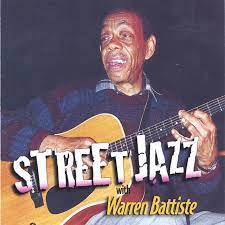
As an educator Battiste taught music at Wequachie High School, Essex County College and the Newark Art Center in Newark, New Jersey. He has performed with George Benson, The Platters, The Inkspots, Frank Foster, Barry Harris, Woody Shaw and Illinois Jacquet, among others. Releasing his debut album Street Jazz in 2001, recorded his sophomore release Just Friends three years later and then his album Quiet Storm in 2007.
Guitarist Warren Battiste, who also plays bass, banjo and piano, has received the Lifetime Achievement Award in Jazz from the New Orleans Jazz and Heritage Festival, and was selected as a Jazz All Star in 2000 from New Orleans Magazine.
More Posts: bandleader,banjo,bass,guitar,history,instrumental,jazz,music,piano
Daily Dose Of Jazz…
Joe Rushton was born in Evanston, Illinois on November 7, 1907. He started out playing clarinet and all of the other standard saxophone varieties, and was occasionally recorded with these other instruments. Settling on the bass saxophone, through the early to mid Forties he worked with Ted Weems, Jimmy McPartland, Bud Freeman, Floyd O’Brien, Benny Goodman, and Horace Heidt.
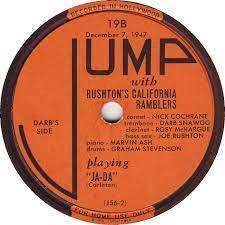
Joining Red Nichols’s Five Pennies in 1947 became a musical relationship and collaboration that went well into the early 1960s. He recorded six sides for Jump Records in 1945/47, but otherwise appears on record only as a sideman.
Bass saxophonist Joe Rushton, who is one of the best-known jazz performers to concentrate on bass saxophone, aside from Adrian Rollini, which he played from 1928. transitioned on March 2, 1964, in San Francisco, California at the age of 56.
More Posts: bandleader,history,instrumental,jazz,music,saxophone