

Daily Dose Of Jazz…
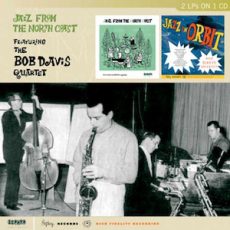
Bob Davis was born on July 26, 1927 in Cosmos, Minnesota and was directly inspired by the efforts of his mother, a pianist who frequently hit the road with touring bands. He began his music career as a drummer and by age 13 had been absorbed into a family band. Leaving home meant not only no longer backing up his mother, but a chance to play piano himself. By the age of 18, his piano styles were ahead of his time and he was playing improvisational jazz with some of the greats.
Davis spent a couple of years gigging with Herbie Fields prior to starting his own group, which was active through the ’50s and recorded for several small labels, The group featuring fellow Minneapolis drummer Bill Blakkestad gigged frequently around the Midwest, including Chicago, Illinois. Though influenced by Oscar Peterson and Bud Powell, he saw advantages in Nashville and established a relationship with guitarist and producer Chet Atkins on the 1953 Jazz from the Hills project that led to other session work.
He recorded three great albums, in addition to recording with Sarah Vaughn, Al Hirt, Dizzy Gillespie. He also was musical director for Playboy Clubs, taught as a music college & high school professor, and was a promoter and agent for music giants such as the Jacksons and Tina Turner. He continued playing jazz and ballads in concerts and clubs into his older years while living most of his life in Miami, Florida. After retiring at the age of 69, Bob continued to play incomparable jazz feats.
In his last days, pianist, educator, promoter and agent Bob Davis retired from music, suffering from bone cancer which robbed him of the joy of playing music.

More Posts: bandleader,history,instrumental,jazz,music,piano
Daily Dose Of Jazz…
Darnell Howard was born on July 25, 1895 in Chicago, Illinois and began playing violin at age seven, picking up clarinet and saxophone later in his youth. He began playing professionally with John H. Wickcliffe’s Ginger Orchestra from 1913 to 1916.
Moving to New York City in 1917, Darnell played and recorded as a violinist with W. C. Handy, then headed back to Chicago, where he led his own band, played with Charlie Elgar before joining James P. Johnson’s Plantation Days Band, which toured London, England in 1923. The following year he toured Europe again as a member of the Singing Syncopators that also played in Shanghai later in the decade.
His Chicago years saw him playing with Carroll Dickerson, King Oliver, and Erskine Tate, Jerome Carrington, Dave Peyton and Earl Hines. He led a quartet in 1928, but his jazz violin is featured on the Hines band’s February, 1933 recording of the Earl Hines/Jimmy Mundy swing composition Cavernism.
In the late 1930s, Howard was freelancing into the Forties and playing with Fletcher Henderson and Coleman Hawkins, and putting together another band in Chicago from 1943 to 1945. He would go on to play with Kid Ory in California for part of 1945, then returned to Chicago and back again in 1948 with Muggsy Spanier until 1953. His only recordings as a leader were done while he worked with Bob Scobey in 1950, amounting to only four sides.
Through the 1950s he played with Jimmy Archey, rejoined Earl Hines to play Dixieland in San Francisco, California and recorded with Don Ewell on his 1956–1957 albums. Sometime after 1962 Darnell suffered a prolonged illness and after recuperating he played with Elmer Snowden, Burt Bales, and his own groups. His final tour in 1966, was in Europe as a member of the New Orleans All-Stars, then he fell ill again. Clarinetist, violinist and alto saxophonist Darnell Howard transitioned on September 2, 1966 in San Francisco.
More Posts: bandleader,clarinet,history,instrumental,jazz,music,saxophone,violin
Requisites
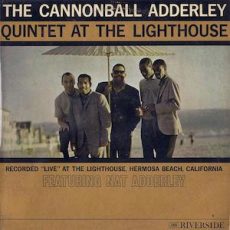
The Cannonball Adderley Quintet at The Lighthouse | By Eddie Carter
One of the things I’ve always loved about alto saxophonist Cannonball Adderley was his uncanny rapport with an audience during the group’s live performances. Those who were in attendance could feel they were about to hear something special. This morning’s choice from the library is a 1960 album, The Cannonball Adderley Quintet at The Lighthouse (Riverside RLP 344/RLP 9344). It’s the ensemble’s second live album following their successful date in San Francisco a year earlier. Cannonball’s joined on stage by Nat Adderley on cornet, Victor Feldman on piano, Sam Jones on bass, and Louis Hayes on drums. My copy used in this report is the original US deep groove Mono release.
Side One opens with Cannonball’s Sack O’ Woe, a catchy little number that starts this jazz party on the quintet’s infectious theme. The leader takes the first bite of this juicy tune. Nat comes in next, clicking on all cylinders. Victor serves up a solidly swinging solo, then Sam gets into a soulful groove leading to the reprise and fadeout. Big P by Jimmy Heath is dedicated to his big brother, Percy. After Cannon’s introduction, the quintet gets busy with the front line leading the charge on the melody. Cannonball lights a fuse of creative inspiration on the lead solo, then Nat works his magic on the second statement. Victor follows with a reading that’s just plain fun, then the front line speaks in succession ahead of the ensemble’s exit.
The first side finale is Blue Daniel, a pretty waltz by trombonist Frank Rosolino that comes to life with the group’s beautiful theme in unison. Cannonball begins with a charming interpretation of graceful elegance. Nat responds with a wonderful feeling of peaceful serenity. Victor delivers a delicately gentle finale before the ensemble reappears for the ending. Side Two begins on an upbeat note with a tune from the pen of Victor Feldman, Azule Serape. The rhythm section provides a brisk foundation for the front line to state the melody. Cannonball takes flight first with a happy opening statement. Nat’s cornet is right on the money on the following solo. Victor cooks on the climax leading to the closing chorus.
Exodus is credited to Vic Stanley, but it’s Victor Feldman’s tune. It turns the temperature upward a few notches with the ensemble’s spirited theme. Cannonball starts with an enthusiastic opening interpretation. Nat takes the next solo aggressively, and Victor is equal to the task on the closer preceding the quintet’s exit. The set closes on one of Cole Porter’s most recorded songs, What Is This Thing Called Love? The song gets underway with the ensemble’s quick melody. Cannonball kicks off the solos with a rapid reading. Nat shifts into high gear on the second solo. Victor has his say next with an exciting statement of concentrated heat, and Louis shares a lively exchange with Cannonball leading to the climax.
The Cannonball Adderley Quintet at The Lighthouse was produced by Orrin Keepnews. Wally Heider was the recording engineer, and the album was mastered by Jack Matthews. The sound quality is exquisite with an impressive soundstage placing the listener in the club audience as the quintet performs. During his time at Riverside, the quintet and later sextet released three other live albums. All are excellent in my opinion, and if you’re a fan of Cannonball or Nat Adderley, they’re well worth the effort for a spot in your library. If you’re in the mood for a great live album, and only know of their work on Mercy, Mercy, Mercy, I invite you to check out The Cannonball Adderley Quintet at The Lighthouse. It’s a wonderful performance where the band’s on fire and the audience is enjoying every moment!
~ Jazz Workshop Revisited (Riverside RM 444/RS 9444), Mercy, Mercy, Mercy (Capitol Records T 2663/ST 2663), The Cannonball Adderley Sextet In New York (Riverside RLP 404/RLP 9404), The Cannonball Adderley Quintet In San Francisco (Riverside RLP 311/RLP 1157) – Source: Discogs.com ~ What Is This Thing Called Love? – Source: JazzStandards.com © 2022 by Edward Thomas Carter

More Posts: choice,classic,collectible,collector,history,instrumental,jazz,music,saxophone
Daily Dose Of Jazz…
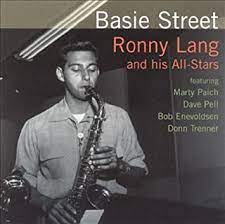
Ronnie Lang was born July 24, 1929 in Chicago, Illinois. Sometimes spelled Ronny, his professional début was with Hoagy Carmichael’s Teenagers. He went on to play for a year with Earle Spencer in 1946, then with Ike Carpenter, and Skinnay Ennis the following year.
Gained attention during his two tenures with Les Brown’s Orchestra between 1949–50 and 1953 to 1956, he recorded with the Dave Pell Octet in the mid-1950s. During this time he moved to California and attended Los Angeles State College of Applied Arts and Sciences studying music and woodwinds.
By 1958 he had become a prolific and busy studio musician in Los Angeles, often employed by Henry Mancini. Ronnie played the iconic sax melodic line in Bernard Herrmann’s score for the 1976 movie Taxi Driver. He also recorded with Pete Rugolo, Bob Thiele, and Peggy Lee.
Alto saxophonist Ronnie Lang, who also played flute and clarinet in the bop, progressive, big band, swing idioms, is now retired at 92.
More Posts: bandleader,clarinet,flute,history,instrumental,jazz,music,saxophone
Daily Dose Of Jazz…
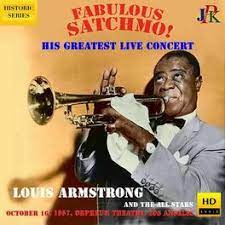
Danny Barcelona was born on July 23, 1929 in Waipahu, a community of Honolulu, Hawaii. A self taught percussionist, by the age of 18 in his final year in high school, he was already playing music with trombonist, singer, and bandleader Trummy Young, joining his Hawaii All-Stars in the early Fifties. When Young left to join Louis Armstrong’s combo in 1952, he assumed leadership of the band, a sextet known as the Hawaiian Dixieland All-Stars. They would tour the Hawaiian Islands, Japan and the rest of the Far East.
Danny was introduced to Louis Armstrong by Young in 1956 and upon his recommendation, in 1958 at the age of 27 became Armstrong’s drummer for 15 years. As a Filipino-American, Armstrong would frequently introduce him to audiences as The Little Filipino Boy, then follow up by calling himself the Little Arabian Boy.
He appears on more than 130 of Armstrong’s recordings including Hello, Dolly! and What a Wonderful World. He toured with Armstrong and Young around the world until illness took Armstrong and he returned to Hawaii. There he became a longtime performer at the Hilton Hawaiian Village Hotel, and worked for many years at Harry’s Music Store and the Easy Music Center.
In 1979, he returned to the mainland and settled with his family in Monterey Park, California. Drummer Danny Barcelona transitioned in Monterey Park on April 1, 2007, due to complications from cancer at the age of 77.
More Posts: drums,history,instrumental,jazz,music