

Three Wishes
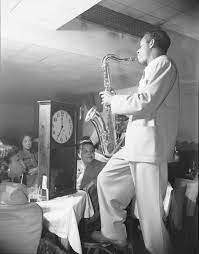
The Baroness made an inquiry of Kermit “Scotty” Scott of his three wishes were he given them and he responded with just one:
- “I wish I could get on a good recording date.”
*Excerpt from Three Wishes: An Intimate Look at Jazz Greats ~ Compiled and Photographed by Pannonica de Koenigswarter

More Posts: baroness,history,instrumental,jazz,music,pannonica,saxophone,three,wishes
Daily Dose Of Jazz…
Frederick Roach was born on May 11, 1931 in The Bronx, New York. He made his record debut in 1960 with saxophonist Ike Quebec on the albums Heavy Soul and It Might as Well Be Spring and played with Willis Jackson.
>From 1962-64 he recorded five albums as a leader for the Blue Note Records label. He also recorded with Donald Byrd on the album I’m Tryin’ to Get Home. His original writing, steady basslines, and highly musical fleet-fingered right hand set him apart.
1966-67 saw Freddie recording three more albums as a leader for Prestige Records, which are in a more commercial vein than his Blue Note dates. He left the music business in 1970 and became involved in theater, playwriting and film.
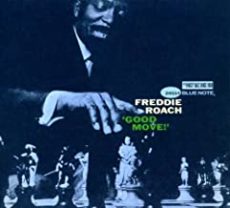
Roach was a soulful organist, certainly influenced by Jimmy Smith, but with a distinct sound and a quite original concept, which was perhaps best heard on “Good Move” for Blue Note. His Blue Note albums are critically acclaimed
Soul jazz Hammond B3 organist Freddie Roach, who moved to California for the film industry, suffered a heart attack and passed away on October 3, 1980.

More Posts: bandleader,composer,history,instrumental,jazz,music,organ
Daily Dose Of Jazz…
Pee Wee Hunt was born Walter Gerhardt Hunt on May 10, 1907 in Mount Healthy, Ohio. He developed a musical interest at an early age, as his mother played the banjo and his father played violin. As a teenager he was a banjoist with a local band while he was attending college at Ohio State University where he majored in electrical engineering. During his college years he switched from banjo to trombone, and graduated from the Cincinnati Conservatory of Music. He joined Jean Goldkette’s Orchestra in 1928.
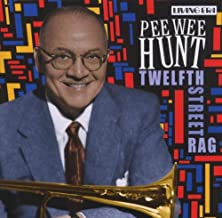
Hunt was the co-founder and featured trombonist with the Casa Loma Orchestra, but he left the group in 1943 to work as a Hollywood radio disc jockey before joining the Merchant Marine near the end of World War II. Returning to the West Coast music scene in 1946, his Twelfth Street Rag was a three million-selling, number one hit in 1948. His second million-selling disc was Oh! in 1953. He was satirized as Pee Wee Runt and his All-Flea Dixieland Band in Tex Avery’s animated MGM cartoon Dixieland Droopy in 1954.
Trombonist, vocalist and bandleader Pee Wee Hunt passed away on June 22, 1979 at age 72 after a long illness in Plymouth, Massachusetts
More Posts: bandleader,history,instrumental,jazz,music,trombone,vocal
Requisites
Julie Is Her Name ~ Julie London | By Eddie Carter
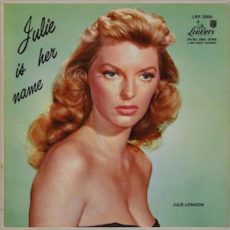
This morning’s choice from the library is the debut album by Julie London. She was a talented actress who starred in several forties and fifties Hollywood films, a sexy pinup model and nightclub singer with a stunning figure to match her luxurious voice. Julie Is Her Name (Liberty LRP 3006/LST 7027), is a half-hour journey of intimate music that’s perfect to enjoy while unwinding after a long day or to help spark a romantic evening ahead. Accompanying Julie on vocals are Barney Kessel on guitar and Ray Leatherwood on bass. My copy used in this report is the 1955 US Mono reissue made at Capitol Records Pressing Plant in Scranton, Pennsylvania. The second pressing turquoise labels are distinguished from the Deep Groove original by a small circle around the center hole on each side.
Side One starts with her biggest hit, Cry Me A River by Arthur Hamilton, a high school classmate. Julie sings the lyrics with elegance and warmth as she turns the tables on a lover who hurt her and now finds himself the recipient of a broken heart. Barney and Ray complement her with their subtle supplement into a gentle fadeout. I Should Care by Sammy Cahn, Alex Stordahl, and Paul Weston was written in 1944, appearing in Thrill of a Romance, a year later. The trio approaches the romantic theme efficiently. Julie caresses the lyrics softly and tenderly, and Kessel has a lush interlude in between that’s seductively silky. Barney and Ray lead the way into I’m In The Mood For Love by Dorothy Fields and Jimmy Hugh. Julie reflects the song’s tenderness with deep sensitivity ahead of a gorgeous ending.
I’m Glad There Is You by Jimmy Dorsey and Paul Madiera is tailor-made for Julie’s provocative delivery of the lyrics. Kessel and Leatherwood are splendidly entertaining in support before the trio’s lush climax. Can’t Help Lovin’ That Man was first heard in the 1927 musical, Show Boat as Can’t Help Lovin’ Dat Man. It’s one of Oscar Hammerstein II and Jerome Kern’s most famous songs. The ensemble presents an exquisite example and Julie shows respect to the lyrics with a bluesy vocal interpretation that flows smoothly. Cole Porter’s I Love You was introduced in the 1944 musical, Mexican Hayride. The trio begins deceptively at a slow tempo before the pace moves upward and Julie turns loose a little gaiety on a swinging statement.
The second side gets underway with Say It Isn’t So by Irving Berlin from 1932. Julie’s indelible opening chorus characterizes a sincere plea to the man she loves to reassure her that the rumor he no longer loves her and is planning to leave isn’t true. Her haunting words are delicately expressed with Barney and Ray providing the gentle groundwork preceding a calm climax. Up next is It Never Entered My Mind, a show tune that premiered in the 1940 musical, Higher and Higher. This well-recorded standard from the pen of Richard Rodgers and Lorenz Hart speaks of loneliness, regret, and remorse. Julie and Kessel make it an intimately personal duet that’s deeply poignant with an emotional emphasis on love and sorrow anyone can identify with.
Julie and her bandmates take a slow tempo trip to Easy Street next. This jazz standard was written by Alan Rankin Jones in 1940 and transports us to a place where life is good, and people are comfortable, content, and happy. Her lyrics are equally carefree and dreamy. Barney and Ray augment the vocalist with a soft supplement and Barney gets a brief solo ahead of the close. George & Ira Gershwin introduced S’ Wonderful in the 1927 musical, Funny Face. It later became a popular jazz standard with many notable recordings. Kessel starts the song vigorously with an enthusiastic introduction segueing into a dazzlingly agile melody by Julie who then slows down to wrap up the song reinforced by Kessel and Leatherwood’s backing.
No Moon At All by David Mann and Redd Evans is a jazz standard that was composed in 1947. It’s a romantic tune, and Julie beckons her lover like a siren with seductively sultry lyrics on the melody. Barney and Ray accompany her as she plans a night of romance beginning with one kiss. Laura by David Raskin and Johnny Mercer needs no introduction. It’s a timeless 1944 standard that became a hit after the Film-Noir drama of the same name. Julie sings the first chorus of the haunting melody without any accompaniment. Kessel and Leatherwood add their serene support as her voluptuous vocals are profoundly moving into a gentle coda. The finale, Gone With The Wind by Allie Wrubel and Herb Magidson is a passionately tender showcase by Julie and the duo who back her delicately into a graceful fadeout.
The Mono copy of Julie Is Her Name was produced by Bobby Troup (who would become her second husband) and engineered by John Neal. John Kraus who also engineered albums on Atlantic, Capitol, Contemporary, Dot, Jazz West, and London worked on the Stereo reissue. I was pleasantly surprised with the sound quality for a record nearly sixty-six years old, it’s quite good. Julie’s vocals are seductive, and Barney Kessel and Ray Leatherwood respond with sheer beauty behind her. The Capitol Records reissues have a misprint, the tracks are reversed on both sides. The Side Two songs are on the Side One label and the Side One songs, on Side Two. How this error was overlooked, I’ll never know, especially since Capitol uses the original Liberty pressing back cover, but that seems to be the only issue with my copy.
Torch singing became Julie’s specialty over her fourteen-year recording career, and she made thirty-one albums at Liberty, earning her the nickname, The Liberty Girl. She also found success on television, becoming most famous for her portrayal of Dixie McCall on the series, Emergency for six years. A chain smoker since she was sixteen, Julie suffered a stroke in 1995 and developed lung cancer a few years later. She passed away from cardiac arrest at age seventy-four on October 18, 2000. If you’re seeking some easy-listening, jazz vocals for your library, make a note to pick up Julie Is Her Name by Julie London on your next vinyl hunt. It marks the beginning of a terrific jazz vocalist and is a lovely way to spend the evening with that special someone!
~Can’t Help Lovin’ That Man, Gone With The Wind, I Love You, I Should Care, I’m Glad There Is You, I’m In The Mood For Love, It Never Entered My Mind, Laura, ‘S Wonderful, Say It Isn’t So – Source: JazzStandards.com ~Cry Me A River, Easy Street, No Moon at All – Source: Wikipedia.org © 2021 by Edward Thomas CarterMore Posts: choice,classic,collectible,collector,history,instrumental,jazz,music,vocal
Daily Dose Of Jazz…
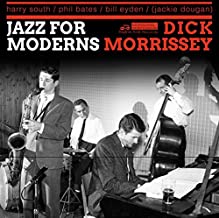
Richard Edwin Morrissey was born on May 9, 1940 in Horley, Surrey, England. Self-taught, he started playing clarinet in his school band, The Delta City Jazzmen, at the age of sixteen with fellow pupils. He then joined the Original Climax Jazz Band before going on to join trumpeter Gus Galbraith’s Septet, where alto saxophonist Peter King introduced him to Charlie Parker’s recordings, Shortly afterward he began specializing on tenor saxophone.
Making his name as a hard bop player, Morrissey appeared regularly at the Marquee Club in 1960, and recorded his first solo album It’s Morrissey, Man! in 1961 at the age of 21 for Fontana Records. Spending most of 1962 in Calcutta, India as part of the Ashley Kozak Quartet, they played three 2-hour sessions seven days a week. Upon returning to the UK he formed his quartet and recorded three LPs, Have You Heard?, Storm Warning!, and Here and Now & Sounding Good!.
He went on to play regular gigs in London and during this time Dick also played extensively in bands led by Ian Hamer and Harry South, including The Six Sounds. He also played briefly in Ted Heath’s Big Band, Johnny Dankworth and his Orchestra, the Harry South Big Band. and Eric Burdon and The Animals’ Big Band.
The mid-1960s, saw Dick played with Brother Jack McDuff, Jimmy Witherspoon, J. J. Jackson and Sonny Stitt together with guitarist Ernest Ranglin recorded with him during the Sixties and early Seventies.
In 1969, Morrissey by thenwas a many-time winner and runner-up of the Melody Maker Jazz Poll, and teaming up with another Melody Maker award-winner, guitarist Terry Smith, with whom he had worked in J. J. Jackson’s Band, to form an early jazz-rock group, If.
When If disbanded in 1975, he toured Germany and the United States, recording with the Average White Band, before meeting up with Glaswegian guitarist, Jim Mullen. With some of the members of AWB, together they formed Morrissey–Mullen, recording their first album, Up in 1976) in New York. On returning to Great Britain, Morrissey–Mullen formed another band which rapidly became Britain’s most highly acclaimed jazz-fusion band of the day. They ultimately recorded seven albums over the 16 years they were together, with Morrissey and Mullen collaborating on each other’s solo albums.
He went on to have numerous collaborations with Tubby Hayes, Bill Le Sage, Roy Budd, Ian Hamer, Ian Carr, Tony Lee, Tony Archer, Michael Garrick, Spike Robinson, Allan Ganley, Peter King, Ray Warleigh, and Hoagy Carmichael among others. Tenor and soprano saxophonist, flautist, and composer Dick Morrissey passed away on November 8, 2000.
More Posts: bandleader,flute,history,instrumental,jazz,music,saxophone