

Daily Dose Of Jazz…
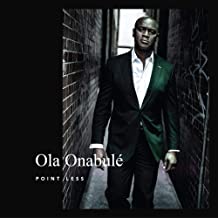
Ola Onabulé was born in Islington, London, England on March 30, 1964 and at the age of seven he was sent to Lagos, Nigeria, where he spent the next ten years in school. When he was seventeen he returned to the UK to study at Millfield School, then attended law school, almost completing a three-year degree before deciding to enroll at Middlesex Polytechnic for an arts degree. While studying, he began to perform in London clubs and venues, writing and performing his own material.
Onabulé’s career spans nearly two decades, releasing his music on his own label, Rugged Ram Records, after recording for Elektra and Warner Bros. His debut album, More Soul Than Sense, was released in 1995.
He has performed internationally, performed with Germany’s WDR Big Band and the SWR Big Band and appeared with the German Film Orchestra Babelsberg in Potsdam for a concert. Ola has played the main stages of the Montreal Jazz Festival and Vancouver Jazz Festival. A return to Canada in 2010 he performed at Victoria Jazz Festival, Vancouver Jazz Festival, and the Edmonton Jazz Festival. His list of credits reads like a who’s who of bog bands and small combos and continues to grow.

More Posts: history,instrumental,jazz,music,producer,vocal bandleader
Daily Dose Of Jazz…
Kamil Běhounek was born March 29, 1916 in the Southern Bohemian section of Blatná, Czech Republic. An autodidact on accordion, having learned to play by imitating recordings and BBC broadcasts, he studied law in Prague, Czech Republic and began performing in clubs. His first recordings on solo accordion date from 1936 and in the late 1930s he worked with the Blue Music Orchestra, Rudolf Antonin Dvorsky, Jiří Traxler, and Karel Vlach.
In 1943, he was forcibly compelled by the Nazis to go to Berlin, Germany where he created arrangements for the bands of Lutz Templin and Ernst van’t Hoff. Upon returning to Czechoslovakia in 1945, he used some of these arrangements for his own band. Kamil returned to Germany the following year and continued arranging for bandleaders Adalbert Luczkowski, Willy Berking, Heinz Schönberger, and Werner Müller.
He played with his own ensemble in Bonn, Germany and, after 1948, in West Germany for American soldiers’ clubs. Between 1968 and 1977, Běhounek recorded several albums of folk music, but continued to play swing with his own groups. He wrote an autobiography, Má láska je jazz (Jazz Is My Love), which was published posthumously in 1986.
Accordionist, bandleader, arranger, composer, and film scorer Kamil Běhounek, who also occasionally played tenor saxophone, passed away on November 22, 1983 in Bonn.
More Posts: accordion,arrangr,composer,film scorer,history,instrumental,jazz,music,saxophone
Requisites
Neo/Nistico ~ Sal Nistico | By Eddie Carter
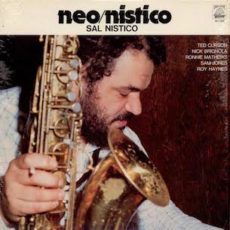
This morning’s choice from the library is another recent acquisition that introduced me to tenor saxophonist, Sal Nistico. Salvatore was born on April 2, 1938, in Syracuse, New York, and began playing the alto sax, before switching to tenor in 1956. He also played baritone sax for a few years. Sal was a member of Count Basie’s and Woody Herman’s bands and also played with Nat Adderley, Chet Baker, Don Ellis, Curtis Fuller, Dusko Goykovich, Johnny Griffin, The Jazz Brothers Band, Buddy Rich, and Stan Tracey to name a few. Neo/Nistico (Bee Hive Records BH 7006) finds him leading a world-class sextet, Ted Curson on flugelhorn (tracks: A1, B3), trumpet (tracks: B1, B2), Nick Brignola (tracks: A1, B2) on baritone sax, Ronnie Matthews on piano, Sam Jones on bass, and Roy Haynes on drums. My copy used in this report is the original 1978 Mono release.
Side One takes off with Anthropology by Dizzy Gillespie and Charlie Parker set at a blistering pace with both saxes backed by Roy presenting the melody. Nick applies searing heat to the opening statement, then Ted gives a high-energy reading that ascends to an exciting climax. Sal sizzles like a firecracker about to explode on the third solo, and Ronnie stirs it all together in an exhilarating statement preceding the front-line’s exchange and ensemble’s abrupt close. The beat slows down for You Don’t Know What Love Is by Gene de Paul and Don Raye. The quartet opens with a sensuous theme. Nistico begins the first reading with a delicately elegant conversation. Matthews begins the second statement with a soothing, almost seductive quality that’s beautifully tender. Nistico swings briefly on a robust return culminating in a gorgeous ending.
The quartet continues with a brisk workout of Be My Love by Nicholas Brodsky and Sammy Cahn. It was written in 1949 for Mario Lanza who sang it in the 1950 film, The Toast of New Orleans. The trio makes a feisty introduction to Sal’s lively theme and enthusiastic lead solo. Ronnie follows with a jubilant reading, then Sam cuts into the next statement like a hot knife through butter. Roy engages in a satisfying exchange with Sal that doesn’t stop swinging until the upbeat ending. Blues For K.D. is a Nistico original written to honor trumpeter Kenny Dorham that charges out of the gate on a vigorous melody. The leader is up first and delivers a torrid solo, then Curson ignites a mighty fire with his trumpet. Matthews keeps the flame burning next, and Haynes does some heavy cooking on the closer amid an interchange of ideas with all three soloists.
Sal’s Bambu is a festive tune he composed while playing around on the piano in Europe. It’s a danceable mix of Afro-Calypso and Latin that’s highly rhythmic, infectious, and fun. The solo order is Brignola, Curson, Matthews, Haynes, and all four soloists invite us to party with them until an abrupt halt. Fee-Fi-Fo-Fum by Wayne Shorter was first recorded by its composer on Speak No Evil (1966). The quintet starts with a stroll on the opening chorus at a leisurely tempo. Nistico starts the first solo conveying a light mood that’s joyously carefree and happy. Curson begins the next reading with an easy-going attitude, building steadily into an enjoyable groove. Matthews adds a great finishing touch with a briskly efficient finale cooking over a mild flame from Jones and Haynes ahead of the quintet’s closing chorus.
Neo/Nistico was produced by Joe Neumann, founder of Bee Hive Records, and engineered by Fred Norsworthy. I was very impressed with the record’s sound quality. It has an excellent soundstage with crystal-clear highs, a sharp midrange, and solid bass. Sal’s career as a musician lasted nearly three decades, and he spent a lot of time performing in Europe. He passed away on March 3, 1991, at age fifty-three. If you’re a fan of the tenor sax, Post-Bop, or are just discovering him as I have, I offer for your consideration, Neo/Nistico by Sal Nistico, an album of six performances that sparkle and swing from start to finish. I’m very happy I found it and have it in my library. After one audition, I’m sure you’ll feel the same!
~ Speak No Evil (Blue Note BLP 4194/BST 84194) – Source: Discogs.com ~ Anthropology, You Don’t Know What Love Is, Be My Love – Source: Wikipedia.org © 2021 by Edward Thomas Carter
More Posts: choice,classic,collectible,collector,history,instrumental,jazz,music,saxophone
Daily Dose Of Jazz…
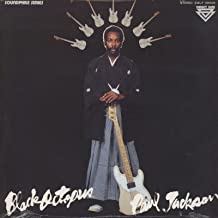
Paul Jackson was born in Oakland, California on March 28, 1947 and began playing bass at the age of nine. By age 14, he performed with the Oakland Symphony Orchestra and went on to study at the San Francisco Conservatory of Music.
He recorded five albums as a leader, eleven albums with Herbie Hancock, five with The Headhunters. He played on recording sessions with Sonny Rollins, Stanley Turrentine, Azteca, Eddie Henderson, Harvey Mason, The Pointer Sisters, Santana, Shawn Phillips, Stomu Yamashta between 1972 and 1977.
Electric bassist Paul Jackson passed away on March 18, 2021 at age 73 in a hospital near Tokyo, Japan, ten days before his 74th birthday.
More Posts: bandleader,bass,history,instrumental,music
Daily Dose Of Jazz…
Miriam Klein was born on March 27, 1937 in Basel, Switzerland and gained fame as a singer for the first time when she appeared on the scene in Paris, France with Pierre Michelot, Don Byas and Art Simmons in the 1950s. After education at the music school in Vienna, Austria she returned to Switzerland and has sung in the group of her husband Oscar Klein since 1963.
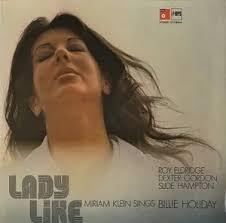
In the 1960s and 1970s, she gained international fame when she released her 1973 album Lady Like. The album was dedicated to Billie Holiday and performed with Roy Eldridge, Dexter Gordon and Slide Hampton. She also recorded music with Albert Nicholas in 1971 and Wild Bill Davison in 1976.
In 1977, Miriam worked with Fritz Pauer’s trio and in 1978 with Roland Hanna and George Mraz in her album By Myself. In 1981/82, she toured with Kenny Clarke, Hanna and Isla Eckinger. In 2001, she took part in My Marlin, the album of her son David Klein. Vocalist Miriam Klein remains active.
More Posts: history,instrumental,jazz,music,vocal