

Daily Dose Of Jazz…
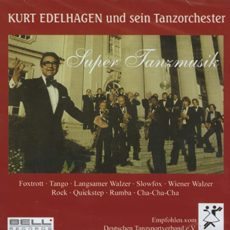
Kurt Edelhagen was born on June 5, 1920 in Herne, Germany. He studied conducting and piano in Essen and b 1945, he started a trio, then a big band a year later. He performed on a Frankfurt radio station, am Main, then for three years beginning in 1949 led the Bayerischer Rundfunk in Nuremberg.
From 1952 to 1957 he led the Südwestfunk big band, and 1954 saw him participating in the concerto for jazz band and orchestra by Rolf Libermann. Three years later he began leading the radio station Westdeutscher Rundfunk Big Band (WDR) in Cologne. Members included Dusko Goykovich and Jiggs Whigham. During the 1960s the band toured East Germany, USSR, Czechoslovakia, and several Arab countries.
His radio orchestra played at the opening ceremony of the 1972 Munich Olympics. Big band leader Kurt Edelhagen passed away on February 8, 1982 in Cologne, Germany.

More Posts: bandleader,history,instrumental,jazz,music
The Quarantined Jazz Voyager
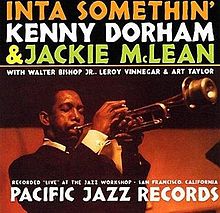
The Quarantined Jazz Voyager is pulling from the stacks the 1962 album by Kenny Dorham titled Inta Somethin’ to spin this week. Recorded at the Jazz Workshop in San Francisco, California on November 13, 1961 and released on Pacific Jazz Records. Una Mas and San Francisco Beat were composed by Dorham. Track List | 38:31
- Una Mas ~ 7:13
- It Could Happen to You (Johnny Burke, Jimmy Van Heusen) ~ 6:00
- Let’s Face the Music and Dance (Irving Berlin) ~ 6:06
- No Two People (Frank Loesser) ~ 6:59
- Lover Man (Jimmy Davis, Ram Ramirez, James Sherman) ~ 5:01
- San Francisco Beat ~ 7:12
The players on this date are Kenny Dorham – trumpet (except tracks 3 and 5), Jackie McLean – alto saxophone (except track 2), Walter Bishop Jr. – piano, Leroy Vinnegar – bass and Art Taylor – drums.
So stay diligent my fellow voyagers in being healthy, continue your social distancing, and take your time getting back to the new normal. Listen to great music and share that music to give another soul a little insight into the choices of a voyager during this sabbatical from what we once knew. The jet setting investigations of jazz around the globe will continue again.
More Posts: choice,classic,collectible,collector,history,instrumental,jazz,music
Daily Dose Of Jazz…
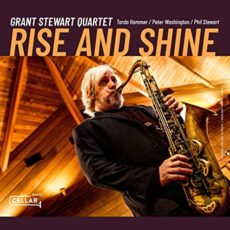
Grant Stewart was born in Toronto, Ontario, Canada on June 4, 1971. His father was a part-time jazz guitarist and at age ten, he played alto saxophone solos from saxophonists Charlie Parker, Coleman Hawkins, and Wardell Gray that had been transcribed by his father. In his early teens, he was gaining experience with such artists as Pat LaBarbera and Bob Mover. By 18 he was leading a quartet in Toronto and had a regular gig at C’est What café and pub.
A move to New York City when he was 19 saw Grant working with guitarist Peter Bernstein and saxophonist Jesse Davis. He then began playing at Smalls Jazz Club from when it opened in 1993. His younger brother, Philip, has been his drummer since 2005.
For his 2007 recording Young at Heart, Stewart chose some challenging compositions, including by Elmo Hope and Neal Hefti, as well as originals. On Around the Corner in 2010, Stewart also played soprano sax.
Saxophonist Grant Stewart continues to play steady swinging hard bop, with a current catalog of seventeen albums as a leader and has recorded with Ehud Asherie and John Swana.
More Posts: bandleader,history,instrumental,jazz,music,saxophone
Daily Dose Of Jazz…
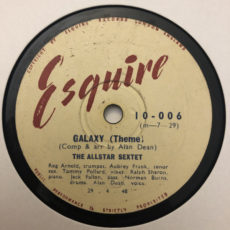
Aubrey Frank was born on June 3, 1921 in London, England. He started playing alto saxophone at fourteen, then switched to tenor the following year. HIs first gig was with Jack Harris, then joined the RAF but continued playing with Ambrose, Johnny Claes, Geraldo, Lew Stone, and George Evans. He was in the first Ted Heath band and the RAF Fighter Command Band. During World War II he played with Sam Donahue and Glenn Miller.
Leaving the RAF, he continued to work with Ambrose until 1947, as well as the Skyrockets and the Squadronnaires. From 1949 to 1954 a member of Jack Nathan’s band alongside Ronnie Scott and Harry Klein. He freelanced and became a staple on early British bebop dates where his adaptability allowed him to play in any type of band, from Dixieland to modern jazz.
He recorded with the George Shearing Sextet, Harry Hayes, Alan Dean All-Star Sextet and had a long career regarded as a first-class session musician but was a jazzman at heart. With the advent of bop, his style changed little, leading the Aubrey Frank Modern Music Sextet consisting of Hank Shaw or Wyatt Forbes, Harry Klein, Andy Denits, Stan Wasser, and Douggie Cooper. Tenor saxophonist Aubrey Frank passed away on his seventy-second birthday in 1993.
More Posts: bandleader,history,instrumental,jazz,music,saxophone
Three Wishes
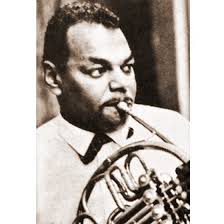
What Julius Watkins said to Pannnica when she inquired of him what his three wishes were was:
-
-
“To be three nice young ladies.”
-
“Three more.”
-
“To put the six of them to work.”
-
*Excerpt from Three Wishes: An Intimate Look at Jazz Greats ~ Compiled and Photographed by Pannonica de Koenigswarter

More Posts: baroness,french horn,history,instrumental,jazz,music,pannonica,three,wishes