

Daily Dose Of Jazz…
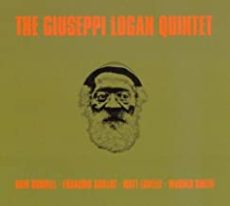
Giuseppi Logan was born on May 22, 1935 in Philadelphia, Pennsylvania, who taught himself to play piano and drums before switching to reeds at the age of 12. At the age of 15 he began playing with Earl Bostic and later studied at the New England Conservatory. In 1964 he relocated to New York and became active in the free jazz scene.
Giuseppi played alto and tenor saxophone, bass clarinet, flute, piano and oboe. He collaborated with Archie Shepp, Pharoah Sanders and Bill Dixon before forming his own quartet made up of pianist Don Pullen, bassist Eddie Gómez and percussionist Milford Graves. After Pullen’s departure, pianist Dave Burrell joined the group. A member of Byard Lancaster’s band, he also toured with and appeared on recordings by Patty Waters. He recorded two albums for the ESP-Disk record label and later appeared on an album by Roswell Rudd on the Impulse! label.
Beset with personal problems, Logan vanished from the music scene in the early 1970s and for over three decades his whereabouts were unknown. In 2008 he was filmed by a Christian mission group just after he had returned to New York City after years in and out of institutions in the Carolinas. Around this same time filmmaker Suzannah Troy made the first of many short films of Logan practicing in his preferred hangout, Tompkins Square Park. Subsequently, he was the subject of a major piece by Pete Gershon in the spring 2009 edition of Signal to Noise Magazine, which detailed the events surrounding Logan’s “comeback” gig at the Bowery Poetry Club in 2009.
The same year he performed with a group in NYC as part of the RUCMA performance series. Later in the year he appeared in the short documentary film Water in the Boat by David Gutiérrez Camps, where his music improvisations formed the soundtrack of the film. In 2010 Giuseppi began recording again and released an album announcing his return to music on Tompkins Square Records with Matt Lavelle, Dave Burrell, Warren Smith and Francois Grillot. This group performed a concert in Philadelphia with Dave Miller playing for Warren Smith at the Ars Nova Workshop. He went on to record six songs with a group of younger experimental musicians.
Around 2011 he was shot and ended up in a home in Far Rockaway, Queens. Still living in New York and performing as a street musician, reedist Giuseppi Logan passed on April 17, 2020 at a nursing facility in Far Rockaway, Queens from COVID-19.

More Posts: bandleader,clarinet,flute,history,instrumental,jazz,music,oboe,piano,saxophone
The Quarantined Jazz Voyager
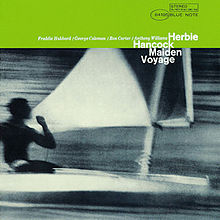
The Quarantined Jazz Voyager is pulling down from the shelves a timeless classic that has been a part of my collection since 1971. Maiden Voyage is the fifth album led by jazz musician Herbie Hancock and was recorded by Rudy Van Gelder on March 17, 1965, for Blue Note Records.
It is a concept album combining modal and hard bop modes aimed at creating an oceanic atmosphere. Many of the track titles refer to marine biology or the sea, and the musicians develop the concept through their use of space. The album was presented with the Grammy Hall of Fame Award in 1999.
The five compositions that comprise the album are Maiden Voyage, The Eye Of The Hurricane, Little One, Survival Of The Fittest and Dolphin Dance. The personnel on the date are pianist Herbie Hancock, trumpeter Freddie Hubbard, tenor saxophonist George Coleman, bassist Ron Carter, and drummer Tony Williams.
Stay diligent my fellow voyagers in being healthy, continue to practice social distancing, and don’t be so anxious to rush back to the new normal. It has been said that music soothes the savage beast, so listen to great music. I share that music to give you a little insight into the choices this voyager has made over the years during this sabbatical from jet setting investigations of jazz around the globe.
More Posts: adventure,club,genius,jazz,museum,music,preserving,restaurant,travel,voyager
Daily Dose Of Jazz…
Bill Barber was born John William Barber on May 21, 1920 in Hornell, New York. He started playing tuba in high school and studied at the Juilliard School of Music. After graduating, he traveled west to Kansas City, Missouri, where he played with the Kansas City Philharmonic and various ballet and theatre orchestras.
Joining the United States Army in 1942, he played in Patton’s 7th army band for three years. After the war, he started playing jazz, joining Claude Thornhill’s big band where he became friends with trombonist Al Langstaff, pianist Gil Evans and saxophone player Gerry Mulligan in 1947. Barber was one of the first tuba players to play in a modern jazz style, playing solos and participating in intricate ensemble pieces.
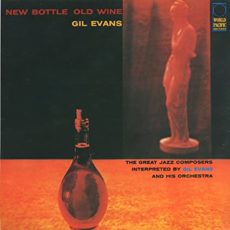
Barber became a founding member of Miles Davis’s nonet in 1949 in what became known as the Birth of the Cool recording sessions. He then worked in the theatre pit orchestras of The King and I, Paradiso, and the City Center Ballet. He joined up with Davis and Gil Evans in the late 1950s to record the albums Sketches of Spain, Miles Ahead and Porgy and Bess. Barber also played tuba on John Coltrane’s album Africa/Brass released in 1961.
Completing a master’s degree from the Manhattan School of Music and became an elementary school music teacher at Copiague, New York. He continued to play where possible including with the Goldman Band. In 1992, he recorded and toured with a nonet led by Gerry Mulligan, reworking material from Birth of the Cool.
From 1998 to 2004 he was part of The Seatbelts, New York musicians who played the music of the Japanese anime Cowboy Bebop. Over the course of his career, he recorded with Art Blakey, Bob Brookmeyer, Kenny Burrell, John Coltrane, Miles Davis, Gil Evans, Urbie Green, Gigi Gryce, Slide Hampton, and Pete Rugolo. Tubist Bill Barber, who was also known as Billy Barber, passed away from heart failure on June 18, 2007 in Bronxville, New York.
More Posts: history,instrumental,jazz,music,tuba
Hollywood On 52nd Street
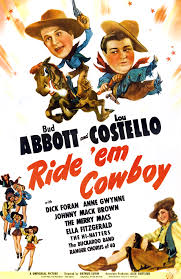
I’ll Remember April is a jazz standard with music written by Gene de Paul, and lyrics by Patricia Johnston and Don Raye. The song made its debut in the 1942 Abbott and Costello comedy Ride ‘Em Cowboy starring the comedy team along with Dick Foran, Anne Gwynne, Johnny Mack Brown, Ella Fitzgerald, Samuel S. Hinds, Douglas Dumbrille, and Morris Ankrum. The film was directed by Arthur Lubin, the song was sung by Foran. Musical numbers were staged by Nick Castle.
The song’s story is about a romantic relationship ending. The lyric uses the seasons of the year metaphorically to illustrate the growth and death of a romance. The lyric also uses the ideas of the hours in a day and the flames of a fire to illustrate a relationship growing stronger and subsequently losing strength.
The Story: The author of best-selling western novels, Bronco Bob Mitchell (Dick Foran), has never set foot in the west. A newspaper article has exposed this fact to his fans, and his image is suffering because of it. He decides to make an appearance at a Long Island charity rodeo to bolster his image. When a steer escapes while he is riding a horse nearby, he is thrown. Not knowing what to do, a cowgirl, Anne Shaw (Anne Gwynne), comes to his rescue and saves his life by bulldogging the steer. Shaw gets hurt, retreats to her father’s dude ranch followed by Mitchell who eventually becomes a decent cowboy.
Cast Fact: This is Ella Fitzgerald’s first screen role, where she plays Ruby, who fills several roles as one of the employees of the ranch. At the opening rodeo, she is dressed as a rodeo clown and comes to Anne’s side when she is hurt. Later in the film, she can be seen removing an apron before singing. Ella sings A-Tisket, A-Tasket on the bus, as the ranch crew drives from the railway station to the ranch. Ruby and the other employees interact playfully during the song.

Daily Dose Of Jazz…
Jan Leder was born in Queens, New York on May 20, 1944 and showed musical talent from an early age, tapping out melodies on the family piano at the age of three. Quickly surpassing her older siblings, at the age of five, she began six years of piano lessons with her classically trained mother. It was not until junior high school that she first picked up the flute. Formally she studied classical flute but in her free time, she taught herself to improvise rock & roll and pop/R&B tunes alongside local guitarists in New York’s Central Park.
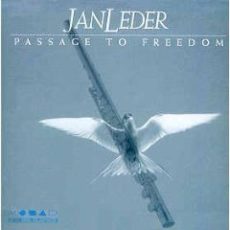
At 17 years old Leder began studying with jazz pianist Lennie Tristano, with whom she continued until his death in 1978. Although crediting Tristano with helping her come into her own as a musician, real recognition and commercial success eluded her until the late 1990s. Her first big break came when Buddy Scott and colleagues from Monad records heard her playing in 1994 at The Dockside in Tarrytown, New York. Her tape of a live date with Art Lillard and others at the Five Spot in New York so impressed Scott, that he signed her to a Monad Records contract and released the live recording intact as the CD Passage to Freedom.
Unfortunately, Passage to Freedom, which includes some really nice work by drummer Lillard, pianist Jon Davis, bassist Yosuke Inoue, and guitarist Mark McCarron, was released just as Monad Records met its demise, leaving Leder’s debut effort largely unavailable and unnoticed for close to two years. In 1998 and 1999, exposure via the internet brought her to the attention of a wider audience and earned her very favorable reviews for Passage to Freedom.
1998 saw A-Records vocalist Diane Hubka recorded Leder’s original composition “Thinking of You” on her own debut CD, Haven’t We Met, which was nominated for a Jazz Award in the Best Debut CD category. Her contribution to Hubka’s CD ultimately led to her signing a recording contract with A-Records, a division of the Dutch label, Challenge Records. The following year she released her second CD, Nonchalant, on which she added the talents of bassist Sean Smith, percussionist Daniel Moreno, and vocalists Angela DeNiro, Mary Foster Conklin, and Cleve Douglass to the already strong instrumental talents of Passage to Freedom collaborators Lillard, McCarron, and Davis. Flutist Jan Leder continues to perform and record.
More Posts: bandleader,composer,flute,history,instrumental,jazz,music