

Daily Dose Of Jazz…
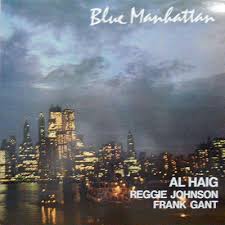
Frank Gant was born on May 26, 1931 in Detroit, Michigan. His first gigs were with Billy Mitchell and Pepper Adams, and after working with Little John Wilson and his Merry Men at the Madison Ballroom, including four days backing Billie Holiday, he went on to join Alvin Jackson’s house band at the Blue Bird..
Gant recorded with Donald Byrd, Sonny Stitt, and extensively with Yusef Lateef in the late 1950s and then Red Garland before becoming a member of Ahmad Jamal’s trio from 1966 to 1976. As the house drummer at Detroit’s Club 12, with Jackson’s band, he backed Thelonious Monk and Charlie Rouse in September 1959. In the 1970s, he accompanied Jamil Nasser and Harold Mabern as the rhythm section for workshops run by Cobi Narita.
From 1955 to 1986 he recorded as a sideman or group member on twenty albums with the above-mentioned musicians, as well as several with Al Haig. There is no more information following this recording period about the drummer as he has never been a leader, however, at eighty-nine he may still be occasionally performing.

More Posts: drums,history,instrumental,jazz,music
Daily Dose Of Jazz…
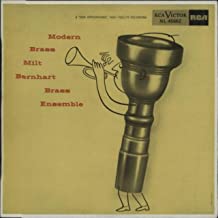
Milt Bernhart was born on May 25, 1926 in Valparaiso, Indiana and began on tuba but switched to trombone in high school. At 16 he worked in Boyd Raeburn’s band and later had some gigs with Teddy Powell. After time in the Army he worked, off and on, with Stan Kenton for the next ten years. In 1955 Bernhart recorded his first album as a leader. In 1986 he was elected President of the Big Band Academy of America.
Although known as mild-mannered or humorous, he spent a brief period with Benny Goodman, who brought out his ire. He indicated working with Goodman was “the bottom” of his first 23 years of life, except for basic training in the Army. He called Goodman a bore and claimed he did nothing about the treatment Wardell Gray faced at a segregated club in Las Vegas and he even alleges that he quit because Goodman publicly humiliated Gray in front of an audience.
The West Coast jazz trombonist recorded more than a hundred albums as a sideman working with Maynard Ferguson, Henri Rene, Shorty Rogers, Pete Rugolo, Howard Rumsey, Lalo Schifrin, Chet Baker, Sammy Davis Jr., June Christy, Astrud Gilberto, Peggy Lee, Johnny Mandel, and Henry Mancini among numerous others.
He recorded with Frank Sinatra, supplying the solo in the middle of Sinatra’s 1956 recording of I’ve Got You Under My Skin conducted by Nelson Riddle. Trombonist Milt Bernhart passed away from congestive heart failure at the Adventist Health in Glendale, California at the age of 77 on January 22, 2004.
More Posts: bandleader,history,instrumental,jazz,trombone

Requisites
New Thing At Newport: John Coltrane~Archie Shepp | By Eddie Carter
And now for something completely different! In 1960, Creed Taylor, a producer for ABC-Paramount Records launched Impulse Records, the company’s label exclusively devoted to jazz. This morning’s subject of discussion from the library is a 1965 live date at The Newport Jazz Festival taken from two performances by The John Coltrane Quartet and The Archie Shepp Quartet. The album is New Thing at Newport (Impulse! A-94), it was released in 1966 and my copy used for this report is the 1968 Stereo reissue (AS-94). Coltrane makes his only appearance on the record backed by McCoy Tyner on piano; Jimmy Garrison on double bass; and Elvin Jones on drums. Archie Shepp composed and performs the remaining four songs supported by Bobby Hutcherson on vibraphone; Barre Phillips on double bass; and Joe Chambers on drums.
Side One starts with an Introduction of Coltrane’s group by Father Norman O’Connor, a Roman Catholic priest who was a huge jazz fan, a longtime radio host at WGBH in Boston, a weekly columnist for The Boston Globe and host of a syndicated jazz program. The Jazz Priest, as he was known, also served as master of ceremonies of various concerts and festivals and contributed to other magazines including Down Beat and Metronome.
The quartet launches into an enthusiastic version of the saxophonist’s One Down, One Up. Trane kicks off the song with a zestful introduction and opening chorus. McCoy starts the soloing offering a feast of dazzling virtuosity, then John turns up the temperature with a thrilling reading making the most difficult passages between Bop and Free Jazz improvisation seem deceptively easy.
The Archie Shepp Quartet takes over for the first side finale, Rufus Swung His Face at Last to The Wind, Then His Neck Snapped. This song portrays a lynching and made its initial appearance on his 1964 debut, Four For Trane. The ensemble begins with a duet dialogue between the saxophonist and Hutcherson on the introduction. Phillips and Chambers come in next for the collective theme. Archie is up first with a lead solo ablaze with a raucous beat. Bobby provides vigorous exhilaration on the second statement, then Paul takes a free-wheeling rollercoaster ride on the closer preceding the reprise and abrupt coda.
Side Two opens with Hutcherson leading the rhythm section on a dreamy introduction to Le Matin Des Noire. Shepp builds the emotion gradually into the opening statement with a laid-back attitude. Phillips and Hutcherson give two concise readings before the song’s fadeout and crowd’s ovation. Scag is delivered with unflinching realism about the dangers of heroin and where the addiction ultimately leads, the gutter, prison, or the grave. The two-beat delivery by Bobby, Barre, and Joe is reminiscent of the tick-tock mechanism inside a clock. Archie recites a grim message to the audience and listener rather than playing the notes as the clock continues to beat ever louder, culminating into a crash of the cymbals that marks the end. Shepp’s Call Me By My Rightful Name closes the album with a medium beat on the introduction and melody that’s maintained as the song unfolds. The saxophonist makes a fine impression on a bittersweet, sensitive interpretation that receives a nice ovation from the Newport crowd at the climax.
New Thing at Newport documents one of the final live performances of The John Coltrane Quartet featuring Tyner, Garrison, and Jones. Trane would change direction and personnel within a year moving further into Free Jazz and towards a more spiritual sound in his music. Shepp also continued to evolve from Post-Bop towards Free Jazz, but in the years to come also recorded works of Contemporary Jazz, Modal Jazz, and Soul-Jazz. The recording by Buddy Graham and Frank Bruno delivers a lively soundstage throughout the highs, midrange, and low-end.
My only issue with this album is the same problem I had with Miles and Monk at Newport from 1963. Both LP’s should have been released as two-record sets spotlighting each band on one record because the listener only gets one song from Coltrane verses four tunes from Shepp. If you’re not a fan of Avant-Garde or Free Jazz, New Thing at Newport is an acquired taste that may not be the album for you. However, if you’re in the mood for music to challenge your emotions and intellect along the lines of The Shape of Jazz To Come by Ornette Coleman, Out To Lunch, and Outward Bound by Eric Dolphy or Point of Departure by Andrew Hill. I invite you to audition New Thing at Newport by John Coltrane and Archie Shepp. An album that’s still pretty amazing nearly fifty-five years after its release and one you’ll want to make room for in your library!
~ Miles and Monk at Newport (Columbia CL 2178/CS8978); Out To Lunch (Blue Note BLP 4163/BST 84163); Outward Bound (New Jazz NRLP-8236, Prestige PRLP 7311/PRST 7311); Point of Departure (Blue Note BLP 4167/BST 84167); The Shape of Jazz To Come (Atlantic 1317/SD 1317) – Source: Discogs.com
~ Father Norman O’Connor – Source: Wikipedia.org ~ © 2020 by Edward Thomas CarterNew Thing at Newport is a 1965 live album recorded July 2, 1965, at the Newport Jazz Festival featuring two separate sets from that year by tenor saxophonists John Coltrane and Archie Shepp.
Track List | 34:56 Side One- Spoken introduction to John Coltrane’s set by Father Norman O’Connor ~ 1:08
- One Down One Up ~ 12:28 (from Coltrane’s set)
- Rufus (Swung His Face at Last to the Wind, Then His Neck Snapped) ~ 4:58 (from Shepp’s set)
- Le Matin des Noire [sic] ~ 7:39
- Scag ~ 3:04
- Call Me by My Rightful Name ~ 6:19
- John Coltrane – tenor saxophone
- McCoy Tyner – piano
- Jimmy Garrison – double bass
- Elvin Jones – drums
- Archie Shepp – tenor saxophone, (recitation on “Scag”)
- Bobby Hutcherson – vibraphone
- Barre Phillips – double bass
- Joe Chambers – drums
More Posts: choice,classic,collectible,collector,history,instrumental,jazz,music,saxophone
Daily Dose Of Jazz…
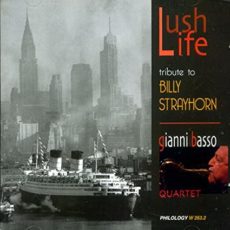
Gianni Basso, born in Asti, Italy on May 24, 1931 studied music in the busy northern city of Turin, where his childhood friend Oscar Valdambrini was a homeboy. A fascination for American jazz, their meeting was a case of a tenor saxophone and trumpet finding each other. This led to all manner of musical possibilities, most notably the easy-to-maneuver-and-feed small combo.
He started his career shortly after World War II, first as a clarinetist, then switched to the saxophone in the Forties performing in Germany and Belgium in Raoul Falsan’s Big Band. By the beginning of the next decade, he was established as a commercial “GB” or “general business” player in Milan, but one with a steady presence at jazz events, including some of the early Italian attempts at post-fascist festivals.
From about 1954, a collaboration with trumpeter and composer Oscar Valdambrini began that resembled the relationship between Duke Ellington and Billy Strayhorn. The partners’ group was without a doubt the most popular jazz band in Italy in the ’50s, accompanying many touring stars such as Billie Holiday, Lionel Hampton, Gerry Mulligan, Slide Hampton, and Chet Baker. His style became so developed that the Verve label signed him and Sarah Vaughan immediately recruited him for her 1984 album The Mystery of Man.
The late ’70s saw Basso founding the band Saxes Machine and fronting the Gianni Basso Big Band. In his senior years he settled into the comfort of the Rome studio scene, still playing in clubs and enjoying his growing historical stature on the European jazz scene that included free jazz fans.
Tenor saxophonist Gianni Basso, whose playing was influenced by Stan Getz and Sonny Rollins, passed away on August 17, 2009.
More Posts: bandleader,history,instrumental,jazz,music,saxophone
Daily Dose Of Jazz…
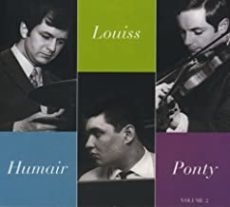
Daniel Humair was born May 23, 1938 in Geneva, Switzerland and played clarinet and drums from the age of seven and won a competition for jazz performance in his teens. By the time he was twenty he was in Paris, France accompanying visiting musicians with his most celebrated season with tenor saxophonist Lucky Thompson at a club called Le Chat Qui Pèche.
Humair became the drummer American musicians would ask to work with, despite a gig with the Swingle Singers in the early 60s. In 1967 he played on violinist Jean-Luc Ponty’s debut Sunday Walk, also contributing the title track. When alto saxophonist Phil Woods emigrated to Paris in 1968 it was natural that Humair should be the drummer in what Woods called the European Rhythm Machine.
In 1969 he won the Downbeat critics’ poll as Talent Deserving Wider Recognition. Humair was so in demand that his job-sheet reads like a list of the pre-eminent names in jazz, Herbie Mann , Roy Eldridge, Stéphane Grappelli, Chet Baker, Michel Portal, Martial Solal, Dexter Gordon, and Anthony Braxton all availed themselves of his graceful, incisive drums. He played with Gato Barbieri on the soundtrack to Last Tango In Paris in 1972.
In 1986, Daniel’s record Welcome on Soul Note, a record which listed all members of the quartet as leaders, was a perfect demonstration of his warmth and responsiveness as a drummer and continued to top drum polls in France well into the 90s. In 1991, Surrounded documented a selection of his work from 1964-87, including tracks with legends such as Eric Dolphy, Gerry Mulligan and Johnny Griffin – a neat way of giving Humair centre-stage and celebrating the breadth of his involvement with jazz history.
To date he has recorded more than four-dozen albums as a leader, became a Chevalier of the Ordre des Arts et des Lettres in 1986 and Officier in 1992. A talented painter, he describes his own work as figurative abstract. Drummer Daniel Humair continues to perform and record.
More Posts: bandleader,composer,drums,history,instrumental,jazz,music