

Daily Dose Of Jazz…
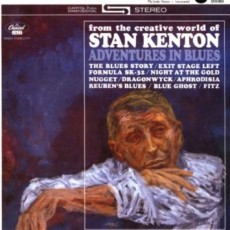
Stanley Newcomb Kenton was born on December 15, 1911 in Wichita, Kansas and was raised in Colorado, then in California. Conceived out of wedlock, his parents told everyone he was born on February 19, 1912 and believing this as fact well into adulthood, he recorded an album Birthday in Britain in 1973 and his grave marker even reflects this erroneous date.
Kenton learned piano as a child, influenced by Earl Hines, attending Bell High School, graduating in 1930 and while still a teenager toured with various bands. He played in the 1930s in the dance bands of Vido Musso and Gus Arnheim, but his natural inclination was as a bandleader.
In June 1941 he formed his own band, which developed into one of the best-known West Coast ensembles of the 1940s. It was later named Artistry in Rhythm after his theme song. In the mid-1940s, Kenton’s band and style became known as “The Wall of Sound”, a tag later used by Phil Spector.
Much more important in the early days as an arranger, Stan was an inspiration for his loyal sidemen in his first band such as Howard Rumsey and Chico Alvarez. Influenced by Jimmie Lunceford and his high note trumpeters and thick-toned tenors, the orchestra struggled after its initial success. Record sales were low and even being Bob Hope’s backup band was not a pleasant experience.
By 1942 Kenton was in New York City, the band was catching on with an endorsement by Fred Astaire on the Roseland Ballroom marquee. He had Art Pepper, Stan Getz, Boots Mussulli and Anita O’Day as part of the ensemble. Lyricist Joe Greene put words to the songs And Her Tears Flowed Like Wine and Don’t Let The Sun Catch You Cryin. Stan would bring in Pete Rugulo as his chief arranger along with Bob Cooper and June Christy. The band’s popularity increased with Christy hits Tampico and Across The Alley From The Alamo, and recorded the popular tune Laura, the song from the film.
Calling his music “progressive jazz,” Kenton sought to lead a concert orchestra as opposed to a dance band at a time when most big bands were starting to break up. Over the years he would employ Kai Winding, Buddy Childers, Ray Wetzel, Al Porcino, Jack Costanzo, Shorty Rogers, Shelly Manne, Bud Shank, Laurindo Almeida, Maynard Ferguson, Gerry Mulligan, Marty Paich, Bill Holman, Mel Lewis, Pete and Conte Candoli, Bill Perkins, Stan Levey, Lucky Thompson, Jack Sheldon, Frank Rosolino, Sam Noto, Carl Saunders, Lee Konitz, Chris Connor and the list goes on.
Kenton won Grammy awards in 1962 and 1963 for his Kenton’s West Side Story and Adventures In Jazz, respectively. He had several Top 40 hits, founded his own label, “The Creative World of Stan Kenton”, recording several live concerts. As an educator he encouraged big band music in high schools and colleges, instructing what he called progressive jazz, making available his charts to the bands. He donated his entire library to the music department of the University of North Texas and the Stan Kenton Jazz Recital hall is named in his honor.
Entering Midway Hospital on August 17, 1979 after suffering a stroke, pianist, arranger, composer, bandleader and educator Stan Kenton, who recorded over seven-dozen albums with an innovative and often controversial jazz orchestra, passed away on August 25, 1979.

Inspire A Young Mind
More Posts: piano
Daily Dose Of Jazz…
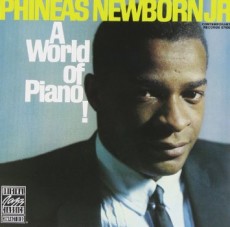
Phineas Newborn, Jr. was born into a musical family on December 14, 1931 in Whiteville, Tennessee. His father Phineas Sr. was a blues musician and his younger brother Calvin, a jazz guitarist. He studied piano as well as trumpet, tenor and baritone saxophone. His principal influences were Art Tatum, Oscar Peterson and Bud Powell.
Newborn first played in an R&B band led by his father on drums, his brother Calvin on guitar, bassist Tuff Green, Ben Branch and Wilie Mitchell before moving on to work with Lionel Hampton, Charles Mingus and others. From 1947 to ’51 they recorded B.B. King’s first recording, toured with Jackie Brenston, recorded Sam Phillips Roclet 88 which became the first #1 record for Chess Records.
His earliest Fifties recordings for Sun Records with blues harmonica player Big Walter Horton, We Three with drummer Roy Haynes and bassist Paul Chambers, and his debut as a solo artist with Phineas’ Rainbow for RCA Victor. By 1956, Phineas was in New York City performing in trio and quartet form with Oscar Pettiford, Kenny Clarke, George Joyner and Philly Joe Jones. He created enough interest internationally to work as a solo pianist in Stockholm and Rome towards the ned of the decade.
In 1960, the 29-year-old Newborn replaced Thelonious Monk and performed It’s Alright with Me on the ABC-TV series, Music for a Spring Night. A move to Los Angeles, California saw him recording a sequence of piano trio albums for the Contemporary label, however, some critics found his playing style rather facile. He developed emotional problems as a result an during certain periods pent time at Camarillo State Mental Hospital. He also suffered a hand injury which hindered his playing.
Newborn’s later career was intermittent due to ongoing health problems. During the mid-1960s to mid-1970s Newborn faded from view, underappreciated and under-recorded. He made a partial comeback in the late 1970s and early ‘80s, although this return apparently failed to benefit his financial situation.
Pianist Phineas Newborn, Jr. recorded twenty-three albums as a leader and another seven as a sideman before he passed away on May 26, 1989 after the discovery of a growth on his lungs. He is buried in Memphis National Cemetery. It is said that his financial and medical plight spurred the founding of the Jazz Foundation of America in 1989.
Dose A Day – Blues Away
More Posts: piano
Daily Dose Of Jazz…
Reginald Volney Johnson was born December 13, 1940 in Owensboro, Kentucky. After playing trombone with school orchestras and army bands, he switched to double bass and started working with musicians such as Bill Barron and recording with Archie Shepp in the mid–1960s, before joining Art Blakey’s band for a month-long residency at the Five Spot Café in 1965.
In 1966 Johnson traveled with the Blakey band to The Lighthouse in Hermosa Beach, California and recorded Buttercorn Lady alongside Frank Mitchell, Chuck Mangione and Keith Jarrett.
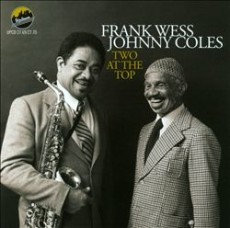
Reggie’s playing and/or recording in America reads like a who’s who list not limited to Bill Dixon, Sun Ra, Burton Greene, Lonnie Liston Smith, Stanley Cowell, Bobby Hutcherson,, Harold Land, Blue Mitchell, Walter Bishop Jr., Sonny Rollins, Sonny Stitt, Sarah Vaughan, Carmen McRae, Art Pepper, Clark Terry, The Crusaders, Charles Mingus, Eddie “Lockjaw” Davis, Johnny Coles, and Frank Wess.
Equally so is his mid–1980s he move to Europe working with Johnny Griffin, Horace Parlan, Monty Alexander, Kenny Barron, Tom Harrell, Phil Woods, Cedar Walton, Alvin Queen, Jesse Davis, Freddie Redd and Alvin Queen.
As a leader double-bassist Reggie Johnson released one album titled First Edition in 1985 on the JR Record label and he continues to be the consummate sideman performing all over the world.
Discography[edit]
Take A Dose On The Road
More Posts: bass
Daily Dose Of Jazz…
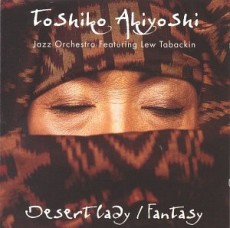
Toshiko Akiyoshi was born 12 December 1929 in Liaoyang, Manchuria in the Republic of China to Japanese emigrants. Losing their home after WWII her family returned to Japan where a local record collector introduced her to jazz through Teddy Wilson playing Sweet Lorraine. Immediately loving the sound she began to study jazz
In 1952, during a tour of Japan, pianist Oscar Peterson discovered Akiyoshi playing in a club on the Ginza. So impressed he convinced record producer Norman Granz to record her and in 1953 she dropped her debut album with the Peterson rhythm section, bassist Ray Brown and drummer J.C. Heard. The album was released as Toshiko’s Piano in the U.S. and as Amazing Toshiko Akiyoshi in Japan.
Toshiko went on to study at Berklee School of Music under a full scholarship and in 1956 she became the first Japanese student to attend. She married saxophonist Charlie Mariano in ’59, had a daughter, divorced in ’67, married Lew Tabackin in ’69 and moved to Los Angeles, California in ‘72. Tgether they formed the a 16-piece big band comprised of studio musicians. She composed and arranged the music and he was featured soloist on sax and flute, recording their first album Kogun in 1974. With commercial success in Japan the band began receiving critical acclaim.
Moving to New York City in 1982, a new big band was assembled called the Toshiko Akiyoshi Jazz Orchestra featuring Lew Tabackin. Though BMG released her big band projects in Japan, to her dismay she could never get distribution in the States and after several decades she disbanded the band after the final concert of a seven year run at Birdland in New York City.
Over the course of a fifty year career since her debut recording for Granz in 1954, pianist, composer and arranger Toshiko Akiyoshi has recorded continuously – almost exclusively as a leader of small jazz combos and of her big bands – averaging one studio album release per year for well over 50 years. She has been honored as an NEA Jazz Master, been named a winner in Down Beat Magazine Critic and Reader Polls for album, big band, arranger and composer, and has been nominated for several Grammy awards among other accolades. She continues to compose, arrange, record and perform.
Give The Gift Of Knowledge
More Posts: piano
Daily Dose Of Jazz…
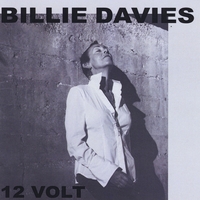
Billie Davies was born on December 10, 1955 in Bruges, West Flanders, Belgium. An autodidact and naturally talented she was surrounded by music from birth as her mother played the best in jazz and classical music. From the age of ten she was singing in choirs until her voice changed around the age of 22.
A few years later Davies would embark on learning to play the drums and became a professional jazz musician shortly after declining Max Roach’s invitation to attend Berklee College of Music. Her music is an improvisational conversation between musicians and musical instruments.
Billie has played with Leroy Vinnegar, John Handy, Joe Fuentes, Saul Kaye, Michael Godwin, Lee Elfenbein, Drew Waters, Pierre Swärd, Tom Bone Ralls, Manny Silvera, Oliver Steinberg, Daniel Coffeng, Adam Levy and has appeared all over the world.
Drummer, composer, director, arranger and bandleader Billie Davies has been honored as Jazz Artist of the Year at the Los Angeles Music Awards, drums in rhythms of jazz, cool jazz, Avant jazz and avant-garde and continues to mold it into her own neo-humanistic expressionist jazz.
Give The Gift Of Knowledge
More Posts: drums