


Daily Dose Of Jazz…
Tim Armacost was born on December 8, 1962 in Los Angeles, California. He began his musical training on clarinet in Tokyo at the age of eight but by sixteen he had switched to tenor saxophone, and was working in big bands around Washington. His turning point into a jazz career came at eighteen when he returned to Los Angeles and met his two primary teachers, Bobby Bradford and Charlie Shoemake. Through them he learned the fundamentals of melody and harmony, and was exposed to the giants of modern jazz, who would give shape to his early development.
Armacost graduated Magna Cum Laude from Pomona College in 1985, moved to Amsterdam later that year, established himself on the jazz scene, learned fluent Dutch and became the head of the Sweelinck Conservatory’s saxophone department. After seven years of performing, teaching and recording in Europe, he headed for India. There he studied under table master Vijay Ateet. He would go on to perform with Indian jazz and classical musicians and at festival.
Fluent in Japanese, Tim has studied as an exchange student at Waseda University, and has performed with Terumasa and Motohiko Hino, Fumio Karashima, Nobuyoshi Ino, Fumio Itabashi, Shingo Okudaira, Benisuke Sakai, Kiyoto Fujiwara, and Yutaka Shiina.
Moving to New York in 1993 he established himself and released his first two albums Fire and Live at Smalls. With his quartet, the cooperative group Hornz in the Hood with fellow saxophonists Craig Handy and Ravi Coltrane he continues to perform as well as with Ray Drummond’s “Excursion Band,” and co- leads the Brooklyn Big Band with Craig Bailey.
Tenor saxophonist Tim Armacost has performance and recording credits alongside Al Foster, Jimmy Cobb, Kenny Barron, Tom Harrell, Billy Hart, Victor Lewis, Jeff “Tain” Watts, Ray Drummond, Roy Hargrove, Paquito D’Rivera, Claudio Roditi, Bruce Barth, Dave Kikoski, Don Friedman, Lonnie Plaxico, Robin Eubanks, Charlie Shoemake, Pete Christlieb, Randy Brecker, Akira Tana, Valery Ponomarev, the Maria Schneider Orchestra, and the David Murray Big Band. He continues to tour throughout East and West Europe, Japan, India, and the United States.

Jazz Is Global – Share
More Posts: saxophone
Daily Dose Of Jazz…
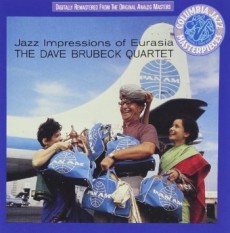
Dave Brubeck was born David Warren Brubeck on December 6, 1920 in Concord, California and grew up in Ione. His father, a cattle rancher, his mother Studied piano with intention to become a concert pianist, taught he son to play. He could not read music during these early lessons, attributing this difficulty to poor eyesight, but faked his way well enough that this deficiency went mostly unnoticed.
Brubeck entered the College of the Pacific studying veterinarian science but changed his major to music at the best of the head of zoology. Discovered that he could not read music he was almost expelled but his ability with counterpoint and harmony more than compensated.
In 1942, Brubeck was drafted into the U.S. Army, and serving in Europe played piano at a Red Cross show and was such a hit that he was spared from combat service and ordered to form a band. He created one of the U.S. armed forces’ first racially integrated bands, The Wolfpack. It was here that he met Paul Desmond in early ’44. He returned to college after discharge, completed his studies, worked with an octet and with an experimental trio with Cal Tjader and Ron Crotty, and often joined onstage by Desmond.
He recorded his first sessions in 1949 for Coronet Records, soon to become Fantasy Records owned by the Weiss Brothers. In 1951 he organized the Dave Brubeck Quartet with Paul Desmond on alto saxophone, taking up a long residency at San Francisco’s Black Hawk nightclub. During this period he recorded a series of albums and gained great popularity touring college campuses.
Dave signed with Fantasy Records, worked as an A&R man and brought in Gerry Mulligan, Chet Baker and Red Norvo. Discovering he only owned half interest in his own recording and not the label he moved to Columbia Records.
In 1959, the Dave Brubeck Quartet recorded Time Out, a seminal album that featured unusual time signatures that quickly went platinum and was the first jazz album to sell more than a million copies. A high point for the group was their 1963 live album At Carnegie Hall, arguably his greatest concert.
Over the next several decades Brubeck would record many albums, develop a jazz musical, The Real Ambassadors, working with Louis Armstrong, Lambert, Hendricks and Ross, and Carmen McRae, perform at the Monterey Jazz Festival, did a series of Jazz Impressions albums, and was the program director of all-jazz format WJZZ-FM radio.
Of his many honors pianist Dave was inducted into the California Hall of Fame, was honored with a Time Magazine cover that he felt should have gone to Duke Ellington, and received an honorary Doctor of Music degrees from the Eastman School of Music, Berklee College of Music and George Washington University.. He was honored by the Kennedy Center, was awarded the Miles Davis Award and Bruce Ricker and Clint Eastwood produced the documentary Dave Brubeck: In His Own Sweet Way.
Pianist and composer Dave Brubeck, considered to be one of the foremost exponents of cool jazz, passed away of heart failure, ironically, on his way to a cardiology appointment, on December 5, 2012, in Newark, Connecticut, one day before his 92nd birthday.
Give A Gift Of Jazz – Share
More Posts: piano
Daily Dose Of Jazz…
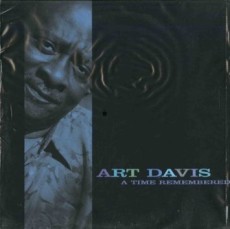
Art Davis was born in Harrisburg, Pennsylvania on December 5, 1934 where he began studying the piano at the age of five, switched to tuba, and finally settled on the bass while attending high school. He studied at Juilliard and the Manhattan School of Music, but graduated from Hunter College.
Davis earned a Ph.D in clinical psychology from New York University in 1982 and four years later he moved to Southern California, where he balanced his teaching as a professor at Orange Coast College and practicing of psychology with jazz performances.
Art recorded three albums as a leader with Herbie Hancock, Hilton Ruiz, Greg Bandy, John Hicks, Idris Muhammad, Pharoah Sanders, Ravi Coltrane, and Marvin Smith.
As a sideman he performed and recorded with Joe Albany, Gene Ammons, Count Basie, Art Blakey, John Coltrane, Curtis Fuller, Dizzy Gillespie, Eddie Harris, Freddie Hubbard, Elvin Jones, Etta Jones, Clifford Jordan, Roland Kirk, Abbey Lincoln, Booker Little, Lee Morgan, Tisziji Munoz, Dizzy Reece, Max Roach, Lalo Schifrin, Shirley Scott, Clark Terry, McCoy Tyner and Leo Wright.
He also launched a legal case that led to the current system of blind auditions for orchestras. Double bassist Art Davis passed away from a heart attack on July 29, 2007.
Inspire A Young Mind
More Posts: bass
Daily Dose Of Jazz…
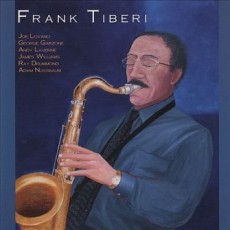
Frank Tiberi ws born December 4, 1928 in Camden, New Jersey. He plays the alto and tenor saxophone, clarinet, flute and bassoon. He has been performing and recording since the age of thirteen and has toured with Benny Goodman and Urbie Green, and has played with Dizzy Gillespie.
He is a part time professor at Berklee College of Music where he teaches improvisational techniques and pedagogy. He has served as the director for the Camden Jazz Festival. Tiberi specializes in modern and contemporary jazz techniques and has released EPs with fellow Berklee instructor George Garzone.
Saxophonist Frank Tiberi is currently the leader of the Woody Herman Orchestra. Herman handpicked him shortly before his death to lead the band. He has been doing so since 1987.
Dose A Day – Blues Away
More Posts: saxophone
Daily Dose Of Jazz…
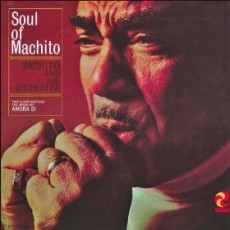
Machito was born Francisco Raúl Gutiérrez Grillo on December 3, 1909 in Havana, Cuba. He began playing music as a child and started playing professionally in his teens before emigrating to America in 1937 as a vocalist with La Estrella Habanera.
In the late 30s he worked with several Latin artists and orchestras, recording with bandleader Xavier Cugat. An attempt to launch a band with his brother-in-law Mario Bauzá failed, but in 1940 Machito founded the Afro-Cubans and was the front man, singer, conductor and maraca player. The following year he hired Bauzá as his music director, a working relationship that lasted for 35 years.
Under Bauzá’s influence, Machito began hiring jazz-oriented arrangers and his bands of the 40s were among the first to fuse Afro-Cuban rhythms with jazz improvisation that greatly inspired jazz giants Dizzy Gillespie and Stan Kenton. Throughout his career he played and recorded with Charlie Parker, Dizzy Gillespie, Buddy Rich, Cannonball Adderley, Herbie Mann, and Johnny Griffin, held a spot at the Palladium and recorded Decca, Mercury and Clef labels.
In 1983 he won the Grammy Award for Best Latin Recording for Machito & His Salsa Big Band ’82. In 2005, his 1957 album, “Kenya”, was added to the list of “1001 Albums You Must Hear Before You Die”. He played a huge role in the history of Latin jazz and passed away after suffering a fatal stroke on April 15, 1984 while playing on stage at Ronnie Scott’s in London. He was 74. A documentary of the great Cuban musician, Machito: A Latin Jazz Legacy was released in 1987.
Take A Dose On The Road