


Daily Dose Of Jazz…
Alan Lee da Silva was born on January 22, 1939, in Bermuda, British Empire to an Azorean/Portuguese mother, Irene da Silva, and a black Bermudian father known only as Ruby. Emigrating to the United States at the age of five with his mother, he was raised in Harlem, New York City. Here he first began studying the trumpet, and moved on to study the upright bass. He eventually acquired U.S. citizenship by the age of 18 or 19 and in his twentieshe adopted the stage name of Alan Silva.
As one of the most inventive bass players in jazz, Silva has performed with avant-garde jazz musicians Cecil Taylor, Sun Ra, Albert Ayler, Sunny Murray, and Archie Shepp. He performed in 1964’s October Revolution in Jazz as a pioneer in the free jazz movement, and for the 1967 live album Albert Ayler in Greenwich Village.
Since the early 1970s, Alan has lived mainly in Paris, France where he formed the Celestrial Communication Orchestra, dedicated to the performance of free jazz with various instrumental combinations. In the 1980s, Silva opened a music school, Institute for Art, Culture and Perception (I.A.C.P.) in Central Paris, together with François Cotinaud and Denis Colin.
In the 1990s he picked up the electronic keyboard, the electric violin and electric sarangi on his recordings. Since around 2000, he has continmued to perform more frequently as a bassist and bandleader, notably at New York City’s annual Vision Festivals.

More Posts: bass,history,instrumental,jazz,keyboards,music,sarangi,violin

Daily Dose Of Jazz…
Simon H. Fell was born on January 13, 1959 in Dewsbury, Yorkshire, England. He began playing double bass in 1973 and from 1978 to 1981 he read English Literature at Fitzwilliam College, Cambridge, England. His early group was a free-jazz trio with drummer Paul Hession and saxophonist Alan Wilkinson. They recorded and released their music on his label Bruce’s Fingers.
During this period Fell was significantly connected with The Termite Club in Leeds. He was a member of the free jazz trio Badland, the improvising string and percussion ensemble ZFP with Carlos Zingaro, Marcio Mattos and Mark Sanders, and SFQ, a quartet/quintet with clarinettist Alex Ward and a changing membership. He also performed in many other ensembles, including the London Improvisers Orchestra and Derek Bailey’s Company Week.
Simon wrote a major sequence of four new large-scale compositions titled Compilation. Free improvisation, rock and jazz all form key parts of the musical language. Noise guitarist Stefan Jaworzyn, Evan Parker and John Butcher were essential musicians to the projects, but he often deliberately made use of amateur or student musicians.
Bassist and composer Simon Fell, who is primarily known for his work as a free improviser and the composer of post-serialist compositions, died on June 28, 2020
More Posts: bandleader,bass,history,instrumental,jazz,music

Daily Dose Of Jazz…
Nicole Rampersaud was born on December 17, 1981 in Toronto,Canada. Studying trumpet through high school she then went to earn an undergraduate degree from the University of Toronto in Jazz Performance. From there a scholarship led her studies to the New England Conservatory, where she earned her Master’s Degree in Jazz Studies. While at the Conservatory, Nicole studied with Danilo Perez, John McNeil, Jerry Bergonzi, Joe Morris, Herb Pomeroy, Joe Maneri, and Bob Moses. She also studied composition with Michael Gandolfi and Ken Schaphorst.
Developing her singular voice that intersects with a broad range of musical practices and traditions, Nicole has become a sought-after collaborator with a host of artists. A few of his contemporary musicians are Anthony Braxton, Joe Morris, Ra-kalam Bob Moses, Sandro Perri, and many more.
Rampersaud’s primary groups include Brass Knuckle Sandwich with pianist Marilyn Lerner, a duo with guitarist Joel LeBlanc, and she is a founding member of the trio c_RL alongside Allison Cameron and Germaine Liu. She has performed with AIMToronto Orchestra, Eucalyptus, Michael Vlatkovich 5 Winds, and Montreal-Toronto Art Orchestra.
Since 2008, she has been building a catalogue of solo compositions that deconstruct the trumpet’s sonic possibilities and co-founded the improvisation-driven series, Understory. Trumpeter and composer Nicole Rampersaud continues to relentlessly seek out and create spaces to work with a diverse and expanding group of music-makers.

More Posts: bandleader,composeer,history,instrumental,jazz,music,trumpet

Daily Dose Of Jazz…
Wilber Morris (November 27, 1937 in Los Angeles, California and followed in the footsteps of his older brother Butch into the music industry and jazz. He began playing frums as a child but switched to the double bass during his tour of duty in the Air Force from 1954 to 1962.
He played around San Francisco, California with Pharoah Sanders and Sonny Simmons but after his discharge he returned home and played with Arthur Blythe and Horace Tapscott. 1969 saw Wilber back in San Francisco for a short period but it wasn’t until he moved aross the country for New York City in 1978 that his career took off. His association with Billy Bang from 1979 to ‘83 rendered five albums and multiple touring dates. He then became a mainstay in David Murray’s octet well into the 1990s which produced seven albums.
He put together a trio of players under the name Wilber Force in 1981 and recorded his debut album as a leader, Collective Improvisations, and would go on to record six more as a leader or co-leader. His final recording came in 2019 titled Monks, which is a collective interpretation of Thelonious Monk compositions.
Morris founded the One World Ensemble in 1995, and participated in John Fischer’s one-off reunion of INTERface and performed well into the new millennium.
Wilber performed with Pharoah Sanders, Steve Habib, Sonny Simmons, Alan Silva, Joe McPhee, Horace Tapscott, Butch Morris, Arthur Blythe, Charles Gayle, William Parker, Charles Tyler, Dennis Charles, Roy Campbell, Avram Fefer, Alfred 23 Harth, Borah Bergman and Rashied Ali.
As a sideman recorded thirty-one albums with Marshall Allen, Billy Bang, Thomas Borgmann, Rob Brown, Bobby Few, Avram Fefer, Charles Gayle, Steve Habib, Frank Lowe, Makanda Ken McIntyre, David Murray, Kevin Norton. Positive Knowledge, Alan Silva and Steve Swell.
Double bass player and bandleader Wilber Morris died on August 8, 2002 in Livingston, New Jersey from a previos bout with cancer that returned.

More Posts: bandleader,bass,history,instrumental,jazz,music
Daily Dose Of Jazz…
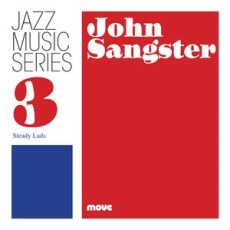
John Grant Sangster was born November 17, 1928 in the Melbourne suburb of Sandringham, Victoria, Australia. He was an only child that attended primary schools in Sandringham and Vermont, and then Box Hill High School. While at high school he taught himself to play trombone and with a friend, Sid Bridle, formed a band.
In 1946 he started a civil engineering course at Melbourne Technical School. Two years later Sangster performed at the third annual Australian Jazz Convention, held in Melbourne. By the following year he led his own ensemble, John Sangster’s Jazz Six, which included Ken Evans on trombone. He provided trombone for Graeme Bell and his Australian Jazz Band, later took up the cornet and then the drums. They toured several times from 1950 to 1955, and in the late Fifties he began playing the vibraphone.
He went on to play with Don Burrows in the early 1960s, form his own quartet and experimented with group improvisatory jazz, after becoming interested in the music of Sun Ra and Archie Shepp. By the end of the Sixties his attention turned to rock musicians and he joined the expanded lineup of the Australian progressive rock group Tully, who provided the musical backing for the original Australian production of the rock musical Hair. He performed and recorded with Tully and their successors, Luke’s Walnut, throughout the two years he played in Hair. In 1970 he re-joined the Burrows group for Expo 1970 in Osaka, Japan.
In the 1970s Sangster released a series of popular The Lord of the Rings inspired albums that started with The Hobbit Suite in 1973. He was also the composer of a large number of scores for television shows, documentaries, films, and radio. In 1988, Sangster published his autobiography, Seeing the Rafters.
Trombonist John Sangster, who also plays trumpet, drums, percussion, cornet, vibraphone and is best known as a composer, died in Brisbane, Queensland, Australia on October 26, 1995 at age 66.
More Posts: bandleader,composer,cornet,drums,history,instrumental,jazz,music,trombone,trumpet,vibraphone