

Daily Dose Of Jazz…
William Henry Bauer was born in New York City on November 14, 1915 and as a child he played ukulele and banjo before switching to guitar. He played with the Jerry Wald band and recorded with Carl Hoff and His Orchestra in 1941, before joining Woody Herman in 1944 as a member of the First Herd. In 1946, he played with Benny Goodman and Jack Teagarden.
Working in small groups led by bassist Chubby Jackson and trombonist Bill Harris, Bauer established himself as a soloist in the bebop movement. In 1946, he began working with Lennie Tristano, enjoying a natural synergy in their style and approach. Their development of intuitive music led to the 1949 session Crosscurrents. He would go on to become a member of the NBC Tonight Show band in New York City and played in the Today Show band at the start of early television.
Continuing his pioneering guitar work in a partnership with Lee Konitz, whose avant-garde saxophone work was a perfect match for Billy’s guitar. The dialogue between the musicians crossed styles from bop and cool to the avant-garde. Their recordings have been described as “some of the most beautiful duet recordings in jazz. Duet For Saxophone and Guitar was an unusual instrument pairing which has been described as redefining the role of jazz guitar.
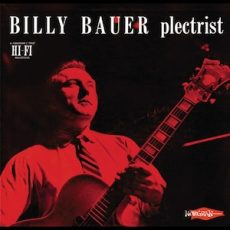
Bauer made one album under his own name, Plectrist, in 1956. Later, he arranged the song No One that appeared on the album Henry Golis Presents Good Music with Friends in 2007.
Guitarist Billy Bauer died of pneumonia in New York at the age of 89 on June 17, 2005.

More Posts: bandleader,guitar,history,instrumental,jazz,music
Daily Dose Of Jazz…
Mario Pavone was born on November 11, 1940 in Waterbury, Connecticut and attended B. W. Tinker grammar school, Leavenworth High School, and the University of Connecticut at Storrs, where he graduated with a B.S. in engineering. When his neighbor, guitarist Joe Diorio, recognized him as an unrealized musician Mario was inspired to take up the bass. Primarily self-taught, he was a natural on his instrument. Pavone began playing bass soon after witnessing John Coltrane at the Village Vanguard in 1961.
Pavone’s career took off during the Sixties when he toured Europe and was involved in the jazz loft era, playing in jam sessions nightly in New York City. From the late in the decade into the early Seventies he was a member of Paul Bley’s trio. The New Haven based Creative Musicians Improvising Forum (CMIF) was founded in 1975 by Pavone, Wadada Leo Smith, and Gerry Hemingway was influenced by Chicago’s Association for the Advancement of Creative Musicians. His venture into composition began here.
In 1979 Mario recorded his debut album as a leader and was a member of Bill Dixon’s trio during the 1980s. He also performed with Barry Altschul, Smith, and Hemingway. In 1980 he began an 18-year musical relationship with saxophonist Thomas Chapin. With drummer Michael Sarin, the group recorded seven albums for Knitting Factory Records, which also released an eight-CD box set of these albums plus a live recording following Chapin’s death in 1998.
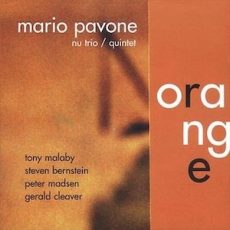
He co-led a group with Anthony Braxton in the early 1990s, with Braxton on piano rather than his usual saxophones. His groups have included Matt Wilson, Gerald Cleaver, Peter Madsen, Joshua Redman, Tony Malaby, Dave Douglas, Steven Bernstein, George Schuller, Craig Taborn, and Jimmy Greene.
Bassist Mario Pavone, who has over 40 recordings and several films documenting his compositions and performances, died from carcinoid cancer in Madeira Beach, Florida on May 15, 2021 at the age of 80.
More Posts: bandleader,bass,composer,history,instrumental,jazz,music

Daily Dose Of Jazz…
Christopher Burnett was born in Olathe, Kansas on November 2, 1955 and grew up in a military family that moved often before settling in the Kansas City area. He was exposed to music growing up as his mother introduced him to the piano and he was a member of the youth choir at his church. He took up saxophone and clarinet in his school band. After high school, he enlisted in the U.S. Army Music Program where he performed and pursued higher education, studying at the Armed Forces School of Music, Webster University, Missouri’s Columbia College, Berklee College of Music, and American University.
Spending 22 years in the military, Chris rose to the rank of 1st Sergeant in the position of Enlisted Bandleader, staff and faculty assignment at the Armed Forces School of Music, and the leading Chief Petty Officer of the NATO Band in Naples, Italy. He served as NATO Ceremonial Band Conductor, directed the jazz band, played the lead alto saxophone chair with the West Point Military Academy Band’s Jazz Knights, and a featured soloist with the Hof Symphony Orchestra in Germany.
After leaving the military Burnett continued to teach, holding the position of director of the jazz ensemble program and adjunct lecturer at Missouri University of Science and Technology, formerly University of Missouri-Rolla, where he worked as an Adjunct Lecturer for a decade.
He has performed with artists like Bobby Watson, Will Matthews, Marcus Hampton, Ahmed Alaadeen, and many more. Burnett is the Founder and Artistic Director of KC Area Youth Jazz and along with colleagues Erica Lindsay and Sumi Tonooka is a co-founder of the large independent recording label, Artists Recording Collective.
He has held residencies at the historic Drum Room and the Black Dolphin in Kansas City, and appeared as a guest artist and clinician for the Northwest Missouri State Jazz Festival. He released his debut album as a leader, Time Flies in 2013, Firebird in 2014, in 2021 The Standards, Vol. 1, and Live at The Drum Room in Kansas City in 2022.
More Posts: bandleader,educator,history,instrumental,jazz,music,saxophone

Daily Dose Of Jazz…
David Panton was born on October 20, 1946 in the Midlands, England where his formative musical experience revolved around singing in the local church choir and later with a mixed voice choir and an amateur operatic society. He began teaching himself classical piano from the age of twelve and by fifteen had begun to compose by improvising at the keyboard. At seventeen he joined the army as a bandsman, taking up the oboe and being posted for a year in 1964 to Kneller Hall, the Military School of Music. He later attended Birmingham School of Music for piano tuition under the late William Fellowes for a year from 1966. His composing took on a more modern direction which was largely unintelligible to his military colleagues.
After four years as bandsman he resigned to pursue a musical career back in civilization, taking up the alto saxophone as a result of hearing some of the American and British free jazz players of the time such as Ornette Coleman and Mike Osborne. He formed several groups and gave solo performances at the Birmingham Arts Lab, Midlands Arts Centre, Birmingham and Midlands Institue as well as numerous pubs. He made contact with London based musicians John Stevens, Evan Parker, Derek Bailey and Maggie Nichols which led to occasional appearances around the city.
He ventured into folk music with the group Forest, followed by the experimental theatre group Chameleon Laboratory Theatre. In 1979 he received an Arts Council jazz bursary, allegedly the first provincal based musician to do so, with a second following in 1981. By 1989 he abandoned music and started up an audio cassette duplication business. When the demise of the audio cassette undermined business viability, David opted to take up a civil service post in the late Nineties from which he retired in 2006.
In 2009 he was awarded the MA in Music from the Open University and has continued to pursue music activities in academia.

More Posts: bandleader,history,instrumental,jazz,music,piano,saxophone
Daily Dose Of Jazz…
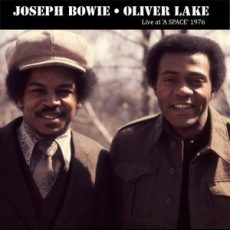
Joseph Bowie was born October 17, 1953 in St. Louis, Missouri and was greatly influenced by his older brothers, saxophonist Byron and trumpeter Lester. His first international tour was with Oliver Lake of the Black Artists Group in 1971. During this time in Paris, France he worked with Alan Silva, Frank Wright, and Bobby Few. He also worked with Dr. John in Montreux, Switzerland in 1973.
Moving to New York City, and with the help of Off Broadway Theater impresario Ellen Stewart he established La Mama children’s theater. He performed with Cecil Taylor, Human Arts Ensemble, Nona Hendryx, Leroy Jenkins, Vernon Reid, Stanley Cowell, Sam Rivers, Philippe Gaillot, Dominique Gaumont and Ornette Coleman.
In 1976 Joseph relocated to Chicago, Illinois where he led bands for Tyrone Davis and other R&B artists. Returning to New York City in 1978 he began singing with punk and funk musician James Chance and the Contortions. Defunkt was born during that time and over the next 25 years, Defunkt recorded 15 albums.
Bowie has collaborated with Jean-Paul Bourelly and Jamaaladeen Tacuma. He has performed “big band funk” arrangements with Ed Partyka at Music School Lucerne, Barbary Coast Ensemble at Dartmouth College, JazzArt Orchestra, and the HR Frankfurt Radio Big Band. The first Defunkt Big Band debuted in 1999 in New York City at the Texaco Jazz Festival sponsored by the Knitting Factory.
In 2003, he moved to the Netherlands where he met Hans Dulfer and was introduced to the Dutch music scene. He has performed with Hans, Candy Dulfer, Saskia Laroo Band, Naked Ears, Monsieur Dubois, Emergency Room, Funkateer, Seven Eleven, and Almost Three.
In 2014 he produced Sax Pistols Allergy for the U.S (ZIP Records) with lyricist Hilarius Hofstede. The album Defunkt Mastervolt was released in 2015 on ZIP Records. Robin van Erven Dorens directed the documentary In Groove We Trust about Bowie’s life.
Trombonist and vocalist Joseph Bowie continues to perform and record.
More Posts: bandleader,history,instrumental,jazz,music,trombone,vocal