

Daily Dose Of Jazz…
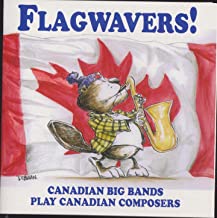
James Douglas “Trump” Davidson was born on November 26, 1908 in Sudbury, Ontario, Canada. He formed one of Canada’s earliest jazz bands in 1925, under the name The Melody Five. From 1929 to 1936 he played in Luigi Romanelli’s orchestra, then led a dance band from 1937 to 1942, which broadcasted on NBC and toured in the United Kingdom with Ray Noble in 1938–39.
In 1942 during World War II he worked in Horace Lapp’s orchestra in 1942, then led a dance band in Toronto, Canada at the Palace Pier from 1944 until 1962. This group appeared often on CBC radio and recorded several times during the 1960s. He led a big band from 1974 to 1978, also singing with this group.
Cornetist, singer and bandleader Trump Davidson passed away on May 2, 1978 at the age of 69 in his hometown.
More Posts: bandleader,cornet,history,instrumental,jazz,music,vocal
Daily Dose Of Jazz…
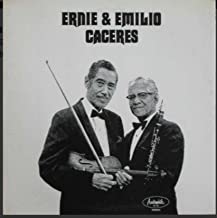
Ernesto Caceres was born on November 22, 1911 in Rockport, Texas and learned to play the clarinet, guitar, alto and baritone saxophone. He first played professionally in 1928 in local Texas ensembles. He and his brother Emilio moved to Detroit, Michigan before moving to New York City, taking work as session musicians. In 1937 they made live nationwide appearances on Benny Goodman’s popular radio series Camel Caravan which created a sensation and made them jazz stars.
In 1938 Ernesto became a member of Bobby Hackett’s band, then worked as a sideman with Jack Teagarden and Glenn Miller’s orchestra from 1940 to 1942. While with Miller, he made an appearance in the films Sun Valley Serenade and Orchestra Wives. Time with Benny Goodman, Woody Herman, and Tommy Dorsey followed later in the 1940s. In 1949 he put together his own quartet, playing at the Hickory Log in New York. He was a frequent performer with the Garry Moore Orchestra on television.
At the beginning of the 1960s he played with the Billy Butterfield Band. In 1964 he moved back to Texas and played in a band with brother Emilio from 1968 until his death. He spent some time in 1965 and 1966 at Mint Hotel in Las Vegas, Nevada and at the Holiday Hotel in Reno, Nevada with the Johnny Long Band. Saxophonist, clarinetist and guitarist Ernesto Caceres passed away from cancer on January 10, 1971.
More Posts: bandleader,clarinet,guitar,history,instrumental,jazz,music,saxophone
Daily Dose Of Jazz…
Clifton “Skeeter” Best was born on November 20, 1914 in Kinston, North Carolina. Playing in Philadelphia, Pennsylvania from 1935 to 1940, he recorded with Slim Marshall and Erskine Hawkins. By 1940, he was a member of Earl Hines’s orchestra, playing with him until he joined the U.S. Navy in 1942.
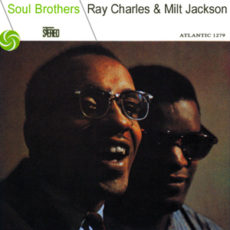
After the war, he played with Bill Johnson, toured East Asia with Oscar Pettiford, and formed his own trio in the 1950s. He did a critically acclaimed session with Ray Charles and Milt Jackson in 1957 called Soul Brothers.
In 1958, he recorded with Mercer Ellington and taught in New York City. He also recorded with Harry Belafonte, Etta Jones, Nellie Lutcher, Milt Hinton, Osie Johnson, Paul Quinichette, Jimmy Rushing, Sonny Stitt, Charles Thompson, and Lucky Thompson.
Guitarist Skeeter Best passed away on May 27, 1985 in New York City.
More Posts: bandleader,guitar,history,instrumental,jazz,music

The Quarantined Jazz Voyager
As a nation of thinkers trepidly venture out to events, not out of fear but in caution, we continue to perform the safe practices of mask wearing and social distancing, this quarantined jazz voyager remains steadfast in protecting himself. Today I am playing one of my favorite genres, the big band, and this one is being led by a most wonderful woman. In 2020 Lenora Zenzalai Helm produced a fabulous record For The Love Of Big Band bringing to the fore the Tribe Jazz Orchestra and new arrangements to some of jazz’s classic compositions. There is something wonderful about listening to music that was created with love.
Track Listing | 1:16:00
- Blues For Mama (Nina Simone) ~ 4:42
- Bebop (Dizzy Gillespie, Deborah Brown) ~ 6:22
- Chega De Saudade (Antonio Carlos Jobim, Jessie Cavanuagh, Vinicius de Moraes, Jon Hendricks) ~ 6:39
- It Could Happen To You (Jimmy Van Heusen, Johnny Burke) ~ 5:26
- Soul Eyes (Mal Waldron) ~ 5:24
- Everything But You (Duke Ellington, Harry James) ~ 4:30
- I Didn’t Know About You (Duke Ellington, Bob Russell) ~ 5:50
- Sandu (Clifford Brown, Dupresha L. Townsend) ~ 9:00
- But Not For Me (George & Ira Gershwin) ~ 5:26
- A Conversation With God (Dear Lord) (John Coltrane, Lenora Zenzalai Helm) ~ 7:25
- Mississippi Goddam (Nina Simone) ~ 6:06
- Stella By Starlight (Victor Young,Ned Washington) ~ 8:23

More Posts: adventure,album,club,genius,jazz,museum,music,preserving,restaurant,travel,vocal
Daily Dose Of Jazz…
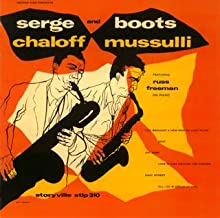
Henry “Boots” Mussulli was born in Milford, Massachusetts on November 18, 1915. His first instrument was clarinet, which he first played at age 12.
By the Forties he was playing with Mal Hallett in Massachusetts and joined Teddy Powell’s group in 1943-44. He played with Stan Kenton from 1944 to 1947, then returned to play with Kenton again on tour in 1952 and 1954.
He played with Vido Musso, Gene Krupa, Charlie Ventura, Serge Chaloff, Toshiko Akiyoshi and Herb Pomeroy.
In 1949, Boots opened a jazz club in his hometown, called The Crystal Room and from the mid-1950s, he concentrated more on music education, leading a local youth orchestra, the Milford Youth Band. They performed at the Newport Jazz Festival in 1967.
Saxophonist Boots Mussulli, based chiefly out of Boston, Massachusetts, passed away from cancer on September 23, 1967 in Norfolk, Massachusetts.
More Posts: bandleader,educator,history,instrumental,jazz,music,saxophone