

Daily Dose Of Jazz…
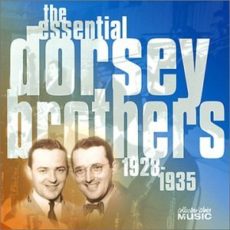
Fulton “Fidgy” McGrath was born in Superior, Wisconsin on December 6, 1907. He played with Red Nichols early in the 1930s, then joined the band of the Dorsey boys and worked on their studio recordings and radio broadcasts.. Additionally he worked extensively as a studio musician and in radio orchestras.
From 1935-37 McGrath played in Lennie Hayton’s radio ensemble, before playing later in the decade with Bunny Berigan, Joe Venuti, and Chauncey Morehouse. After spending time in an NBC orchestra, he moved to the West Coast around 1943, where he became a first-call studio musician who worked on film soundtracks in Hollywood.
His compositions include Shim Sham Shimmy and Mandy Is Two, the latter of which was recorded by Billie Holiday.
Pianist and songwriter Fidgy McGrath passed away at the age of 51 on January 1, 1958 in Los Angeles, California.

Daily Dose Of Jazz…
Eugene Sufana Allen was born on December 5, 1928 in East Chicago, Indiana. He began playing clarinet and piano as a child, and was playing with Louis Prima at age 15 in 1944. He stayed in Prima’s band until 1947, then worked with Claude Thornhill for two years in 1949, and from 1951 to 1953 he played with Tex Beneke.
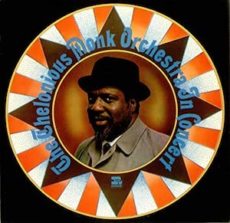
In 1953 he began playing with the Sauter-Finegan Orchestra, playing with them intermittently until 1961, and also worked with Tommy Dorsey, Benny Goodman, and Hal McKusick in the 1950s. Toward the end of the decade, and into the early 1960s, Gene worked with Gerry Mulligan, Manny Albam, Woody Herman, Thelonious Monk, and Bob Brookmeyer.
His later associations include work with Urbie Green, Mundell Lowe, Rod Levitt, and Rusty Dedrick. In the calendar year of 1963, Allen successfully played in and recorded with the big bands of Benny Goodman, Thelonious Monk, and Woody Herman.
Baritone saxophonist and bass clarinetist Gene Allen passed away on February 14, 2008.
More Posts: clarinet,history,instrumental,jazz,music,saxophone
Daily Dose Of Jazz…
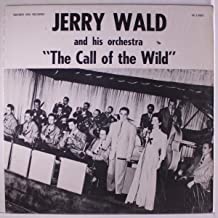
George Robert “Rob” Swope was born on December 2, 1926, in Washington, D.C., the younger brother of trombonist Earl Swope. In 1947 he played with Buddy Rich and recorded with Jerry Wald before playing and getting in the studio with Chubby Jackson in 1948-49.
He worked with Gene Krupa in 1949-50, then with Elliot Lawrence in 1950-51. Swope led his own trio in the D.C. area in the early 1950s, and was a member of The Orchestra, the band which accompanied Charlie Parker in 1953 and Dizzy Gillespie in 1955.
Spending time in New York City in the latter half of the Fifties, he played with Larry Sonn, Boyd Raeburn, Claude Thornhill, Jimmy Dorsey, and Louie Bellson. In the 1960s he worked in Washington, D.C. again, often as a leader. Trombonist Rob Swope passed away on January 9, 1967 in Washington, D.C.
More Posts: bandleader,history,instrumental,jazz,music,trombone
Daily Dose Of Jazz…
Jolyon Hunter was born on December 1, 1926 in Ealing, London, England and moved with his actor parents to America in 1935. He studied the French horn at two military schools before switching to trumpet. By 1943 he returned home to Britain and attended the Royal College of Music before joining the war effort in the British Army.
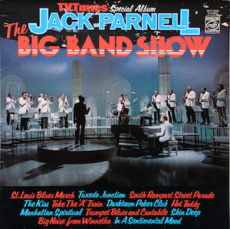
In 1950 Jo left Army service and joined the Kenny Graham Afro Cubists, working with them off and on until 1957. Departing the group, he then worked for a short time with Roy Fox, followed by a five year residence with the Jack Parnell Big Band. He went on to play with Oscar Rabin, replacing Jimmy Deuchar.
Moving to Brighton, he worked with local bands and was an active freelancer on both trumpet and piano. In his later years he worked on cruise ships and played harmonica. Trumpeter and pianist Jo Hunter, who also played pianist and harmonica, passed away on August 14, 2016 at the age of 89.
More Posts: harmonica,history,instrumental,jazz,music,piano,trumpet
Daily Dose Of Jazz…
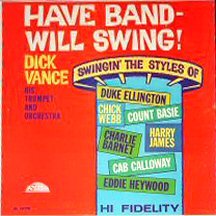
Dick Vance was born on November 28, 1915 in Mayfield, Kentucky, and raised in Cleveland, Ohio. He learned violin before concentrating on trumpet and by 1932 was playing with J. Frank Terry before joining Lil Armstrong’s band in 1934.
He moved to New York City and played with Willie Bryant, Kaiser Marshall, and Fletcher Henderson between 1936 to 1938. In Henderson’s band he was lead trumpeter and occasionally sang. By 1939 he joined Chick Webb’s orchestra, remaining in the group when Ella Fitzgerald took over leadership. His next move had him becoming the staff arranger for Glen Grey’s band and, in 1942, joined the Lucky Millinder Orchestra.
From 1944–45 he worked with Charlie Barnet, Don Redman, Eddie Heywood and Ben Webster. From 1944 to 1947 he studied at Juilliard, and moonlighted as a pit orchestra musician and an arranger for Harry James, Cab Calloway, Earl Hines and Duke Ellington. During this time Dick played on notable Broadway productions including Pal Joey, Beggar’s Holiday, and in the off-stage band for Streetcar Named Desire.
In 1950, Vance reunited with Fletcher Henderson, playing in his New York sextet. 1951 to 1952 saw him as a member of Duke Ellington’s trumpet section where he arranged most of the items for the album Ellington ‘55. In 1958 he co-composed Jazz Festival Suite with Ellington for performance at the Newport Jazz Festival. He led Sonny Stitt’s trumpet section on the 1962 album Sonny Stitt & The Top Brass. He toured abroad with his own band in 1969, which later appeared in the film L’aventure du jazz.
He toured with Redman in 1953 and was a regular at the Savoy Ballroom throughout the 1950s. He released two albums in the 1960s and toured with Eddie Barefield in 1969. He appears briefly in episode 9 of the music documentary series All You Need Is Love: The Story of Popular Music. In 1979, he composed for the documentary film No Maps On My Taps, starring Lionel Hampton and Howard Sims.
Trumpeter, vocalist, composer and arranger Dick Vance passed away on July 31, 1985 in New York City at the age of 69.
More Posts: arranger,bandleader,composer,history,instrumental,jazz,music,trumpet,vocal