

Daily Dose Of Jazz…
Chuck Andrus was born Charles Edmund Andrus Jr. on November 17, 1928 in Holyoke, Massachusetts. Raised in New England, he studied at the Manhattan School of Music.
In the late 1940s he formed his own ensemble in Springfield, Massachusetts which included Sal Salvador and Phil Woods. He played with Charlie Barnet in 1953, then with Claude Thornhill through the middle of the decade. While with Thornhill he met Terry Gibbs, and the two frequently played and recorded together in subsequent years.
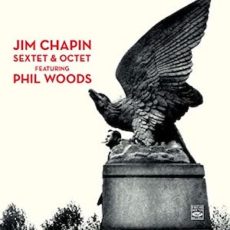
As a freelance musician in New York, Andrus worked with Don Stratton, Bernard Peiffer, and Jim Chapin; he also recorded extensively with Woody Herman. Double bassist Chuck Andrus passed away on June 12, 1997.
More Posts: bass,history,instrumental,jazz,music
Daily Dose Of Jazz…
Albert Bennington Lucas was born on November 16, 1916 in Brantford, Ontario, Canada and took piano lessons as a child from his concert pianist mother, Francis Bradley Lucas. Eventually switching to bass and tuba at age 12, after moving to New York City in 1933 he played with Kaiser Marshall, then joined the Royal Sunset Orchestra, where he played from 1933 to 1942.
During the 1940s, Lucas appeared on record with Hot Lips Page, Coleman Hawkins, Eddie Heywood, Duke Ellington, Mary Lou Williams, James P. Johnson, J.J. Johnson, Ben Webster, Erroll Garner, and Eddie South.
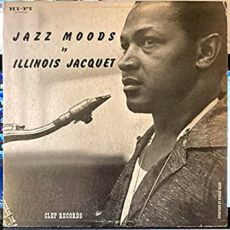
He toured and recorded with Illinois Jacquet from 1947 to 1953, recording in Detroit with Jacquet’s all-star band which included Sonny Stitt, Leo Parker, Sir Charles Thompson, Maurice Simon and Shadow Wilson before returning to play with Heywood again from 1954 to 1956.
He also recorded in the 1950s with Ruby Braff, Charlie Byrd, and Teddy Wilson. In his last two decades he worked primarily as a studio musician backing up groups at Apollo Theater performances, playing jazz only occasionally. Double bassist Al Lucas passed away on June 19, 1983 in New York City.
More Posts: bass,history,instrumental,jazz,music
Daily Dose Of Jazz…
Dick Wilson, born November 11, 1911 in Mount Vernon, Illinois was raised in Seattle, Washington, but attended high school in Los Angeles, California. He started on piano and learned saxophone in Seattle from saxophonist Joe Darensbourg. He became a member of Darensbourg’s band in 1930.
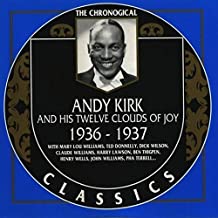
In 1936, he joined Andy Kirk’s Clouds of Joy, where he spent the next five years. With Mary Lou Williams and Pha Terrell, Wilson was one of the most striking musical personalities in the band. He cultivated a style that has been compared to Lester Young’s because of similar characteristics in their solos.
Tenor saxophone Dick Wilson, best known for his work with the Andy Kirk big band, passed away from tuberculosis on November 24, 1941 in New York City.
More Posts: history,instrumental,jazz,music,saxophone
Daily Dose Of Jazz…
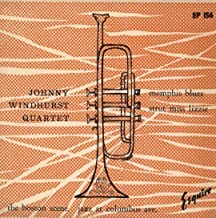
John Henry Windhurst came into this world on November 5, 1926 in New York City, New York and was a self taught trumpeter. At the age of 15 he played his first public performance at Nick’s, and made his professional debut during the spring of 1944 at one of Eddie Condon’s concerts at the Town Hall, both venues in New York City. By eighteen he replaced Bunk Johnson in Sidney Bechet’s band for a Savoy Cafe gig in Boston, Massachusett, which launched his career as a trumpeter.
Going on to play with Art Hodes and James P. Johnson at the Jazz at Town Hall concert in 1946, Johnny then moved to the midwest and after a brief stint in the Chicago, Illinois jazz scene he returned to the Savoy Cafe as a member of Edmond Hall’s band. Eventually he moved west to experience the west coast jazz scene in California. However, his inability to read music forced him to decline gigs with Benny Goodman and Woody Herman, emphasizing his preference for informal jamming.
Over the years, he played with Louis Armstrong, Nappy Lamare, Eddie Condon. Ruby Braff,George Wettling, Jack Teagarden and Barbara Lea. He also led his own band, Riverboat Five, through Columbus, Ohio and Boston for several years, opting to play colleges and small venues instead of the most popular east coast venues and nightclubs.He also did some off-Broadway work with Conrad Janis in the musical Joy Ride.
Windhurst only made one recording with his swing quartet called Jazz at Columbus Avenue, for the Transition label in 1956. On the record label Jazzology, George Buck released The Imaginative Johnny Windhurst which showcased his unique trumpet style. The LP was recorded at a showcase in Massachusetts, where the decision to record it was made on the spot just as the show began. The spontaneous set flaunts his innovative playing on timeless numbers such as Back In Your Own Backyard, Strut Miss Lizzie and Lover Come Back to Me.
He eventually moved upstate to Poughkeepsie, New York with his mother, where he finished his career in a dixieland band at Frivolous Sal’s Last Chance Saloon. Trumpeter Johnny Windhurst passed away from a heart attack at the age of 54 on October 2, 1981 in Dutchess County, New York.
More Posts: bandleader,history,instrumental,jazz,music,trumpet
Daily Dose Of Jazz…
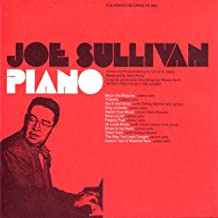
Joe Sullivan was born Michael Joseph O’Sullivan on November 4, 1906 in Chicago, Illinois. The ninth child of Irish immigrant parents, he studied classical piano for 12 years and by age 17, he began to play popular music in silent-movie theaters, on radio stations, and then with the dance orchestras, where he was exposed to jazz. Graduating from the Chicago Conservatory he was an important contributor to the Chicago jazz scene of the 1920s.
Sullivan’s recording career began towards the end of 1927, when he joined McKenzie and Condon’s Chicagoans. Other musicians in his circle included Jimmy McPartland, Frank Teschemacher, Bud Freeman, Jim Lanigan and Gene Krupa. In 1933, he joined Bing Crosby as his accompanist, recording and making many radio broadcasts.
Contracting tuberculosis in 1936, while convalescing at a sanitarium in Monrovia, California in 1937, Crosby organized and appeared in a five-hour benefit for him at the Pan-Pacific Auditorium in Los Angeles, California on May 23, 1937 in front of an audience of six thousand. The show was broadcast over two different radio stations, with fourteen bands attending and raised approximately $3,000 for Sullivan.
After suffering for two years with tuberculosis, Joe briefly re-joined Bing Crosby in 1938 and the Bob Crosby Orchestra in 1939. In 1940, when leading Joe Sullivan’s Cafe Society Orchestra, he had a minor hit with I’ve Got A Crush On You. By the 1950s, he was largely forgotten, playing solo in San Francisco, California, and marital difficulties and excessive drinking caused him to become increasingly unreliable and unable to keep a steady job.
In 1963, he met up with old colleagues Jack and Charlie Teagarden plus Pee Wee Russell when they performed at the Monterey Jazz Festival. Pianist Joe Sullivan passed away on October 13, 1971 in San Francisco at the age of 64.
More Posts: bandleader,history,instrumental,jazz,music,piano