

Daily Dose Of Jazz…
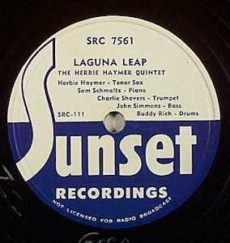
Herbert Haymer was born on July 24, 1915 in Jersey City, New Jersey, and played alto saxophone from age 15 before picking up the tenor at age 20.
Through the Thirties he played with the Carl Sears-Johnny Watson Band, then played with Rudy Vallee, Charlie Barnet, Red Norvo and Jimmy Dorsey from 1937 to 1941. The early Forties saw Herbert playing with Woody Herman, Kay Kyser, Benny Goodman, and Dave Hudkins.
In 1944, he enlisted in the Navy, and after returning he worked as a session musician, including dates with Red Nichols and again with Goodman. In 1945, he led a quintet featuring Charlie Shavers and Nat King Cole on recording, and had three songs issued on Keynote Records in 1946. In 1949 he recorded with Frank Sinatra.
Saxophonist Herbert Haymer, known primarily as a saxophonist in big bands, was killed in an automobile accident after a session on April 11, 1949 in Santa Monica, California.

More Posts: bandleader,history,instrumental,jazz,music,saxophone
Daily Dose Of Jazz…
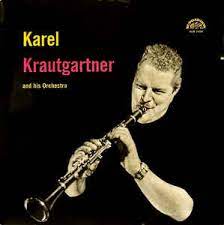
Karel Krautgartner was born on July 20, 1922 in Mikulov, Moravia into the family of a postmaster. He began studying clarinet on a private basis with Stanislav Krtička, and performed a demanding part of the Concertino by Leoš Janáček at the composer’s request at the festival of contemporary music in Frankfurt am Main, Germany in 1926. Acquiring the necessary skills of clarinet playing, and a fanatic passion for clarinet construction and components – reeds, mouthpieces, and barrels, which he later used his knowledge of wind instruments as a lecturer at German universities in Cologne and Düsseldorf.
In 1930 he began playing piano and by 1935 after moving to Brno, Czech Republic he became interested mainly in jazz radio broadcasts. 1936 saw Karel founding the student orchestra Quick band. In 1942, he signed his first professional contract as a saxophonist in the Gustav Brom orchestra in the hotel Passage in Brno. A year later he created Dixie Club and started to arrange in the Benny Goodman and Glenn Miller styles. From 1945 – 1955, the core of the Dixie Club moved to Prague and became a part of the Karel Vlach Orchestra.
He achieved a privileged position as the leader of the saxophone section and started to contribute with his own compositions. In 1956,along with Karel Velebný he put together the Karel Krautgartner Quintet, performed with the All Star Band, and with Studio 5. During the Sixties he became the head of the Dance Orchestra of Czechoslovakia Radio, renamed the Karel Krautgartner Orchestra. In 1968 he emigrated to Vienna, Austria and became the chief conductor of the 0RF Bigband. He eventually moved to Cologne, Germany. Clarinetist, saxophonist, arranger, composer, conductor and educator Karel Krautgartner passed away on September 20, 1982.
More Posts: arranger,clarinet,composer,conductor,educator,history,instrumental,jazz,music,saxophone
Daily Dose Of Jazz…
Eddie Dougherty was born July 17, 1915 in Brooklyn, New York. Playing drums from age 13, then started working with Billy Gusak before Dickie Wells’s band at 18 in Harlem, New York by the beginning of the 1930s. He gigged regularly up through 1940 with Kenny Watts & His Kilowatts. His recording career started as a sideman in the 1930s, with Taft Jordan, Frank Froeba, Mildred Bailey, Harry James, Billie Holiday, Frankie Newton, Pete Johnson, and Meade Lux Lewis.
Alongside this he held a gig as the drummer for Keny Watts and his Kilowatts through 1940. He subbed for Dave Tough in the Bud Freeman Orchestra in 1940, then played with Art Tatum, Joe Sullivan, Benny Carter, Benny Morton, and others in the first half of the 1940s. He worked with James P. Johnson several times, including on 1944 recording sessions. His later work included recordings with Cliff Jackson, Mary Lou Williams, Clyde Bernhardt, Wilbur De Paris, Teddy Wilson, and Albert Nicholas. He was still active into the 1980s.
When he finally retired from full-time music decades later, he had amassed a list of credits that not only rivals the length of some short stories, but represented a thorough involvement in many different styles of jazz, vocal music, and rhythm & blues. Drummer Eddie Dougherty passed away on December 14, 1994 in Brooklyn.
More Posts: drums,history,instrumental,jazz,music
Daily Dose Of Jazz…
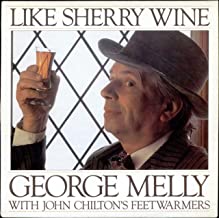
John James Chilton was born on July 16, 1932 in London, England to working-class parents and was evacuated to Northamptonshire, where he began playing the cornet at the age of 12. Switching to trumpet at 17, after doing two years in the RAF, in 1952 he formed his own jazz band.
He worked in Bruce Turner’s Jump Band from 1958 to 1963 which also had a film of their exploits called Living Jazz in 1961. He went on to play in Alex Welsh’s Big Band. During the 1960s he played piano on some pop recordings, worked in Mike Daniels’ Big Band. He formed his own Swing Kings band which backed touring American jazz musicians including Buck Clayton, Ben Webster, Bill Coleman and Charlie Shavers. He also recorded The Song of a Road, one of the radio ballads by folk singers Ewan MacColl and Peggy Seeger in the 1950s for the BBC.
He would go on to work with cartoonist Wally Fawkes, form John Chilton’s Feetwarmers, and began accompanying jazz singer George Melly. Together they made records and toured the world for nearly 30 years. In 1983 and 1984 they had their own BBC television series called Good Time George, and appeared on countless other TV shows.
A songwriter and composer, one of his songs, “Give Her A Little Drop More”, was used in the film St Elmo’s Fire. John is one of the few European writers to win a Grammy Award for his album notes on Bunny Berigan and was nominated again in 2000. He won the British Jazz Award for Writer of the Year, his Who’s Who of Jazz was described as one of the essential jazz books, and he wrote award winning books on Coleman Hawkins, Louis Jordan Sidney Bechet and Louis Armstrong. Trumpeter John Chilton continued to play trumpet with the clarinetist Wally Fawkes in London until he passed away on February 25, 2016 in London.
More Posts: author,bandleader,history,instrumental,jazz,music,trumpet
Daily Dose Of Jazz…
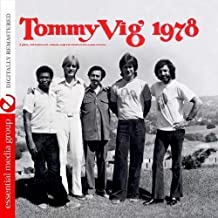
Tommy Vig was born on July 14, 1938 in Budapest, Hungary. Internationally recognized as a child prodigy by the age of 6, he played drums with his father, clarinetist Gyorgy Vig and performed concerts on Budapest State Radio, at the City Theatre, the Academy of Music, and the National Circus. By age 8, he made the album The World Champion Kid Drummer with Austrian jazz players in Vienna, Austria including Hans Koller, Ernst Landl, and the Hot Club of Vienna for Elite Special. The following year his drumming won him the 1947 MGM-Jazz Competition in Budapest and as a result made several recordings with the Chappy’s Mopex Big Band for His Master’s Voice.
Completing his studies at the Bartók Conservatory in 1955 and the Ferenc Erkel Music High School in 1956, due to the crushing of the Hungarian Revolution of 1956, he fled to Vienna, where he played concerts with Fatty George and Joe Zawinul. A move to the United States saw him on scholarship at Juilliard School of Music. Since then he has been writing and conducting concerts.
In 1970 Vig relocated to Los Angeles, California where he worked in the studios of Warner Bros., Fox, Universal, CBS, Columbia, ABC, Disney, Goldwyn, MGM, and Paramount. He played on 1500 studio sessions in Hollywood, two Academy Awards, and produced, directed, and conducted the official 1984 Olympic Jazz Festival for the Los Angeles Olympic Organizing Committee. He wrote the music for 30 films and television shows, and added percussion on the recording of Quincy Jones’s soundtrack to Roots.
Vig has worked with Red Rodney, Don Ellis, Cat Anderson, Terry Gibbs, Art Pepper, Milcho Leviev, Joe Pass, the Miles Davis-Gil Evans Big Band. Frank Sinatra, Sammy Davis Jr., Tony Curtis, Woody Allen, Judy Garland, Tony Bennett and Rod Stewart.
Since 2006, vibraharpist, drummer, percussionist, xylophonist and marimba player Tommy Vig, who has won several awards, has been performing concerts with his wife, appearing on radio and television, and recording albums.
More Posts: bandleader,drums,educator,history,instrumental,jazz,marimba,music,percussion,vibraharp,xylophone