

Daily Dose Of Jazz…
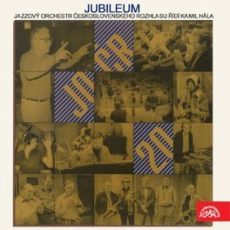
Kamil Hala was born on August 1, 1914 in Most, Czechoslovakia. During the late Fifties he led his own orchestra. He was a member of the Czechoslovak Radio Dance Orchestra beginning in 1960, starting as a pianist and later as its arranger and conductor. After the orchestra split in 1963 he was the conductor of the Czechoslovak Radio Jazz Orchestra until the 1990s.
Pianist composer, arranger, and conductor Kamil Hala passed away on October 29, 2014 in Prague, Czechoslovakia.

More Posts: arranger,bandleader,composer,conductor,history,instrumental,jazz,music,piano
Daily Dose Of Jazz…
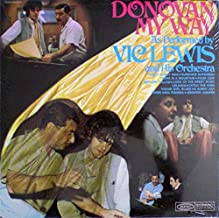
Victor Lewis was born on July 29, 1919 in London, England and began playing the guitar at the age of three, and dabbled with cornet and trombone. One of his early bands included George Shearing, then a teenager, among its members.
Lewis first toured the United States in 1938, where he recorded sessions with a band that had Bobby Hackett, Eddie Condon, and Pee Wee Russell. Serving in the Royal Air Force from 1941 to 1944, he recorded with Buddy Featherstonhaugh. While he was in the RAF, he met Jack Parnell and together they formed the Vic Lewis/Jack Parnell Jazzmen. He worked with Stephane Grappelli after the war and with Ted Heath soon after.
Lewis put together his first big band in 1946 to play swing jazz, but soon after its formation he began to direct the ensemble toward the sound of Stan Kenton, who gave him some of his arrangements by Pete Rugolo, Gerry Mulligan, and Bill Holman. Pianist Ken Thorne also made arranging contributions. He toured the US with the band at various intervals between 1956 and 1959, and recorded extensively for Parlophone, Esquire, Decca, and Philips.
After 1959, Vic semi-retired as a performer, only occasionally recording, but he continued to write about jazz and champion its value. He went into artist management, and oversaw the careers of photographer Robert Whitaker and the singer Cilla Black among many others.
Selling his management agency in 1964 to Brian Epstein’s company NEMS, then worked with Epstein arranging the Beatles’ international tours. Following Epstein’s death in 1967, Lewis served as managing director of NEMS. Lewis also managed Robin Gibb of the Bee Gees, and produced his debut album Robin’s Reign in 1970.
He conducted recordings of his own and others with the Royal Philharmonic Orchestra on Vocalion, which included excerpts from his Russian Suite, a Romance for Violin, and two movements (Red and Jade) from a multi-composer suite called Colours. Guitarist, bandleader, agent and manager Vic Lewis, who was awarded the MBE in 2007, continued to work in the music industry until he passed away on February 9, 2009 in Golders Green, London.

More Posts: agent,bandleader,guitar,history,instrumental,music

Daily Dose Of Jazz…
Leon Prima was born on July 28, 1907 in New Orleans, Louisiana, the older brother of singer Louis Prima. Starting on piano before learning the trumpet, his early jobs were with Ray Bauduc, Leon Roppolo, Jack Teagarden, and Peck Kelley (during the Roaring Twenties. He and Sharkey Bonano led the group the Melody Masters in the late 1920s and early 1930s.
From 1940 to 1946 a move to New York City saw Leon playing in his brother’s big band. After returning to New Orleans, he led his own ensemble and managed more than one nightclub. Then in 1955 he retired from music and made a career for himself in real estate. Trumpeter Leon Prima, who owned the 500 Club on Bourbon Street in New Orleans, passed away on August 15, 1985.
More Posts: bandleader,history,instrumental,jazz,music,trumpet

Daily Dose Of Jazz…
Barbara Gracey Thompson was born on July 27, 1944 in Oxford, England. She studied saxophone and classical composition at the Royal College of Music, but it was the music of Duke Ellington and John Coltrane that made her shift her interests to jazz and saxophone.
Around 1970, Thompson was part of Neil Ardley’s New Jazz Orchestra and appeared on albums by Colosseum. Beginning in 1975, she was involved in the foundation of three bands: United Jazz and Rock Ensemble, a group of bandleaders; Barbara Thompson’s Jubiaba, a nine piece Latin/rock band; and Barbara Thompson’s Paraphernalia, her most recent band with pianist Peter Lemer, vocalist Billy Thompson, bassist Dave Ball, and the late Jon Hiseman on drums.
Awarded the Most Excellent Order of the British Empire (MBE) in 1996 for her services to music, due to Parkinson’s disease diagnosed in 1997, she retired as an active saxophonist in 2001 with a farewell tour. After a period of working as a composer exclusively, she returned to the stage in 2003.
Following hospitalization with atrial fibrillation, she landed a role in an accident and emergency department featured in an episode of the Channel 4 fly-on-the-wall television documentary “24 Hours in A&E” in October 2020.
Thompson has worked closely with Andrew Lloyd Webber on musicals such as Cats and Starlight Express, his Requiem, and Lloyd Webber’s 1978 classical-fusion album Variations. She has written several classical compositions, music for film and television, a musical of her own and songs for the United Jazz and Rock Ensemble, Barbara Thompson’s Paraphernalia and her big band Moving Parts.
She played the incidental music in the ITV police series A Touch of Frost starring David Jason, and flute on Jeff Wayne’s Musical Version of The War of the Worlds. Saxophonist and flutist Barbara Thompson remains active.
More Posts: bandleader,flute,history,instrumental,jazz,music,saxophone
Daily Dose Of Jazz…
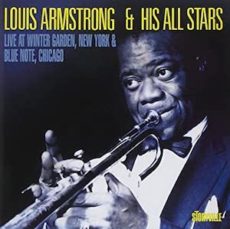
Augustus “Gus” Aiken was born on July 26, 1902 in Charleston, South Carolina. He started playing trumpet with the Jenkins Orphanage band.
He was first recorded professionally in 1919. In the 1920s he worked with several groups, but his best known work would be with Louis Armstrong. He went on to play with Sid Catlett, Roy Eldridge, and Elmer Snowden before his career declined. The end of the Big Band era and the rise of rock and roll is seen as causing the decline.
Trumpeter and cornetist Gus Aiken, who also played blues, passed away on April 1, 1973 in New York City.