

Daily Dose Of Jazz…
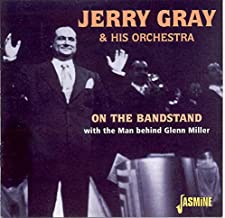
Jerry Gray was born Generoso Graziano on July 3, 1915 in East Boston, Massachusetts. His father was a music teacher who began teaching his son violin at age seven. As a teenager he studied with Emanuel Ondříček and was a soloist with the Boston Junior Symphony. By age eighteen he had formed a jazz band and was performing in Boston clubs.
1936 saw Gray joining the Artie Shaw orchestra as lead violinist and studied musical arrangement under Shaw. A year later he became a staff arranger. Over the next two years he penned some of the band’s most popular arrangements, including Carioca, Softly, As In A Morning Sunrise, Any Old Time, and Begin the Beguine. After the band broke up in 1939, Glenn Miller offered him a job arranging
In November 1939, Shaw suddenly broke up the band and moved to Mexico. On the next day, Glenn Miller called Gray and offered him a job arranging for his band. During his time with the Glenn Miller Orchestra, Jerry produced many of the most recognizable recordings of the era, arranging Elmer’s Tune, Moonlight Cocktail, Perfidia, and Chattanooga Choo-Choo among others, while his compositions among numerous others included Sun Valley Jump, The Man In The Moon, Caribbean Clipper, Pennsylvania 6-5000, and his most famous song, A String of Pearls. Many of his compositions became best-sellers.
The war years saw Jerry in Miller’s unit and became chief arranger for Miller’s “Band of the Training Command”, better known today as the Glenn Miller Army Air Forces Orchestra. He was the full orchestra’s assistant conductor, and conducted the orchestra’s first concert in Paris after Miller’s airplane disappeared over the English Channel.
After the war for a while he did radio and studio work around Los Angeles, California, including leading the band on a radio show called Club 15 that featured Dick Haymes. In 1949 he accepted a request from Decca Records to lead his own Miller-esque orchestra that was called Jerry Gray and the Band of Today.
Violinist, arranger, composer, and leader of swing big bands Jerry Gray, who continued to lead the Fairmont Hotel band into the 1970s, passed away of a heart attack on August 10, 1976 in Dallas, Texas. He was 61.

More Posts: arranger,composer,history,instrumental,jazz,music,violin
Daily Dose Of Jazz…
Charles Sumner Kennedy was born on July 2, 1927 in Staten Island, New York. He played with Louis Prima’s big band orchestra in the 1940s, earning himself a solo on that band’s 1943 recording of The White Cliffs of Dover. He put together his own band and after a brief stint as a leader, he joined Gene Krupa’s big band.
Over the course of his career, he also played with Terry Gibbs’s Dream Band, as well as Charlie Ventura, Flip Phillips, Chico O’Farrill, and Bill Holman. In addition to live performances and recordings with big-name bands, he also was a frequent studio musician. He played in the orchestras for popular movies including My Fair Lady and West Side Story.
By the 1970s, he gave up his career as a full-time musician in order to support his family, but continued to perform in clubs near his home in southern California. Alto saxophonist Charlie Kennedy, who was a big band-era musician, passed away of pulmonary disease on April 3, 2009 in Ventura, California at the age of 81.
More Posts: bandleader,history,instrumental,music,saxophone
Daily Dose Of Jazz…
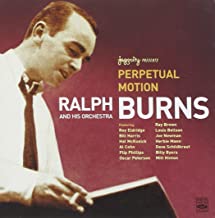
Ralph Jose P. Burns was born on June 29, 1922 in Newton, Massachusetts and began playing the piano as a child. Attending the New England Conservatory of Music, he learned the most about jazz by transcribing the works of Count Basie, Benny Goodman and Duke Ellington. While a student, he lived in the home of Frances Wayne, who was an established big band singer and her brother Nick Jerret was a bandleader who began working with him. He found himself in the company of performers as Nat King Cole and Art Tatum.
Moving to New York in the early 1940s, he met Charlie Barnet and the two men began working together. In 1944, he joined the Woody Herman band with members Neal Hefti, Bill Harris, Flip Phillips, Chubby Jackson and Dave Tough. Together, the group developed Herman’s sound. For 15 years, Burns wrote or arranged many of the band’s major hits including Bijou, Northwest Passage, Apple Honey, and on the longer work Lady McGowan’s Dream and the three-part Summer Sequence.
Herman band member Stan Getz was featured as a tenor saxophone soloist on Early Autumn, a hit for the band and the launching platform for Getz’s solo career. Burns also worked in a small band with soloists including Bill Harris and Charlie Ventura. The success of the Herman band provided Ralph the ability to record under his own name. He collaborated with Billy Strayhorn, Lee Konitz and Ben Webster to create both jazz and classical recordings.
Writing compositions for Tony Bennett and Johnny Mathis led to his later work with Aretha Franklin and Natalie Cole. He was responsible for the arrangement and introduction of a string orchestra on two of Ray Charles’s biggest hits, Come Rain or Come Shine and Georgia on My Mind. In the 1990s, Burns arranged music for Mel Tormé, John Pizzarelli, Michael Feinstein and Tony Bennett.
During the 1960s he quit touring as a band pianist and began arranging and orchestrating for Broadway shows including Chicago, Funny Girl, No, No, Nanette, and Sweet Charity. His first film score was for Woody Allen’s Bananas. He worked with Bob Fosse and won an Academy Award for Cabaret, and went on to compose the film scores for Lenny, New York, New York and All That Jazz, the latter garnered an Academy Award. Besides winning Oscars, Burns won an Emmy, a Tony and a Drama Desk Award. From 1996 until his death, he restored many orchestrations for New York City Center’s Encores! series.
Carefully hiding his homosexuality throughout his life, pianist, composer and arranger Ralph Burns, who was posthumously inducted into the New England Jazz Hall of Fame in 2004, passed away on November 21, 2001 from complications of a stroke and pneumonia in Los Angeles, California.
More Posts: arranger,composer,history,instrumental,jazz,music,piano
Daily Dose Of Jazz…
Eli Robinson was born on June 23, 1908 in Greenville, Georgia. After working in Cincinnati, Ohio in bands led by Speed Webb, Zack Whyte and also worked with McKinney’s Cotton Pickers. In 1935 he made his first recordings with Blanche Calloway.
1936 saw Eli moving to New York City, where he became a member of the Teddy Hill and Willie Bryant big bands and the Mills Blue Rhythm Band. Three years later he played with Roy Eldridge and joined the big band of Lucky Millinder.
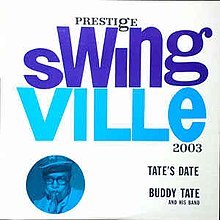
Beginning in 1941, he spent several years as a member of the Count Basie Orchestra. He returned to working with Millinder, then joined Buddy Tate in 1954.
Trombonist and arranger Eli Robinson never recorded as a leader, and passed away on December 24, 1972 in New York City.
More Posts: arranger,history,instrumental,jazz,music,trombone
Daily Dose Of Jazz…
Albert King was born on June 19, 1912 in Panama and raised in Kingston, Jamaica where he attended Alpha Boys School. During the 1930s he led his own band, Bertie King and his Rhythm Aces, one of Jamaica’s foremost dance orchestras.
Leaving the island in 1936, he sailed to England on the same ship as his friend Jiver Hutchinson. Once in London he joined Ken Snakehips Johnson’s West Indian Dance Band, then played with Leslie Hutchinson’s band. He also worked with visiting American musicians including Benny Carter, George Shearing and Coleman Hawkins.
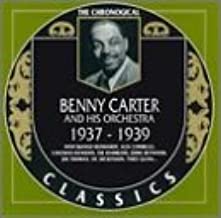
In 1937, while in the Netherlands he recorded four sides in the Netherlands with Benny Carter, and the next year he recorded with Django Reinhardt in Paris, France. In 1939 he joined the Royal Navy. He left the Navy in 1943 and formed his own band, also working and recording with Nat Gonella.
Returning to Jamaica in 1951, he assembled his own band, the Casa Blanca Orchestra, playing in the mento style. With no Jamaican record labels at this time, he arranged for his recordings to be pressed in a plant in Lewisham, England, owned by Decca Records. Bertie returned a number of times to the United Kingdom, working and recording with Kenny Baker, George Chisholm, Chris Barber, Kenny Graham and Humphrey Lyttelton. During this period in his career he toured Asia and Africa with his own band and played and recorded in London with some of the leading Trinidadian calypsonians.
King went on to lead the Jamaica Broadcasting Corporation house band in the 1950s. His sidemen included Ernest Ranglin and Tommy Mowatt. He recorded extensively with this outfit, until 1965 when he moved to the USA. His last known public performance was in New York City in 1967. Clarinetist and saxophonist Bertie King passed away in 1981.
More Posts: bandleader,clarinet,history,instrumental,jazz,music