

Daily Dose Of Jazz…
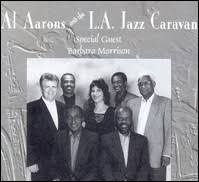
Albert Aarons was born in Pittsburgh, Pennsylvania on March 23, 1932 and graduated from Wayne State University in Detroit, Michigan. He began to gain attention as a trumpeter by 1956 and started working with saxophonist Yusef Lateef and pianist Barry Harris in the latter part of that decade in Detroit.
After a period playing with jazz organist Wild Bill Davis, he played trumpet in the Count Basie Orchestra from 1961 to 1969. The 1970s saw Aarons working as a sideman for singers Sarah Vaughan and Ella Fitzgerald, and saxophonist Gene Ammons.
Contributing to jazz fusion, playing on School Days with Stanley Clarke, he appeared with Snooky Young on the classic 1976 album Bobby Bland and B. B. King Together Again…Live. Trumpeter Al Aarons passed away on November 17, 2015 at age 83 in Laguna Woods, California.

Daily Dose Of Jazz…
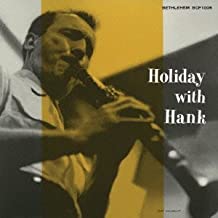
Hank D’Amico was born on March 21, 1915 in Rochester, NY and was raised in Buffalo, New York. He began playing professionally with Paul Specht’s band in 1936. That same year, he joined Red Norvo.
1938 saw Hank begin his radio broadcasts with his own octet before returning briefly to Norvo’s group in 1939. He played with Bob Crosby’s orchestra in 1940 and 1941, then had his own big band for about a year. He had short stints in the bands of Les Brown, Benny Goodman and Norvo again before working for CBS in New York.
D’Amico found time to play with Miff Mole and Tommy Dorsey, and spent ten years as a staff musician for ABC, before playing with Jack Teagarden in 1954. From that point he mostly worked with small groups, infrequently forming his own band. He played at the 1964 World’s Fair in New York with The Morey Feld trio.
Clarinetist Hank D’Amico passed away on December 2, 1965.
More Posts: bandleader,clarinet,hitory,instrumental,jazz,music
Daily Dose Of Jazz…
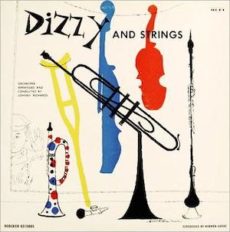
Lavere “Buster” Harding was born on March 19, 1917 to Benjamin and Ada Harding in North Buxton, Ontario, Canada. Raised in Cleveland, Ohio as a teenager he started on his own band.
In 1939 Buster went to work for the Teddy Wilson big band, and then in the early 1940s joined the Coleman Hawkins band. This was followed by his playing with Cab Calloway. He became a freelance arranger and worked with Benny Goodman, Artie Shaw, Roy Eldridge, Dizzy Gillespie, and Count Basie, among others.
In 1949 he became the musical director for Billie Holiday recording sessions. In the early 1960s Harding played with Jonah Jones, though he was known primarily as an arranger and composer.
Pianist, composer and arranger Buster Harding, who never recorded as a leader, passed away on November 14, 1965, in New York City.
More Posts: arranger,composer,history,instrumental,jazz,music,piano
Daily Dose Of Jazz…
Ernest “Bass” Hill was born on March 14, 1900, Pittsburgh, Pennsylvania. He played from 1924 with Claude Hopkins, and remained with him on a tour of Europe with Josephine Baker the following year. He collaborated with Hopkins numerous times over the next few years and again in the 1940s. In 1928 he played with Leroy Smith & His Orchestra and Bill Brown & His Brownies, and the following year worked in the Eugene Kennedy Orchestra.
The 1930s saw Bass playing with Willie Bryant, Bobby Martin’s Cotton Club Serenaders, Benny Carter, Chick Webb, and Rex Stewart. He was in Europe late in the decade when World War II broke out and he fled to Switzerland. There he played with Mac Strittmacher before returning to the United States in 1940.
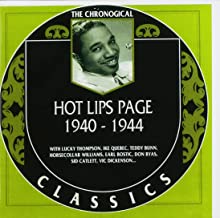
In that year, he recorded with violinist Eddie South and trumpeter Hot Lips Page. Following this, he played with Maurice Hubbard, Hopkins again, Zutty Singleton, Louis Armstrong, Cliff Jackson, Herbie Cowens, and Minto Kato throughout the decade. In 1949 he returned to Europe, where he played in Switzerland and Italy with Bill Coleman and then in Germany with Big Boy Goudie until 1952.
Upon his return to the States he worked in New York City with Happy Caldwell, Henry Morrison, and Wesley Fagan. Double bassist Ernest “Bass” Hill, who worked in the musicians’ union in the last decade of his life, passed away on September 16, 1964 in New York City.
More Posts: bass,history,instrumental,jazz,music
Daily Dose Of Jazz…
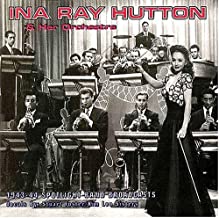
Ina Ray Hutton was born Odessa Cowan on March 13, 1916 in Chicago, Illinois into a family whose mother was a pianist. She began dancing and singing on stage professionally at the age of eight. By 15, she starred in the Gus Edwards revue Future Stars Troupe at the Palace Theater, and Lew Leslie’s Clowns in Clover. On Broadway she performed in George White’s revues Melody, Never Had an Education and Scandals, before joining the Ziegfeld Follies.
1934 saw her being approached by Irving Mills and vaudeville agent Alex Hyde to lead an all-girl orchestra, the Melodears. As part of the group’s formation, Mills asked Odessa to change her name. The group included trumpeter Frances Klein, Canadian pianist Ruth Lowe Sandler, saxophonist Jane Cullum, guitarist Marian Gange, trumpeter Mardell “Owen” Winstead, and trombonist Alyse Wells.
The Melodears appeared in short films and in the movie Big Broadcast of 1936. They recorded six songs, sung by Hutton, before disbanding in 1939. Soon after, she started the Ina Ray Hutton Orchestra (with men only) that included George Paxton and Hal Schaefer. The band appeared in the film Ever Since Venus in 1944, recorded for Elite and Okeh, and performed on the radio. After this band broke up, she started another male band a couple years later. During the 1950s, Hutton again led a female big band that played on television and starred on The Ina Ray Hutton Show.
Although she and some members of her family are known to have been white, historians have theorized that she and her family were of mixed white and African-American ancestry. In 1920, Hutton herself was listed in the US Census as “mulatto” and in 1930 as “negro”. Hutton was also mentioned under her original name in the black Chicago newspaper The Chicago Defender several times in articles describing the early years of her career. A photograph of her as a 7-year-old dancer appeared in a 1924 issue of the paper.
Retiring from music in 1968, Ina Ray Hutton, who led one of the first all-female big bands, passed away on February 19, 1984 from complications due to diabetes at the age of 67 in Ventura, California.
More Posts: bandleader,history,instrumental,jazz,music,vocal