

Daily Dose Of Jazz…
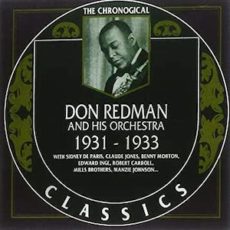
Claude Jones was born on February 11, 1901 in Boley, Oklahoma and began playing trombone at the age of 13, and studied at Wilberforce College before dropping out in 1922 to join the Synco Jazz Band. This group eventually evolved into McKinney’s Cotton Pickers, where he would play intermittently until 1929.
From there, Jones played in a variety of noted swing jazz ensembles from 1929 through the Depression until 1950, playing with Fletcher Henderson, Don Redman, Alex Hill, Chick Webb, and Cab Calloway.
He recorded with Jelly Roll Morton in 1939 and Louis Armstrong/Sidney Bechet in 1940. During the 1940s and into the Fifties, he also played with Coleman Hawkins, Zutty Singleton, Joe Sullivan, Benny Carter, and Duke Ellington.
After completing his second stint with Ellington, trombonist Claude Jones became a mess steward on the ship S.S. United States and passed away at sea on January 17, 1962.

More Posts: history,instrumental,jazz,music,trombone

Daily Dose Of Jazz…
Ed Polcer was born February 10, 1937 in Paterson, New Jersey. He started leading jazz bands while attending Princeton University. While there studying engineering, he was headed toward a promising career as a professional baseball player. During that time, he was asked to play at the wedding of Princess Grace and Prince Rainier in Monaco, as well as a concert in Carnegie Hall. He chose music over baseball.
When cornetist Bobby Hackett recommended him to Benny Goodman, he abandoned his engineering and purchasing day jobs and joined Goodman’s small band. Other musicians in that band included John Bunch, Bucky Pizzarelli, Slam Stewart, Al Klink, Zoot Sims, George Masso, and Peter Appleyard.
While in his 20s and 30s, Ed played with Teddy Wilson, Bobby Hackett, Kenny Davern, Dick Wellstood, Gene Ramey, Sonny Greer, Joe Muranyi, Herbie Nichols and Joe Venuti. With his wife, singer and actress Judy Kurtz he managed and co-owned with Red Balaban, Eddie Condon’s Jazz Club in New York City from 1977–1985. Sharing the bandstand with him at the club were such musicians as Vic Dickenson, Herb Hall, and Connie Kay.
He was instrumental in giving several younger musicians, such as Scott Hamilton, Warren Vache, Dan Barrett, and Mark Shane a showcase of their talents. He served as musical director of several jazz festivals, including the North Carolina Jazz Festival, Colorado Springs Jazz Party, and San Diego Jazz Party. In the 1980s he served as president of the Long Island, New York-based non-profit International Art of Jazz, which promoted community and corporate involvement in jazz, presented jazz programs. He played for five U.S. Presidents, including the Congressional Ball at the White House for President Clinton in 1994, and played in Thailand with the King of Thailand, a jazz clarinetist and enthusiast.
He has been awarded the New Jersey Jazz Society lifetime achievement award, named a Jazz Legend by the San Diego Jazz Party, and honored by the Atlanta Jazz Preservation Society for unyielding commitment to the preservation of our beloved American art form of jazz. Cornetist, bandleader, festival director, club owner, and mentor Ed Polcer, who has a melodic mellow-toned sound with an unforced delivery, recorded ten albums as a leader and fourteen as a sideman, remains active.
More Posts: bandleader,cornet,history,instrumental,jazz,music
Daily Dose Of Jazz…
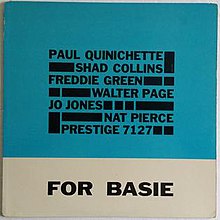
Walter Sylvester Page was born on February 9, 1900 in Gallatin, Missouri on to parents Edward and Blanche Page. Showing a love for music as a child, in 1910 with his mother moved to Kansas City, Missouri and exposed him to folksongs and spirituals, a critical foundation for developing his love of music. He gained his first musical experience as a bass drum and bass horn player in the brass bands of his neighborhood. Under the direction of Major N. Clark Smith, he took up the string bass in his time at Lincoln High School. During that time he also drew inspiration from bassist Wellman Braud, who he had the opportunity to see when he came to town with John Wycliffe.
After completing high school, he went on to study to become a music teacher at the University of Kansas at Lawrence. In college,Walter completed a three-year course in music in one year, in addition to taking a three-year course on gas engines. Between the years 1918 and 1923, he moonlighted as a tuba, bass saxophone, and string bass player with the Bennie Moten Orchestra. In 1923 he left Moten and began an engagement with Billy King’s Road Show, and with Jimmy Rushing and Count Basie, toured the Theater Owners’ Booking Association (TOBA) circuit across the United States.
Walter Page and the Blue Devils was a territory band founded in 1925, based out of the Oklahoma City~Wichita, Kansas area that included Basie, Rushing, Buster Smith, Lester Young, and Hot Lips Page. By 1929 the Blue Devils faced defections of key players, booking problems and musicians’ union conflict, he relinquished control to James Simpson and joined Moten’s band in 1931, staying until 1934. After his second stint with Moten, he moved to St. Louis, Missouri to play with the Jeter-Pillars band. Following the death of Moten in 1935, however, Basie took over the former Moten Band, which Page rejoined.
Staying with the Count Basie Orchestra from 1935 to 1942, Walter was an integral part of what came to be called the “All-American Rhythm Section. Together with drummer Jo Jones, guitarist Freddie Green, and pianist Basie, the rhythm section pioneered the “Basie Sound”, a style in which Page, as bass player, clearly established the beat, allowing his band mates to complement more freely. Until this point, the rhythm of a jazz band was traditionally felt in the pianist’s left hand and the kick of the bass drum on all four beats. In a sense, the classic Basie rhythm section were liberators.
After his first departure from the Count Basie Orchestra, Walter worked with various small groups around Kansas City. He returned to the Basie Band in 1946 for three more years. Bassist and multi-instrumentalist Walter Page, best known for his groundbreaking work with Walter Page’s Blue Devils and the Count Basie Orchestra, passed away of kidney ailment and pneumonia at Bellevue Hospital on December 20, 1957 in New York City.
More Posts: bandleader,bass,bass horn,bass saxophone,drums,history,instrumental,jazz,music,tuba
Daily Dose Of Jazz…
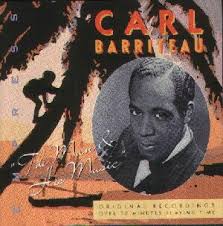
Carl Alrich Stanley Barriteau was born on February 7, 1914 in Trinidad, but was raised in Maracaibo, Venezuela. He played tenor horn in Trinidad from 1926 to 1932, before playing the clarinet in a local police band from 1933 to 1936. At the same time, he also played in Port of Spain with the Jazz Hounds and the Williams Brothers Blue Rhythm Orchestra.
Moving to London, England where he played in Ken Johnson’s West Indian Swing Band. Melody Maker named him “best clarinetist” for seven consecutive years. In the 1940s Carl led his own group on recordings for Decca Records.
He did several USO tours for American troops from 1958 to 1966. He emigrated to Australia in 1970. Clarinetist Carl Barriteau passed away on August 24, 1998, in Sydney, Australia.
More Posts: clarinet,history,instrumental,jazz,music
Daily Dose Of Jazz…
Jim Lanigan was born on January 30, 1902 in Chicago, Illinois. Learning piano and violin as a child, he played piano and drums in the Austin High School Blue Friars before specializing on bass and tuba.
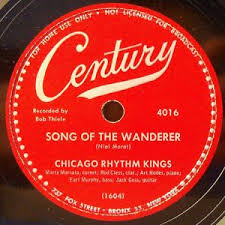
A member of the Austin High Gang, he played with Husk O’Hare in1925), the Mound City Blue Blowers and Art Kassel from 1926 to 1927, the Chicago Rhythm Kings, the Jungle Kings, and the 1927 McKenzie and Condon’s Chicagoans recordings.
From 1927 to 1931 he was with Ted Fio Rito and worked in orchestras for radio, including NBC Chicago. Performing sideman duties in the 1930s and 1940s with Jimmy McPartland, Bud Jacobson’s Jungle Kings, Bud Freeman, and Danny Alvin, he began to concentrate more on music outside of jazz at that time. He played with the Chicago Symphony Orchestra from 1937 to 1948, and did extensive work as a studio musician.
Bassist and tubist Jim Lanigan, who never recorded as a leader, played reunion gigs for the Austin High Gang, passed away on April 9, 1983.
More Posts: history,instrumental,jazz,music,tuba