

Daily Dose Of Jazz…
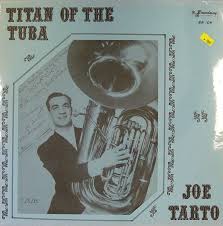
Joe Tarto was born Vincent Joseph Tortoriello on February 22, 1902 in Newark, New Jersey. He played trombone from age 12 before settling on tuba as a teenager. When World War I hit, he enlisted and played in an Army band where he was wounded, and received his release in 1919.
The 1920s saw him working with Cliff Edwards, Paul Specht, Sam Lanin, and Vincent Lopez, in addition to doing arrangement work for Fletcher Henderson and Chick Webb and playing in pit orchestras on Broadway. Throughout the 1920s recording copiously, he accompanied among others, Bing Crosby, The Boswell Sisters, Ethel Waters, Eddie Lang, Joe Venuti, Miff Mole, Red Nichols, The Dorsey Brothers, Bix Beiderbecke, and Phil Napoleon.
During the 1930s he spent two years playing with Roger Wolfe Kahn, then worked extensively as a session musician both on tuba and double bass. He also played with radio ensembles and in theater and symphony orchestras. He remained active as a performer into the 1980s, playing in Dixieland jazz revival groups in his last years. Tubist and bassist Joe Tarto passed away on August 24, 1986 in Morristown, New Jersey.

More Posts: bandleader,bass,history,instrumental,jazz,music
Daily Dose Of Jazz…
Frederick L. Robinson was born on February 20, 1901 in Memphis, Tennessee. He learned to play trombone as a teenager, and studied music in Ohio before moving to Chicago, Illinois where he played in the Carroll Dickerson Orchestra.
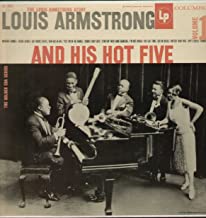
Robinson went on to play on Louis Armstrong’s Hot Five recordings and continued working with both Dickerson and Armstrong until late 1929, when he took a position in Edgar Hayes’s band. In the 1930s he worked extensively as a sideman, with Marion Hardy, Don Redman, Benny Carter, Charlie Turner, Fletcher Henderson, and Fats Waller.
In 1939-1940 he was in Andy Kirk’s band, and played later in the 1940s with George James, Cab Calloway, and Sy Oliver. Early in the 1950s he worked with Noble Sissle, but after 1954 he was less active as a performer. Trombonist Fred Robinson passed away on April 11, 1984 in New York City.
More Posts: history,instrumental,jazz,music,trombone
Daily Dose Of Jazz…
Jack Lesberg was born February 14, 1920 in Boston, Massachusetts. He had the misfortune of playing in that city’s Cocoanut Grove on the night in 1942 when 492 people lost their lives in a fire. His escape was memorialized by fellow bassist Charles Mingus.
Jack performed in the New York City Symphony under Leonard Bernstein in the 1940s. Lesberg continued to tour in the 1980s and performed in Menlo Park, California in 1984. Jack played with Louis Armstrong, Earl Hines, Jack Teagarden, Coleman Hawkins, Sarah Vaughan, Urbie Green, George Barnes, Ruth Brown, Tony Bennett, Johnny Hodges and Benny Goodman among others, He went on several international tours.
Double-bassist Jack Lesberg, who co~led two sessions and twenty-one as a sideman, passed away from Alzheimer’s Disease in Englewood, California at the age of 85 on September 17, 2005.
More Posts: bandleader,bass,history,instrumental,jazz,music
Daily Dose Of Jazz…
Irving “Irv” Cottler was born February 13, 1918 in Brooklyn, New York. He would become a sometime member of Los Angeles, California based The Wrecking Crew, who recorded with Nat King Cole, Louis Armstrong, Bing Crosby, Dinah Shore, Ella Fitzgerald, and many others.
Best known as the drummer for Frank Sinatra, with whom he worked for over 30 years beginning in 1955, Irv’s first recording session with Sinatra was in October 1955 on ‘Love Is Here To Stay’ and he played on many of the remaining Songs For Swingin’ Lovers tracks, alternating with Alvin Stoller.
From 1956 on, Irv was Sinatra’s preferred drummer and played a world tour with Sinatra during 1962, as well as on his many TV recordings. He also performed for twelve years with The Dinah Shore Show house band.
Drummer Irv Cottler passed away of a heart attack on August 8, 1989 in Templeton, California at the age of 71.
More Posts: drums,history,instrumental,jazz,music
Daily Dose Of Jazz…
Bernard Privin was born of Jewish ancestry on February 12, 1919 in New York City. An autodidact on trumpet, he played professionally while in his teens. When he was 13, he bought a trumpet the day after he heard Louis Armstrong perform.
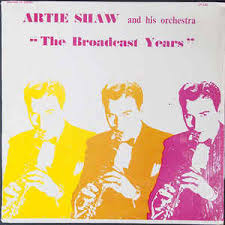
In 1937 Berniee became a member of Harry Reser’s band, and in the same year also worked with Bunny Berigan and Tommy Dorsey. The following year, he joined the Artie Shaw Orchestra, and then worked with Charlie Barnet, Mal Hallett, and Benny Goodman. Drafted in 1943 Bernie played from 1943 to 1946 with the Glenn Miller Army Air Force Band in Europe.
Returning to the United States, he worked with Goodman once more, then became a staff musician for radio and television, working with NBC and then CBS, the latter well into the 1960s. Concomitantly he played as a session musician, especially with Goodman throughout the 1950s, as well as for musicians such as Sy Oliver and Al Caiola.
Privin played frequently in Europe from the Sixties onward, playing in Sweden multiple times in the decade, and was a member of the Tommy Dorsey Orchestra, under the direction of Warren Covington and Pee Wee Erwin, for tours of Europe in the mid-1970s. He was a member of the New York Jazz Repertory Company when it toured the Soviet Union in 1975.
Trumpeter Bernie Privin passed away on October 8, 1999 in the city of his birth.
More Posts: history,instrumental,jazz,music,trumpet