

Daily Dose Of Jazz…
William McLeish Smith was born on November 25, 1910 in Charleston, South Carolina, and raised in Cleveland, Ohio. His first instrument was the clarinet and his education was in chemistry, receiving his degree from Fisk University, an HBCU.
In 1929 Smith became an alto saxophonist for Jimmie Lunceford’s band, becoming one of the main stars in the group. 1940 had him leading his own quintet as a side project. His success with Lunceford had lost its charms by 1942 as he now wanted more pay and less travel. Moving to the Charlie Spivak Orchestra for a year and was in the navy for another year. He then switched to Harry James’s orchestra, where he made more money and stayed with him for seven years.
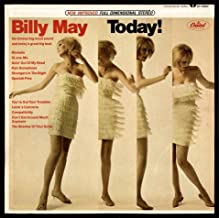
His next move was to work with Duke Ellington and Billy May. He was also part of the Gene Krupa Trio and can be heard on the 1952 live Verve album The Drum Battle, part of the Jazz at the Philharmonic series. In 1954 he returned to Harry James’s band.
He recorded some three dozen albums as a sideman with Stan Getz, Dizzy Gillespie, Lionel Hampton, Billie Holiday, Barney Kessel, Jimmie Lunceford, Billy May, Rose Murphy, Red Norvo, Andre Previn, Googie René, and Kay Starr among others.
Alto saxophonist Willie Smith, who has been described as one of the triumvirates of great jazz alto saxophonists with Johnny Hodges and Benny Carter before Charlie Parker arrived, passed away of cancer on March 7, 1967 in Los Angeles, California, at the age of 56.
More Posts: history,instrumental,jazz,music,saxophone
Daily Dose Of Jazz…
Keg Johnson was born Frederic Homer Johnson on November 19, 1908 in Dallas, Texas. His father was a choir director and he and his younger brother, Budd began their musical careers singing and playing first with their father and later with Portia Pittman, daughter of Booker T. Washington. They played in Dallas-area bands like the Blue Moon Chasers, then with Ben Smith’s Music Makers, eventually performing with Gene Coy and The Happy Black Aces.
Playing a variety of instruments but most noted as a trombonist, around 1928, in Kansas City, Missouri they played in several bands but by 1930 Keg left for Chicago, Illinois to play with Louis Armstrong, recording his first solo on Armstrong’s Basin Street Blues album. His move to New York City in 1933 Keg played with Fletcher Henderson, Benny Carter, and Cab Calloway at the Cotton Club, remaining with Cab for 15 years.
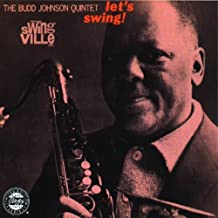
Leaving New York City for Los Angeles, California he briefly changed careers renovating houses. During the 1950s he returned to New York City where he and his brother reunited and recorded the album Let’s Swing. In 1961, he began playing with Ray Charles and was still in his band when trombonist Keg Johnson passed away in Chicago on November 8, 1967.
More Posts: history,instrumental,jazz,music,trombone
Daily Dose Of Jazz…
Johnny Richards was born Juan Manuel Cascales on November 2, 1911 in Querétaro, Mexico. His father immigrated to the United States into Laredo, Texas in 1919, the family settling first in Los Angeles, California and then in San Fernando, California where he attended and graduated from San Fernando High School. From there he went to Fullerton College in 1930.
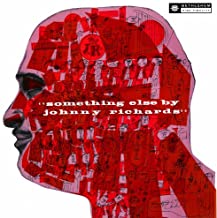
Working in Los Angeles, California from the late 1930s to 1952 when he moved to New York City. He had been arranging for Stan Kenton since 1950 and continued to do so through the mid~Sixties while leading his own bands throughout his career. Additionally, he composed the music for the popular song Young at Heart in 1953, made famous by Frank Sinatra. He recorded nine albums as a leader and as a sideman/arranger working with Charlie Barnet, Harry James, Stan Kenton, and Hugo Lowenstern recorded another eight.
Arranger, composer, and bandleader Johnny Richards, who was a pivotal arranger for some of the more adventurous performances by Stan Kenton’s big band in the 1950s and early 1960, passed away from a brain tumor in New York, New York on October 7, 1968.
More Posts: arranger,bandleader,composer,history,instrumental,jazz,music
Daily Dose Of Jazz…
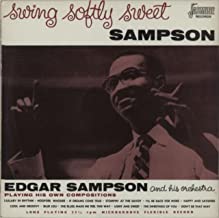
Edgar Melvin Sampson, born October 31, 1907 in New York City, he started playing violin at the age of six and picked up the saxophone in high school. He started his professional career in 1924 with a violin-piano duo with Joe Colman and through the rest of the 1920s and early ’30s, he played with many bands, including those of Charlie “Fess” Johnson, Duke Ellington, Rex Stewart and Fletcher Henderson.
1933 saw him joining Chick Webb’s band. It was during his tenure with Webb that he created his most enduring work as a composer, writing Stompin’ at the Savoy and “Don’t Be That Way“. Leaving the Webb band in 1936 with a reputation as a composer and arranger, he was able to freelance with Benny Goodman, Artie Shaw, Red Norvo, Teddy Hill, Teddy Wilson, and Chick Webb.
Becoming a student of the Schillinger System in the early 1940s, Edgar continued to play saxophone through the late ’40s and led his own band from 1949 to 1951. Through the Fifties, he worked as an arranger for Latin performers Marcelino Guerra, Tito Rodríguez and Tito Puente.
He recorded one album under his own name, Swing Softly Sweet Sampson, in 1956. Due to illness, he stopped working by the late 1960s. Saxophonist, violinist, composer, arranger Edgar Sampson passed away on January 16, 1973 at the age of 65 in Englewood, New Jersey.

More Posts: arranger,composer,history,instrumental,jazz,music,saxophone,violin
Daily Dose Of Jazz…
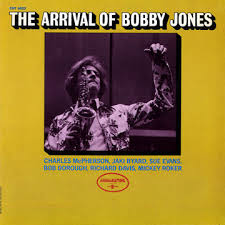
Bobby Jones was born on October 30, 1928 in Louisville, Kentucky and played drums as a child, starting on clarinet at age 8. His father encouraged him to explore jazz and
From 1949 into the mid-1950s he played with Ray McKinley, and then with Hal McIntyre before rejoining McKinley later in the decade. During a stint in the Army, he met Nat and Cannonball Adderley as well as Junior Mance. After getting his discharge, he played country music and rock & roll as a studio musician and did time with Boots Randolph and Glenn Miller before returning again with McKinley from 1959 to 1963.
Briefly playing with Woody Herman and Jack Teagarden in 1963, after the latter’s death, Bobby retired to Louisville and started a local jazz council and taught at Kentucky State College. In 1969 he moved to New York City and from 1970 to 1972 played with Charles Mingus, touring Europe and Japan with him. He also recorded sessions under his own name in 1972 and 1974.
Late in life saw him moving to Munich, Germany, where he ceased performing due to emphysema. Over the course of his career, he only recorded two albums as a leader, 15 as a sideman ~ 8 with Mingus and seven with Bill Cosby, Glen Miller, Woody Herman, Jimmy Raney, Willie Thomas and Bunky Green. Saxophonist Bobby Jones passed away on March 6, 1980 in Munich, Germany.
More Posts: bandleader,history instrumental,jazz,music,saxophone