

Daily Dose Of Jazz…
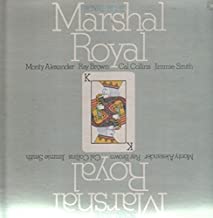
Marshal Walton Royal Jr. was born into a musical family on December 5, 1912 in Sapulpa, Oklahoma. His first professional gig was with Lawrence Brown’s band at Danceland in Los Angeles, California. In a very short time, he secured a regular gig at the Apex, working for Curtis Mosby in Mosby’s Blue Blowers, a 10-piece band. Following that gig, he began an eight-year stint from 1931–1939 with the Les Hite Orchestra at Sebastian’s Cotton Club in Los Angeles. He spent 1940 to 1942 with Lionel Hampton, until the war interrupted his career.
With his brother Ernie, he served in the U.S. Navy in the 45-piece regimental band that was attached to the Navy’s pre~flight training school for pilots at St. Mary’s College in Moraga, California. Two swing bands were organized from the larger regimental band, and they played for smokers and dances at USOs and officers clubs. Royal was the leader of the Bombardiers, one of those bands, which also included not only his brother Ernie, but Jackie Kelson (later known as Jackie Kelso), Buddy Collette, Jerome Richardson, and Vernon Alley.
When he left Basie in 1970, Royal settled permanently in Los Angeles, continuing to play and record, working with Bill Berry’s big band, Frank Capp and Nat Pierce, Earl Hines, and Duke Ellington. Royal recorded as a soloist with Dave Frishberg and Warren Vache. He co-led a band with Snooky Young in the 1970s and 1980s, recording with the band in 1978.
Alto saxophonist and clarinetist Marshal Royal, best known for his twenty years with Count Basie, passed away in Culver City, California, on May 9, 1995, aged 82.
More Posts: bandleader,clarinet,history,instrumental,jaz,music,saxophone
Daily Dose Of Jazz…
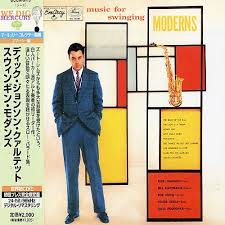
Dick Johnson was born Richard Brown Johnson on December 1, 1925 in Brockton, Massachusetts. His primary instrument was clarinet, however, he also played the alto saxophone and flute.
He began his professional career as a musician while serving in the U.S. Navy in 1944-1946 and played with the navy band on the USS Pasadena during World War II. He often credited his stint in the Navy for kicking off his career in jazz. After the war, Johnson toured with the big bands of Charlie Spivak and Buddy Morrow.
Eventually, after several years on the road, he settled in his hometown of Brockton, Mass. It was there in Brockton where he and his close friend, Lou Colombo formed a jazz sextet. The group lasted 10 years, but the friendship and musical kinship lasted for the rest of his life. In addition, Dick formed his septet, Swing Shift, which was a staple on the Boston music scene for many years.
Like Herb Pomeroy, Johnson managed a double career as a performer and an educator, teaching jazz at nearby Berklee School of Music, where he mentored many younger jazz musicians.
Between 1956 and 2006 he recorded ten albums as a leader. He worked with Frank Sinatra, the Swing Shift Orchestra, Dizzy Gillespie, and Tony Bennett.
Clarinetist, alto saxophonist, and flutist Dick Johnson, who also played in the free jazz genre, passed away on January 10, 2010 in Boston, Massachusetts after a short illness, aged 84.
</ahref=”http:>
More Posts: bandleader,clarinet,educator,flute,history,instrumental,jazz,music,saxophone
Daily Dose Of Jazz…
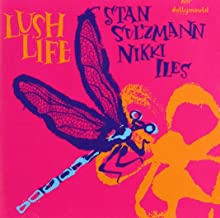
Stanley Ernest Sulzmann was born November 30, 1948 in London, England and began on saxophone at age 13, playing in Bill Ashton’s London Youth Jazz Orchestra, later the National Youth Jazz Orchestra. He studied at the Royal Academy of Music from 1969-1972.
In the 1970s he played with the Clarke-Boland Big Band, Mike Gibbs, John Taylor, Kenny Wheeler, Volker Kriegel, Eberhard Weber, Zbigniew Seifert, Phil Woods, Clark Terry, and Gordon Beck. The 1980s saw him working with Gil Evans, Paul McCartney, the European Jazz Ensemble, the James Last Orchestra, the Hilversum Radio Orchestra, the NDR Big Band, and the London Jazz Orchestra.
Collaborations in the 1990s include with Allan Botschinsky, David Murray, Paul Clarvis, and Bruno Castellucci. Television audiences around the world have heard him as the saxophone soloist in The Belgian Detective, the theme music to ITV’s Poirot, composed by Christopher Gunning.
Saxophonist Stan Sulzmann has held teaching positions at the Guildhall School of Music, the Royal Academy of Music, and Trinity College of Music, and continues to teach, perform and record.
More Posts: history,instrumental,jazz,music,saxophone
Daily Dose Of Jazz…
John Lamb was born in Vero Beach, Florida on November 29, 1933 and grew up as a child who loved playing music, specializing in the tuba. He left high school to join the United States Air Force as a musician for their military band. Stationed in Texas and then Montana, the long winters left him with ample time to practice. He replaced the regular string bassist in 1951. He When the band’s usual string bass player was unavailable for a gig in 1951, the bandmaster asked Lamb if he could play the bass; Lamb immediately said yes, and before long became the band’s new string bassist.
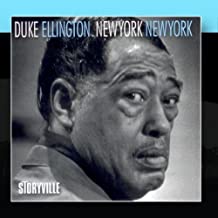
Lamb joined Duke Ellington’s orchestra in 1964, and toured with them for three years. Lamb was more of a fan of Miles Davis and Red Garland when he was with Ellington, In 1966 Lamb performed with Ellington and Sam Woodyard for artist Joan Miró at the Fondation Maeght in Saint-Paul-de-Vence.
A later move to St. Petersburg, Florida saw him teaching music in public schools as well as St. Petersburg College. John was awarded the Jazz Club of Sarasota’s Satchmo Award for his service to jazz. Double bassist John Lamb, who recorded with the Duke Ellington Orchestra until 1975, continues to perform.
Daily Dose Of Jazz…
Joe Britton was born on November 28, 1903 in Birmingham, Alabama and following his student days under the guidance of Fess Whatley, he went to work with Bessie Smith who took him on the road from 1924 through 1926 as a member of her backing group, followed with the Fred Longshaw Orchestra and then the Bill Woods Orchestra. The next year, he jumped to Frank Bunch & the Fuzzy Wuzzies, most likely the most obscure name in the list of the groups he played for.
Settling in New York in the ’30s and immediately got into the fast-paced jazz scene working with Ellsworth Reynold’s Bostonians, Teddy Hill, the band of classic jazz drummer Kaiser Marshall, Charlie Johnson, Edgar Hayes, and the Vernon Andrade Orchestra. In the ’40s: he worked with Benny Carter from 1940-1941 and Dizzy Gillespie, while at the same time collaborating on older styles of jazz.
In the 1940s Britton worked and recorded with Jelly Roll Morton, Jay McShann, and Lucky Millinder in 1942. He would go on to be employed by Wynonie Harris showing up on a half-dozen of her R&B records, and also recorded with Sister Rosetta Tharpe.
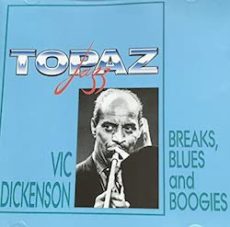
He performed and recorded with pianist Earl Hines. The trombonist dabbled into orchestra arrangements and his work in this field is highlighted on the album Breaks, Blues and Boogies by fellow bone-man Vic Dickenson. retired from full-time professional playing in the 1950s, however, he gigged off and on into the Sixties, including a regular stint in a band led by saxophonist Wesley Fagan. Trombonist Joe Britton passed away on August 12, 1972 in New York City, New York.
More Posts: arranger,bandleader,history,instrumental,jazz,music,trombone