


Daily Dose Of Jazz…
William Carl “Bama” Warwick was born on October 27, 1917 in Birmingham, Alabama and lived in Brookside, Alabama as a child. Moving northward in the early 1930s he lived with Charlie Shavers and together they moved to Philadelphia, Pennsylvania in 1936. There they became members of Frank Fairfax’s band, playing alongside Dizzy Gillespie.
They subsequently played with Tiny Bradshaw and the Mills Blue Rhythm Band. After Shavers left to join John Kirby’s ensemble, Carl then worked with Teddy Hill, Edgar Hayes, Don Redman, and Bunny Berigan. During World War II, he conducted a military band, and played with Woody Herman in 1944-45, then with Buddy Rich.
In the 1950s he led his own group and also worked with Lucky Millinder and Brew Moore; he returned to Gillespie’s employ in 1956, playing intermittently with him until 1961. He took a position in 1966 directing music with the New York City Department of Corrections, and in 1972, he appeared at the Newport Jazz Festival with Benny Carter.
Trumpeter Carl Bama Warwick passed away in 2003, in Philadelphia, Pennsylvania.

More Posts: bandleader,history,instrumental,jazz,music,trumpet
Daily Dose Of Jazz…
James Theodore Powell was born on October 24, 1914. He played on two recording dates with Billie Holiday for Columbia Records, the first in 1940, was with a band comprising of trumpeter Roy Eldridge, alto saxophonists Carl Frye and Powell, tenor saxophonist Kermit Scott, pianist Sonny White, guitarist Lawrence Lucie, bassist John Williams, and Hal West on drums. The second recording session was in 1941, again with Eldridge, Lester Boone, Ernie Powell, and Jimmy Powell on alto saxophones, Eddie Heywood on piano, Paul Chapman on guitar, Grachan Moncur on bass, and drummer Herbert Cowans.
1944 had Jimmy recording with Billy Eckstine and His Orchestra, with Oscar Pettiford, Art Blakey, Dexter Gordon, Gene Ammons, Thomas Crump, Wardell Gray, Dizzy Gillespie, Chippy Outcalt, and Trummie Young, among others. The album was released in 1960 as Mr. B. In 1945, he recorded in New York with Don Byas and Hal Singer.
At the beginning of 1947, Powell was with Illinois Jacquet and his Orchestra, which featured Miles Davis, Marion Hazel, Fats Navarro and Joe Newman on trumpets, Gus Chapwell, Ted Kelly, Eli Robinson and Dickie Wells on trombones, Ray Perry and Powell on alto saxes, Jacquet and Big Nick Nicholas on tenor saxes, Leo Parker on baritone sax, Bill Doggett and Leonard Feather on piano, Al Lucas on bass and Shadow Wilson on drums, together with Tadd Dameron and Jimmy Mundi as arrangers. And again, in April the same year, with a slightly different line-up, this time featuring Russell Jacquet, Navarro and Newman on trumpets, J.J. Johnson on trombone, Powell or Ray Perry on alto, Illinois Jacquet on tenor, Leo Parker on baritone, Sir Charles Thompson on piano, Freddie Green on guitar, Al Lucas on bass and Shadow Wilson on drums.
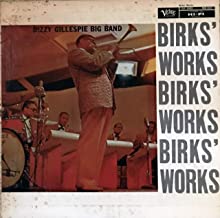
In 1956, Powell was a member of the Dizzy Gillespie Big Band that recorded Groovin’ High live at Birdland with Walter Bishop on piano, Nelson Boyd on bass, Marty Flax on baritone, Gillespie, Quincy Jones, Carl Warwick and Joe Gordon on trumpets, Benny Golson and Ernie Wilkins on tenor, Ernie Henry and Phil Woods on alto saxes, Roy Levitt and Melba Liston on trombones. He went on to record several albums with Gillespie.
Alto saxophonist Jimmy Powell, who never recorded as a leader but as a sideman was part of nine recording sessions, passed away on February 16, 1994.
More Posts: history,instrumental,jazz,music,saxophone
Daily Dose Of Jazz…
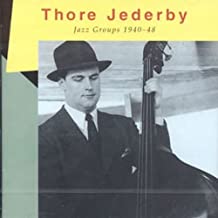
Thore Jederby was born on October 15, 1913 in Stockholm, Sweden, receiving formal training in music at the Royal Swedish Academy of Music. He began playing jazz in the mid-1930s, playing with Arne Hülphers’s band from 1934 to 1938, and then with Thore Ehrling’s ensemble from 1938 through the end of World War II.
He led his own group, the Swing Swingers, for studio recordings in the mid-1930s, and led smaller ensembles for recording sessions well into the 1940s. Later in his life, Thore went on to become active in the capturing of the history of Swedish jazz. He was involved in reissues of early Swedish recordings, curated radio shows devoted to Swedish jazz, and participated in a national commission on the history of jazz in Sweden.
Double bassist Thore Jederby, who was also a record producer and radio broadcaster, passed away on January 10, 1984 in Stockholm.
More Posts: bandleader,bass,history,instrumental,jazz,music
Daily Dose Of Jazz…
Scoville “Toby” Browne was born on October 13, 1909 in Atlanta, Georgia and played in the late 1920s with Junie Cobb’s band and the Midnight Ramblers in Chicago, Illinois. From 1931 to 193232 he played saxophone and clarinet for Fred Avendorph. He went on to work with Louis Armstrong from 1933–35, and in the mid- and late Thirties with Jesse Stone, Jack Butler, Claude Hopkins, and Blanche Calloway.
By the end of the decade, he was attending the Chicago College of Music and the 1940s Browne played with Slim Gaillard, Fats Waller, Buddy Johnson, Hot Lips Page, and Eddie Heywood before serving in the U.S. military during World War II. Following his discharge, he played with Hopkins again and with Buck Clayton.
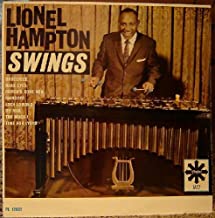
Taken on the role of bandleader on and off in the 1950s, Toby also studied classical music. He was the main clarinet soloist with Lionel Hampton and toured overseas with Muggsy Spanier late in the decade, and appeared in the 1958 photograph A Great Day in Harlem.
Continuing to work with Hopkins well into the Seventies, alto saxophonist and clarinetist Toby Browne who never recorded as a bandleader but only a sideman, passed away on October 3, 1994 in Chicago.
More Posts: bandleader,clarinet,history,instrumental,jazz,music,saxophone
Daily Dose Of Jazz…
Jimmy Archey was born on October 12, 1902 in Norfolk, Virginia. He began playing when he was twelve and was getting professional gigs a year later. He studied at Hampton Institute from 1915 to 1919, played in Atlantic City, New Jersey for a while before moving to New York City in 1923.
During the Roaring Twenties, he played with Edgar Hayes, Most noteworthy for his work was in several prominent jazz orchestras and big bands of his time, including leading one of his own. He performed and recorded with the James P. Johnson Orchestra, King Oliver, Fats Waller, and the Luis Russell Orchestra, among others.
The late 1930s saw Archey participating in big bands that simultaneously featured musicians such as Benny Carter, Coleman Hawkins, Cab Calloway, Duke Ellington, and Claude Hopkins. In the 1940s he toured France with Mezz Mezzrow and in the 1950s, he spent much of his time working with New Orleans revivalist bands with artists such as Bob Wilber and Earl Hines.
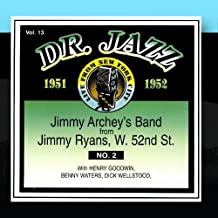
Becoming a bandleader, during the next few years, he headed a sextet, which in 1952 had trumpeter Henry Goodwin, Benny Waters on clarinet and pianist Dick Wellstood. A major yet underrated musician, his only sessions recorded as a leader were for Nec Plus Ultra, the French Barclay and the 77 label. Trombonist Jimmy Archey passed away on November 16, 1967 in Amityville, New York.
More Posts: bandleader,history,instrumental,jazz,music,trombone