

Daily Dose Of Jazz…
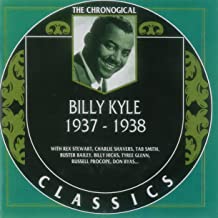
William Osborne Kyle was born on July 14, 1914 in Philadelphia, Pennsylvania and began playing the piano in school. By the early 1930s, he was working with Lucky Millinder, Tiny Bradshaw, and later the Mills Blue Rhythm Band. In 1938, he joined John Kirby’s sextet but was drafted in 1942. After the war, he worked with Kirby’s band briefly and also worked with Sy Oliver. He then spent thirteen years as a member of Louis Armstrong’s All-Stars, performing in the 1956 musical High Society.
A fluent pianist with a light touch, Kyle never achieved much fame, but he always worked steadily. He had a few opportunities to record as a leader, seventeen songs in all, just some octet and septet sides in 1937, two songs with a quartet in 1939, and outings in 1946 with a trio and an octet.
He is credited as the co-author of the song Billy’s Bounce recorded by the Modern Jazz Quartet in 1992 with Bobby McFerrin on the album MJQ and Friends. He didn’t record during his Armstrong years, however, he recorded with Al Hibbler and Buck Clayton.
Pianist Billy Kyle, best known as an accompanist, passed away on February 23, 1966 in Youngstown, Ohio.

More Posts: bandleader,composer,history,instrumental,jazz,music,piano
Daily Dose Of Jazz…
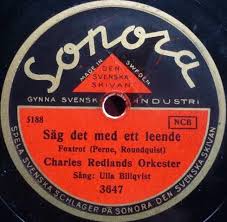
Charles Redland was born Carl Gustaf Mauritz Nilsson on July 7, 1911 in Södertälje, Sweden. The son of a musician, he learned several instruments when he was young.
In the 1930s he was a member of bands in which he played alto saxophone, clarinet, trumpet, and trombone. During that decade he also worked as a leader.
On clarinet, he recorded with Benny Carter in Sweden in 1936. He composed and arranged jazz and popular music. He also composed for more than 80 films, as well as for radio and television programs. Alto saxophonist, Charles Redland passed away on August 18, 1994 in Stockholm, Sweden.
More Posts: bandleader,clarinet,history,instrumental,jazz,music,saxophone,trombone,trumpet
Daily Dose Of Jazz…
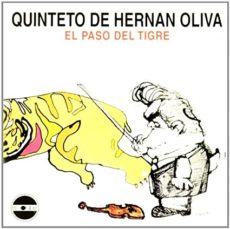
Hernán Oliva was born in Valparaíso, Chile on July 4, 1913 and began his violin studies at age 8 under a dominating mother. Around 1927 at the age of fourteen, he joined the Ernesto Davagnino Orchestra. Bohemian in character and dedicating himself to music over his father choice of law, his father disinherited and expelled from the home.
Around 1935 he crossed to Mendoza, Argentina and worked a few months on the LV10 radio in Cuyo, with his orchestra. Migrating to Buenos Aires, Argentina where Luis Davagnino, Ernesto’s brother, also a musician, lived, and after finding him whistling from corner to corner of Calle Alsina a tune that he knew Luis would recognize received him at his home after. Getting him a job as a companion to Betty Caruso and Fanny Loy on Radio Belgrano, then joined the René Cóspito Orchestra.
He played at the Boite La Chaumiere, with Enrique “Mono” Villegas on piano, David Washington on trumpet, and the English Phillips on sax. The following year Hernán joined the Oscar Alemán orchestra and by 1944 he began working with Ahmed Ratip’s Cotton Pickers, then with Tito Alberti and José Finkel they formed the Jazz Casino in 1951 with singer Lorna Warren.
His later years were spent hanging around the bars of San Telmo playing for whoever asked, sometimes for a glass of whiskey and for many who never appreciated his enormous talent. Violinist Hernán Oliva, who recorded six albums as a leader, passed away in the early morning of June 17, 1988 in Buenos Aires, Argentina lying on a sidewalk in the Palermo neighborhood, hugging his violin case.
More Posts: bandleader,history,instrumental,jazz,music,violin
Daily Dose Of Jazz…
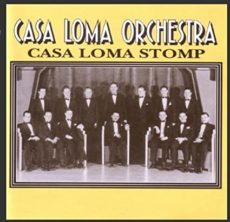
Grady Watts was born in Texarkana, Texas on June 30, 1908 and after attending the Allen Military Academy and the University of Oklahoma, he played in local jazz bands in Louisiana during the late 1920s. By 1931 he had joined the Casa Loma Orchestra, where he became a featured soloist and a composer.
Grady recorded copiously with the ensemble and remained with it until 1942. Among his compositions for the Orchestra was Rhythm Man, You Ain’t Been Livin’ Right, I Remember, and Touch and Go.
The mid-1940s saw Watts abandoning his full-time career as a performer and took jobs in artist & repertoire and as an executive in the chemical engineering industry. Trumpeter and composer Grady Watts passed away in Vero Beach, Florida in January 1986.

More Posts: composer,history,instrumental,jazz,music,trumpet
Daily Dose Of Jazz…
Joe “Fox” Smith was born Joseph Emory Smith on June 28, 1902 in Ripley, Ohio into a family of musicians. His father was a bandleader and his six brothers played trumpet or trombone.
Known throughout his childhood as “Toots”, he originally started as a drummer but was convinced by Ethel Waters that he was a far better trumpeter. By the time he reached New York in 1920, he had his own style, which achieved “the vocalized sound, the blues spirit, and the swing.
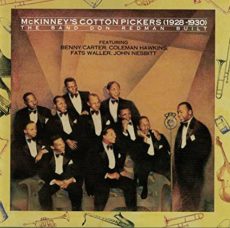
In 1921, Smith joined the Black Swan Jazz Masters in Chicago, Illinois directed at the time by Fletcher Henderson. He went on to work with the Jazz Hounds, the Broadway Syncopators, and finally with McKinney’s Cotton Pickers throughout the 1920s. He became famous from his work accompanying Bessie Smith, recording over 30 records. Some of the other artists he worked with include Billy Paige, Noble Sissle, Eubie Blake, and Allie Ross.
Trumpeter and cornetist Joe “Fox” Smith passed away from complications related to tuberculosis on December 2, 1937 in a Central Islip, New York asylum.