

Daily Dose Of Jazz…
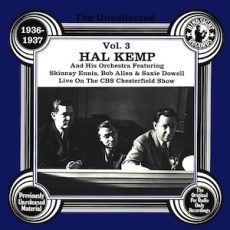
Horace Kirby Dowell, known professionally as Saxie, was born on May 24, 1904 in Raleigh, North Carolina. Attending the University of North Carolina he met Hal Kemp and joined Kemp’s orchestra as a tenor saxophonist, clarinetist, flutist and vocalist in the fall of 1925.
He composed I Don’t Care, which was recorded by Kemp for Brunswick in 1928. When the band’s style changed in the early 1930s to that of a dance band, Dowell became the group’s comedic vocalist for novelty songs. After Three Little Fishies became a hit in 1939, Dowell was involved in a legal dispute with lyricists Josephine Carringer and Bernice Idins. In 1940 he wrote the song Playmates.
Dowell left Kemp and started a big band in 1940. Drafted during World War II he served as a bandleader aboard an aircraft carrier, the U.S.S. Franklin. He went on to record for Brunswick, Sonora, and Victor. Around 1946 he led a naval air station band with 14-year-old Keely Smith as a singer.
>After the war he reunited his orchestra, performing mostly in Chicago, Illinois. In 1949 he became a disc jockey for WGN radio in Chicago, and retired in the late 1950s. He moved to Scottsdale, Arizona and worked as a disc jockey part-time for KTAR in Phoenix during his retirement.
Saxophonist and vocalist Saxie Dowell died on July 22, 1974 in Scottsdale.

More Posts: bandleader,history,instrumental,jazz,music,saxophone,vocal
Daily Dose Of Jazz…
Frederick L. Guy was born in Burkeville, Virginia on May 23, 1897 and was raised in New York City. He played guitar and banjo with Joseph C. Smith’s Orchestra.
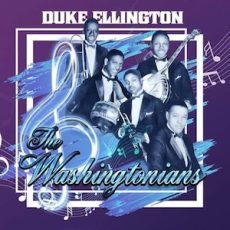
In the early 1920s, Guy joined Duke Ellington’s Washingtonians, switching from banjo to guitar in the early Thirties. He remained with Ellington’s orchestra until 1949.
Retiring from music he moved to Chicago, Illinois and for twenty years ran a ballroom. On December 22, 1971 he committed suicide. He was 74 years old.
Daily Dose Of Jazz…
Jimmy Henderson was born on May 20, 1921 in Wichita Falls, Texas and began studying piano at age six, picking up the trombone a few years later. By the time he was thirteen he had joined a musicians’ union and was first chair at the Wichita Falls Symphony Orchestra.
Winning several trombone competitions by age fourteen, Jimmy started his own orchestra while still in his teens, in addition to studying at the Cincinnati Conservatory of Music. Henderson toured with the big bands of Hal McIntyre, Jimmy Dorsey, and Tommy Dorsey.
In 1954, he moved to Los Angeles, California where he steadily worked as a session musician for some 20 years. Among his credits in the studios was the soundtrack for Bonanza. From 1957 to 1960, he was also a member of Lawrence Welk’s orchestra in which he appeared weekly on the Maestro’s television show.
He led his own orchestra for fifteen years, and was the musical director for the Emmy Awards, Television Academy Honors, and Directors Guild of America Awards In the 1970s, he led the Glenn Miller Orchestra ghost band before retiring in 1980.
Trombonist and bandleader Jimmy Henderson died at the age of 77 on June 10, 1998 in New York City, New York.
More Posts: bandleader,history,instrumental,jazz,music,trombone
Daily Dose Of Jazz…
Henry Busse Sr. was born on May 19, 1894 in Magdeburg, Germany to a generational German Band family. He studied violin and then trumpet after a broken finger was set incorrectly. In 1912 at age 18 he ran away from the family farm outside of Magdeburg, where he had been forced to play trumpet in his uncle’s band.
Initially jumping ship in New York City and landing in the German ghettos there, unable to speak English, he found a job on a boat heading to California. He acquired some English on his trip in 1916 that found him in Hollywood working as an extra in Keystone Cop films and playing trumpet in a movie theater pit band.
In 1917, he played the trumpet with the Frisco Jass Band before forming his own band, Busse’s Buzzards which was the nucleus of the Paul Whiteman orchestra of the mid-1920s, and featuring Henry they made four sides in total. Being the subject of discrimination because of his German accent caused concern among those living in post-World War I America.
At one point, eight out of the top ten sheet music sales spots belonged to the band. During his peak with them, Busse was earning $350 weekly, while fellow band member Bing Crosby was earning just $150. Busse co-composed several of the band’s early hit songs, including Hot Lips with Gussie Mueller and Wang Wang Blues. The latter sold over one million copies, and was awarded a gold disc in 1920.
Throughout the 1920s he was concertmaster for the Whiteman Band, played alongside the Dorsey brothers, Ray Bolger, and formed the Shuffle Rhythm Band, which went on to enjoy great success in the 1930s and ’40s. A later group, The Henry Busse Orchestra. This group was more of a dance band than a jazz band and had a successful career.
Hitting his peak in 1930-45 playing dance music before the war, and swing during the war. He and his band appeared in two MGM color movies in 1935 called Starlit Days at the Lido, filmed at the Ambassador Hotel, along with Clark Gable and the studio’s stable of stars and in the movie Lady Let’s Dance.
Trumpeter Henry Busse and his Orchestra continued to record and perform up until his death on April 23,1955. at an undertaker’s convention at the Peabody Hotel in Memphis, Tennessee. He was playing with the Shuffle Rhythm Band.
More Posts: history,instrumental,jazz,music,trumpet
Daily Dose Of Jazz…
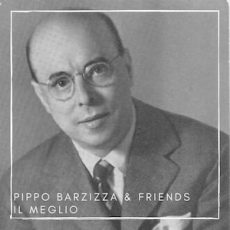
Giuseppe “Pippo” Barzizza was born on May 15,1902 in Genova, Italy. He was a child prodigy and at age six he entered the Camillo Sivori Institute to study violin, quickly passing the exam and taking his first award. He could hardly read words but he was already able to write a Mozart symphony without error.
After attending primary and secondary schools he went to Cristoforo Colombo High School, where he studied violin at the Conservatory. Listening to his father’s phonograph, Pippo developed a passion for classical and symphonic music. He became skilled in mathematics and decided to follow mathematical studies, graduating as an engineer.
Barzizza also studied harmony, counterpoint, composition, and instruments. He focused on the piano until 1933, followed by the violin, banjo and the trumpet section. During this period he was the lead violinist at Politeama and performed music for silent movies at the cinema near his home.
By seventeen he had stopped his violin studies for the pursuit of conducting and composition. For the next four years he performed on ships and for orchestras in Genova. However, it was in New York City he first heard jazz and swing music. Through the 1920s Pippo became a skilled arranger, joined an orchestra, served in the Italian Army and founded a military orchestra.
His first line up was playing violin for Blue Star Orchestra, then he conducted the Cetra Orchestra, recorded during the Thirties for Fonit, Columbia, La Voce del Padrone, Odeon, Brunswick and Fonotipia record labels. Post World War II he played on soundtracks and counducted the Modern Orchestra. Retiring from music in 1960 he taught music, established a recording studio in his home
At the age of 92, composer, arranger, conductor and music director Pippo Barzizza, who was active from 1924 to 1960 playing violin, piano, saxophone, banjo, and accordion, died on April 4,1994 in Sanremo, Italy.
More Posts: accordion,arranger,bandleader,banjo,composer,conductor,piano,saxophone,violin