

Daily Dose Of Jazz…
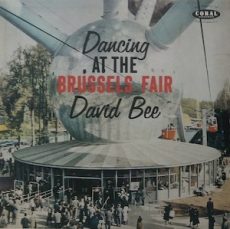
David Bee was born on October 17, 1903 in Brussels, Belgium. He was a multi-instrumentalist adept on clarinet, harp, piano, and alto and tenor saxophone. For a year in 1924 he played with the group Bistrouille ADO before co-founding an ensemble with Peter Packay called Red Beans. The group toured widely throughout western Europe.
After returning to Belgium, David joined Robert De Kers’s band, and also played in Paris, France at Chez Florencewith Benny Carter and Willie Lewis. He recorded with Gus Deloof in the early Forties and after World War II he played with Robert Bosmans and Chas Dolne later in the decade. He led his own bands and groups at various times in the 1950s and continued recording late into the decade and the 60s.
As a composer, Bee pennedr the tunes High Tension recorded by Luis Russell) and Obsession recorded by Ted Heath and Reg Owen.
Clarinetist, harpist, pianist, alto and tenor saxophonist, arranger and composer David Bee, also known as Ernest Craps, Ernie Sparks, and Manuel Travo, transitioned in 1992.

More Posts: arranger,clarinet,composer,harp,history,instrumental,jazz,music,saxophone

Daily Dose Of Jazz…
Anthony Kerr was born in Belfast, Northern Ireland on October 16, 1965. From 1981 till 1984 he received his education at the Belfast School of Music. Moving to New York City after graduating, he studied vibes and marimba with David Friedman and Kenny Werner. He won a scholarship to the New School of Jazz and Contemporary Music in 1987.
Returning to Ireland, Anthony went on to work as a percussionist with the RTE Symphony Orchestra. There was a period of time when he was employed with the UK’s National Theater.
Kerr later worked as a jazz musician with John Taylor, Louis Stewart, Peter King, Norma Winstone, Mike Westbrook, a bandleader he toured with around Europe. He worked with Charlie Watts and Georgie Fame, while simultaneously leading his own group and conducting jazz workshops in Belfast.
He toured with the Irish Youth Jazz Orchestra and worked with BBC Big Band and collaborated with Ian Shaw and a saxophonist Dale Barlow. He leads his own quartet and the Mallet Band with Justin Woodward, Stewe Brown and Geoff Gascoyne.
In 1994 Kerr was voted best instrumentalist at the British Jazz Awards and the following year received the Young Jazz Musician of the Year. He also won nominations in the Rising Star category in 1995, 1996 and 1998.
His first album “First Cry” was made in collaboration with singer / lyricist Jacqui Dankworth. His second album, “Now Hear This” which was recorded live at Ronnie Scott’s Club, was released in 1997.
Vibraphonist Anthony Kerr currently teaches vibraphone and jazz improvisation at the Royal College of Music in London, produces and records music from his home studio in Hertfordshire, England.
More Posts: bandleader,educator,history,instrumental,jazz,music,vibraphone
Daily Dose Of Jazz…
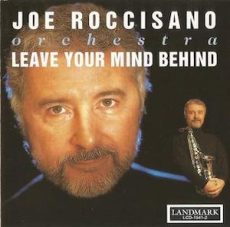
Joseph Lucian Roccisano was born on October 15, 1939 in Springfield, Massachusetts. He received his bachelor’s degree in music education from SUNY-Potsdam in 1963. In 1964 he played in the Tommy Dorsey orchestra under Sam Donahue.
After moving to Los Angeles, California in the mid-Sixties he played with Don Ellis, Ray Charles, Louie Bellson, Lew Tabackin, Toshiko Akiyoshi, Terry Gibbs, Don Menza, Bill Holman, and Don Rader. He assembled the 15-piece ensemble Rocbop in 1976 and played in the Capp-Pierce Juggernaut in 1981.
He formed his own big band, the Joe Roccisano Orchestra, releasing two albums during the 1990s. The musicians joining him in this band included Bill Charlap, Bud Burridge, Jack Stuckey, Franck Amsallem, James E. Pugh, John Basile, Ken Hitchcock, Lou Marini, Matt Finders, Robert Millikan, Scott Lee, Terry Clarke, Tim Ries, Tom Harrell, Scott Robinson, and Greg Gisbert.
He became an arranger for Ellis, Bellson, Doc Severinsen, and Woody Herman. He scored the tune Green Earrings on the 1978 Herman album Chick, Donald, Walter, and Woodrow. Joe was nominated for a Grammy Award for the arrangement. He composed Tenors of the Time, a tune recorded by Pete Christlieb and Warne Marsh.
Saxophonist and arranger Joe Roccisano transitioned on November 9, 1997.
More Posts: arranger,bandleader,history,instrumental,jazz,music,saxophone
Daily Dose Of Jazz…
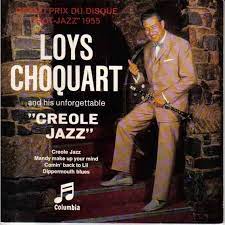
Loys Choquart was born on October 11, 1920 in Geneva, Switzerland. Leading his own ensemble by age 17, and at 19 had a position at Radio Geneva, remaining a broadcaster with the station for decades.
He first recorded with his ensemble the New Rhythm Kings in 1942, then with a new ensemble, the Dixie Dandies, in 1943 which included Henri Chaix and Wallace Bishop as sidemen.
According to jazz historian Rainer E. Lotz, by the end of World War II “he was considered the best Swiss saxophone and clarinet soloist”, playing in both Dixieland and swing idioms. His Creole Jazz ensemble won the Prix Jazz Hot in 1955 on the basis of recordings made in 1952.
He also led a larger ensemble with an orchestra, which included pianist and vibraphonist André Zumbach. During his later life he toured extensively throughout western Europe and owned a club in Geneva called La Tour. Unfortunately there are no recordings of his playing online.
Reedist, bandleader and broadcaster Loys Choquart transitioned on December 10, 1989 in Puplinge, Switzerland.
More Posts: bandleader,broadcaster,history,instrumental,jazz,music,reeds
Daily Dose Of Jazz…
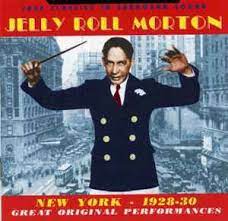
Lee L. Blair was born on October 10, 1903 in Savannah, Georgia and was a left-handed autodidact on banjo, aside from a few lessons taken from Mike Pingitore, the banjoist for Paul Whiteman. He played and recorded in New York City, New York with Thomas Morris’s Seven Hot Babies in 1926, then played with Charlie Skeete in 1926-28, before playing and recording with Jelly Roll Morton’s Red Hot Peppers in 1928-30.
In the Thirties he went on to play with Billy Kato, then played and recorded with Luis Russell and Louis Armstrong from 1935 to the end of the decade. He worked part-time in music through the 1940s, then joined Wilbur De Paris’s New New Orleans Jazz Band in the 1950s at Jimmy Ryan’s Club on West 52nd Street in New York City.
The summer of 1957 had him touring Africa with the DeParis band for the State Department. During the 1960s he played less, concentrating on raising chickens on his farm in Belmore, Long Island, but appeared at the 1964 World’s Fair in a trio with Danny Barker and Eddie Gibbs. He freelanced around New York with Hank Duncan and others until his death.
He never recorded as a leader, but appears on record with Morris, Morton, Russell, Armstrong, and De Paris, as well as with Dick Cary, Pee Wee Erwin, and Leonard Gaskin among others. He is honored in the jazz section of the Georgia Music Hall of Fame in Macon, GA.
Banjoist and guitarist Lee Blair, who never recorded as a leader, transitioned on October 15, 1966 in New York City.