Daily Dose Of Jazz…
Harry Alexander White was born on June 1, 1898 in Bethlehem, Pennsylvania. As a teenager, he played drums, then switched to trombone after moving to Washington, D.C. around 1919. In the early Twenties he played with Duke Ellington, Elmer Snowden, and Claude Hopkins. Then in 1925 he formed the family band called the White Brothers Orchestra, which played the mid-Atlantic states for several years with regular gigs in New York City and Philadelphia, Pennsylvania.
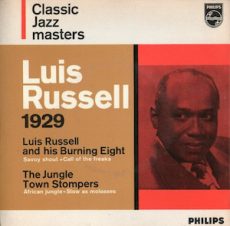
Late in the 1920s, he played with Luis Russell, then joined the Mills Blue Rhythm Band in 1931. The following year he joined Cab Calloway’s orchestra, working as an arranger and composer in addition to his duties on trombone. One of Calloway’s trumpeters, Edwin Swayze, overheard Harry use the term “jitterbug”, and wrote a tune called The Jitterbug. Calloway’s 1934 recording of the song brought the term into widespread currency.
Returning to play with Russell in 1935 when the band was backing Louis Armstrong, he eventually quit playing for part of the Thirties decade. He would later perform with Manzie Johnson, Hot Lips Page, Edgar Hayes, and Bud Freeman.
Trombonist, pianist, saxophonist, arranger and composer Harry White, who was affectionately known as Father White, transitioned on August 14, 1962 in New York City.

More Posts: arranger,bandleader,composer,history,instrumental,jazz,music,piano,saxophone,trombone
Daily Dose Of Jazz…
John Bernard Gordon was born May 30, 1939 in New York City, New York. He studied at Juilliard School and played with Buddy Johnson and Ray Draper in the 1950s.
Gordon worked with Lionel Hampton in 1961 and 1962 and with Lloyd Price and Sam Rivers later in the 1960s. By the 1970s, he was playing with Charles Tolliver, Clark Terry, Count Basie, Howard McGhee, and Frank Foster.
John led his own ensembles in the late 1970s, and his sidemen included Tolliver, Roland Alexander, Lisle Atkinson, Stanley Cowell, and Andrew Cyrille. During this decade he rejoined Hampton again, with whom he continued working until 1989.
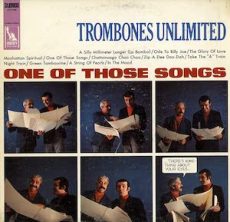
After his Hampton residency Gordon played in Al Grey’s ensemble, Trombone Summit, and founded a group called Trombones Incorporated with Fred Joiner. When Joiner left the group in the early 1990s, he became its leader and changed its name to Trombones Unlimited. The late 1990s had him playing with Slide Hampton, Josh Roseman, Lafayette Harris, Martin Winder, Curtis Fuller, and Thilo Berg.
Gordon worked for several decades as a session musician for recordings and has also performed in pit orchestras for Broadway musicals. At 83, trombonist JOhn Gordon continues to play.

More Posts: bandleader,history,instrumental,jazz,music,trombone
Daily Dose Of Jazz…
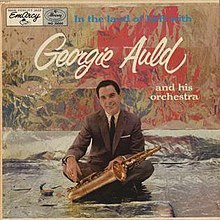
Skeets Herfut was born Arthur Relsmond Herfut on May 28, 1911 in Cincinnati, Ohio and raised in Denver, Colorado. While attending the University of Colorado he played in different bands. By 1934 he was performing with Smith Ballew, and through the decade with Jimmy and Tommy Dorsey, and Ray Noble.
After moving to California, Herfut worked with Alvino Rey, then served in the Army from 1944 to 1945. After the war, he flourished as a studio musician in Hollywood, California and led his own band. Between 1946 and 1947 he performed with Benny Goodman and Earle Spencer.
Into the 1960s Skeets’ studio sessions were with Billy May, Louis Armstrong, Georgie Auld, Jack Teagarden, Stan Kenton and again with Goodman. By the end of the 1960s he joined the Ray Conniff orchestra for several tours of Japan and Germany as well as recording sessions during the 1970s.
Herfurt bacme a member of Lawrence Welk’s orchestra and weekly television show from 1979 to 1982, performing on lead alto saxophone. During his career he recorded with Glen Gray, Ray Anthony, Joe “Fingers” Carr, Frankie Carle, Larry Clinton, Bob Eberly, Helen O’Connell, The Four Freshmen, Bob Keene and Pete Rugolo.
Saxophonist and clarinetist Skeets Herfut, who appeared as a saxophonist in the 1956 film The Nightmare, playing clarinet on the soundtrack, and performed on the soundtrack to the 1974 film The Fortune, transitioned in New Orleans, Louisiana at the age of 80 on April 17, 1992.
More Posts: clarinet,history,instrumental,jazz,music,saxophone
Daily Dose Of Jazz…
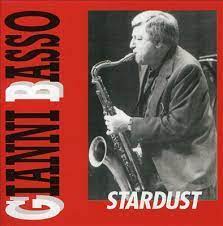
Gianni Basso was born May 24, 1931 in Asti, Italy. He started his career shortly after World War II, at first as a clarinetist, then switched to the tenor saxophone playing in Germany and Belgium with Raoul Faisant’s Big Band.
By the Fifties he became established as a commercial GB or general business player in Milan, Italy and had a steady presence at jazz events. The middle of the decade saw Gianni studying music in Turin, Italy and collaborating with trumpeter and composer Oscar Valdambrini. They created a small group combo which soon became one of the most popular jazz groups in Italy during the Fifties.
Due to their popularity Basso went on to work with a number of touring American jazz musicians, including Chet Baker, Buddy Collette, Slide Hampton, Maynard Ferguson, Phil Woods and Gerry Mulligan.
During the Seventies he founded the Saxes Machine and fronted the Gianni Basso Big Band. His senior years had him settling into the Rome, Italy studio scene while playing clubs and enjoying his historical stature.
Tenor saxophonist Gianni Basso, who was influenced by Stan Getz, transitioned on August 17, 2009.
More Posts: bandleader,history,instrumental,jazz,music,saxophone
Daily Dose Of Jazz…
Edgar Junius Hayes was born on May 23, 1902 in Lexington, Kentucky and attended Wilberforce University, graduating with a degree in music. In 1922 he toured with Fess Williams, and formed his own group in 1924, the Blue Grass Buddies, in Ohio. The following year he played with Lois Deppe. Later in the decade he led the groups Eight Black Pirates and the Symphonic Harmonists.
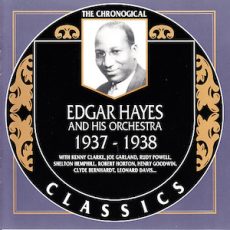
For five years from 1931 to 1936 Hayes played and arranged for the Mills Blue Rhythm Band. Hayes again led his own orchestra from 1937 to 1941 and Kenny Clarke was among his sidemen. His most popular recording was a version of the song Stardust and the original recording of In the Mood which was later covered by Glenn Miller; both songs were recorded in 1938.
Moving to California in 1942 and led a quartet there for most of the decade. Following this he played solo, continuing to perform live into the 1970s. He recorded under his own name several times between 1937 and 1960.
Pianist and bandleader Edgar Hayes transitioned in San Bernardino, California on June 28, 1979.
More Posts: bandleader,history,instrumental,jazz,music,piano