

Daily Dose Of Jazz…
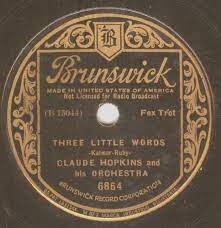
Pete Edward Jacobs was born on May 7, 1899 in Asbury Park, New Jersey. He played in the Musical Aces, then joined the band of Claude Hopkins from 1926 to 1928. He left Hopkins to play with Charlie Skeete in 1928, then returned to play with Hopkins from 1928 until 1938.
During this ten-year tenure in Hopkins’s orchestra, Pete recorded extensively with the group on Brunswick Records, particularly during the period 1927 to 1932. Additionally, he appeared with the band in the short films Barbershop Blues and By Request.
He fell ill in 1938 and had to quit the group, and never returned to active performance. Drummer Pete Jacobs transitioned in 1952.
More Posts: drums,history,instrumental,jazz,music
Daily Dose Of Jazz…
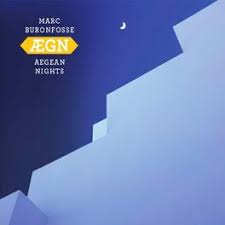
Marc Buronfosse was born on May 6, 1963 in Paris, France. His musical training commenced with classical guitar studies at the age of ten, then he began lessons on the upright bass in 1982 with Thierry Barbé while achieving studies in sound engineering and musicology. After receiving a prize at the Conservatoire de Paris XII, he started playing more and more jazz, working with bass players such as Cesarius Alvim, Charlie Haden, Reggie Workman and Henri Texier. He also worked with symphonic orchestras such as the Opéra de Paris and chamber music orchestras on a tour in Japan with the Solistes de Versailles.
1991 saw him obtaining a grant from the French Ministry of Culture and attending for one year in New York at The New School of Music. During this time he worked regularly with Gary Peacock, Marc Johnson and Mark Dresser. He also met and played with Jimmy Cobb, Steve Kühn, John Abercrombie, Lew Soloff, Jim Hall, Tim Berne, Dave Liebman, and Billy Harper and numerous others.
Returning to Paris he plays with Stéphane Guillaume Quartet + Brass Project, René Aubry Septet, Michel Elmalem Quartet, and Gueorgui Kornazov “Horizons” Quintet. As an educator he teaches jazz at the Conservatoire National de Région of Paris. Bassist Marc Buronfosse presently leads a quartet with musicians Benjamin Moussay, Jean Charles Richard and Antoine Banville.
More Posts: bandleader,bass,guitar,history,instrumental,jazz,music,vocal

Daily Dose Of Jazz…
Fatty George was born Franz Georg Pressler on April 24, 1927 in Vienna, Austria. He originally modeled himself after Benny Goodman but subsequently became a bebop player under the banner of Charlie Parker. He started out playing in clubs near the end of World War II for an audience of both American and Russian soldiers. his setlist adhering to the enormously popular swing recipes of the era.
He became involved in personally running nightclubs in both Germany and Austria, opening Fatty’s Jazz Casino in Insbruck, Austria in the early ’50s and Fatty’s Saloon in Vienna in 1958. His Fatty George Jazzband performed throughout the European continent at both clubs and festivals and released a series of albums under his own name, including Two Sides of Fatty George and Fatty’s Saloon. His playing partners often included the brothers Bill Grah and Heinz Grah on piano and trombone, respectively.
His recorded legacy includes about 50 recordings made over four decades beginning in the Forties, covering aspects of European history as well as ongoing developments in jazz itself.
Clarinettist Fatty George, who may have acquired the stage name of Fatty George with the help of double servings of apple strudel and goulash, transitioned on March 29, 1982.
More Posts: bandleader,clarinet,history,instrumental,jazz,music

Daily Dose Of Jazz…
Born near Kyiv, Ukraine on April 22, 1920 Benjamin “Buzzy” Drootin moved to Boston, Massachusetts with his family when he was five. His father played the clarinet, and two of his brothers and his nephew were musicians. He began playing drums professionally as a teenager. At age twenty, he toured with the Jess Stacy All-Stars, a band that includeded Lee Wiley.
In 1940, he also toured with Ina Ray Hutton, then joined the Wingy Manone band. From 1947 until 1951, he worked as the house drummer at Eddie Condon’s night club in New York City. He was a bandleader at El Morocco club in New York City, and a member of the house band with his brother Al at George Wein’s Storyville club in Boston. During these years he worked with Doc Cheatham, Vic Dickenson, Bobby Hackett, Ruby Braff, Claude Hopkins, Jimmy McPartland, Pee Wee Russell, and Arvell Shaw.
Drootin recorded with Tommy Dorsey, Bobby Hackett, Jack Teagarden, Eddie Condon, Ruby Braff, Anita O’Day, George Wein, the Newport All-Stars, Lee Konitz, Sidney Bechet, PeeWee Russell and The Dukes of Dixieland. In 1968–69, he toured and recorded with Wild Bill Davison’s Jazz Giants and then formed Buzzy’s Jazz Family, borrowing some of Davison’s sidemen, Herb Hall and Benny Morton, plus added Herman Autrey on trumpet and his nephew, Sonny Drootin, on piano.
In 1973, after touring Europe and America, he returned to his hometown of Boston, where he and his brother Al and nephew Sonny formed the Drootin Brothers Band. They played at the Newport Jazz Festival. He played at the first Newport festival and at many festivals after that. He also played at the Los Angeles Classic Jazz Festival in the 1980s.
Drummer Buzzy Drootin transitioned on May 21, 2000 from cancer at the age of 80 at the Actors Fund Retirement and Nursing Home in Englewood, New Jersey.
More Posts: bandleader,drums,history,instrumental,jazz,music
Daily Dose Of Jazz…
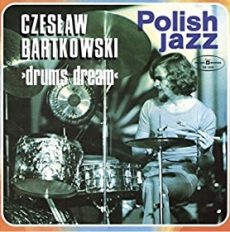
Czesław Kazimierz Bartkowski was born April 19, 1943 in Łódź, Poland and has been dealing with music since the age of 6. A percussion class graduate of the Secondary Music School in Wrocław, he made his official debut in 1960 as a drummer for Jerzy Pakulski ‘s Far Quartet.
In 1963, he met Zbigniew Namysłowski and became a musician in his band Zbigniew Namysłowski Quartet. He also played with other well-known jazz groups, e.g. with Czesław Niemen’s Niemen Enigmatic or Michał Urbaniak’s Group, and in trios with various musicians. He has also collaborated with the Polish Radio Jazz Studio and Sławomir Kulpowicz’s Mainstream and InFormation bands .
In addition, he participated in the recording of such singers as Ewa Bem, Urszula Dudziak and Stanisław Sojka, and such foreign musicians as: Freddie Hubbard, Clark Terry, Joe Newman, Art Farmer, Ben Webster, and the Polish band Novi Singers.
Not only has he performed in Poland, but abroad in India, USA, New Zealand, Australia and numerous European countries. In the winter of 1976, he took part in the jazz workshop Radost ’76 in Mąchocice, Poland near Kielce, which was immortalized in the documentary titled We’re Playing Standard!.
In 1993 he became a lecturer at the Secondary School of Music. Fryderyk Chopin in Warsaw, Poland and the Warsaw Jazz Studio. Drummer and pedagogue Czesław Bartkowski continues his endeavors in music.
More Posts: bandleader,drums,history,instrumental,jazz,music