


Daily Dose Of Jazz…
Bobby Durham was born on February 3, 1937 in Philadelphia, Pennsylvania and learned to play drums while a child. He played with The Orioles at age 16, and was in a military band between 1956 and 1959. After his discharge, he played with King James and Stan Hunter.
1960 saw Durham moving to New York City, where he played with Lloyd Price, Wild Bill Davis, Lionel Hampton, Count Basie, Slide Hampton, Grant Green, Sweets Edison, Tommy Flanagan, Jimmy Rowles, and the Duke Ellington Orchestra, in which he played for five months. While working with Basie, he met Al Grey, and was a member of several of Grey’s small ensembles.
He accompanied Ella Fitzgerald for more than a decade, and worked with Oscar Peterson in a trio setting. Bobby played in trios with organists such as Charles Earland and Shirley Scott, and there was a resurgence in interest in his work during the acid jazz upswing in the 1990s. Many of his projects, both as sideman and as leader, came about because of his association with producer Norman Granz, who used him in performances with Fitzgerald, Basie, Edison, Flanagan, and Joe Pass.
He led his own combos, is noted for scat singing along with his drum solos. He recorded with Monty Alexander, Shawn Monteiro, Red Holloway, Milt Jackson, Clifford Jordan, and Jay McShann. He also performed often with pop and soul musicians such as Frank Sinatra, James Brown, Ray Charles, and Marvin Gaye.
Drummer Bobby Durham, who recorded five albums as a leader and twenty~three as a sideman, transitioned from lung cancer in Genoa, Italy at 71 on July 6, 2008.

More Posts: bandleader,drums,history,instrumental,jazz,music
Daily Dose Of Jazz…
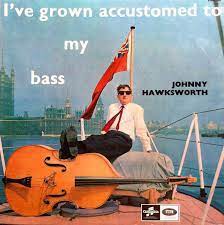
Johnny Hawksworth was born in London, England on February 2, 1924 and initially trained as a pianist, but also played double bass in the Ted Heath Orchestra during the early 1950s and through the 1960s. Becoming one of the most popular jazz bassists in the UK, he won numerous polls and was often featured as a soloist on Heath concerts and recordings.
As a composer Johnny wrote many television themes including Salute to Thames, Thank Your Lucky Stars, Roobarb, Man About the House and George and Mildred. He contributed some of the incidental music used in the 1967 Spider-Man cartoon, and his composition, Er Indoors, was frequently used in SpongeBob SquarePants. While working on films, he scored The Naked World of Harrison Marks, The Penthouse, and Zeta One.
Hawksworth has also written many pieces of stock music for the De Wolfe Music library. He also provided the hypnotic musical soundtrack to Geoffrey Jones’s classic British Transport Films Snow and has composed American-style blues-based material under the name Bunny J. Browne and classically-based material under the name John Steinway.
Bassist and composer Johnny Hawksworth transitioned on February 13, 2009 in Sydney, Australia at the age of 85.
More Posts: bandleader,bass,composer,history,instrumental,jazz,music
Daily Dose Of Jazz…
William Thornton Blue was born on January 31, 1902 in St. Louis, Missouri and grew up playing in local bands in his hometown, where his father was a part-time music instructor.
He played with Wilson Robinson’s Bostonians, a territory band, where he was introduced to the rigors of the road. In 1924 he worked with Charlie Creath, then went to New Orleans, Louisiana and joined Dewey Jackson in the middle of the 1920s. This association eventually took Blue back to St. Louis as part of the touring schedule but Blue didn’t stay long. Heading to New York City later that decade he had an extended stint working with Andrew Preer’s Cotton Club Orchestra. This led to a European tour as a member of Noble Sissle’s ensemble.
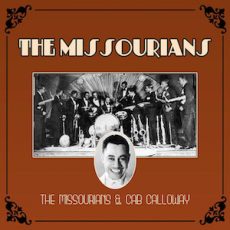
Remaining for a brief time in Paris, France he collaborated with bassist John Ricks. When Bill returned to New York City, he joined The Missourians, led by Cab Calloway, then worked with pianist Luis Russell.
Due to failing health he played very little in the late Thirties and afterwards. Clarinetist and alto saxophonist William Thornton Blue, sometimes credited as Bill Blue, transitioned in 1968 after spending the last several years of his life in a New York sanatorium.

More Posts: clarinet,history,instrumental,jazz,music,saxophone
Daily Dose Of Jazz…
Ulysses Livingston was born on January 29, 1912 in Bristol, Tennessee and played in the band of the West Virginia State College. He began his professional career in music in the Horace Henderson band as a roadie, or, as Henderson called them, valet.
After his period with Henderson he played guitar in carnival bands on traveling road shows. By the middle of the 1930s he began to get jazz gigs with Lil Armstrong, Frankie Newton, Sammy Price, Coleman Hawkins, and Benny Carter.
Moving to New York City, Ulysses accompanied Ella Fitzgerald on tour and on record. He served briefly in the military during World War II, but returned to jazz playing on the West Coast in 1943. He played with Cee Pee Johnson in Hawaii four years later.
Alongside his guitar playing, Livingston also sang with the Spirits of Rhythm, and led a group called the Four Blazes. From the 1950s he did freelance work with West Coast jazz musicians and also became active as a record producer.
He would go on to record with the Varsity Seven, Jazz At The Philharmonic, Illinois Jacquet, Rex Stewart’s Big Eight, Pete Johnson and numerous others. Guitarist Ulysses Livingston, who also played and recorded on electric bass guitar, transitioned on October 7, 1988 in Los Angeles, California.
More Posts: guitar,history,instrumental,jazz,music
Daily Dose Of Jazz…
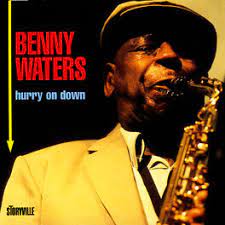
Benjamin Waters was born on January 23, 1902 in Brighton, Baltimore, Maryland. He began on organ, then switched to clarinet and later added saxophone. The first band he joined in 1918 was Charly Miller’s band. In 1922 he attended the New England Conservatory of Music where he gave lessons to Harry Carney.
From 1926 until 1931, Waters was a member of Charlie Johnson’s band. He would later work with King Oliver, Fletcher Henderson, Claude Hopkins, and others. During these years he made several recordings with King Oliver and Clarence Williams.
In the years 1941 and 1942 he played with the Jimmie Lunceford Orchestra, and later in the 1940s with Roy Milton. He went on to form his own band, playing at the Red Mill in New York City. After this stint in the city he moved to California for four years.
From 1952 to 1992 Benny lived in Paris, France. In 1996, he received the Legion of Honour from the French Ministry of Culture. He continued to perform regularly up to his 95th birthday.
Saxophonist and clarinetist Benny Waters, who became blind in 1992 due to cataracts, transitioned on August 11, 1998 in Columbia, Maryland.
More Posts: bandleader,clarinet,history,instrumental,jazz,music,saxophone