

Daily Dose Of Jazz…
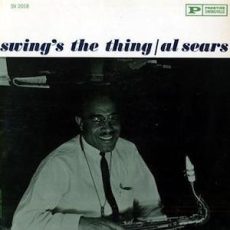
Albert Omega Sears was born February 21, 1910 in Macomb, Illinois. His first major gig came in 1928 when he replaced Johnny Hodges in Chick Webb’s ensemble. The Thirties had him first playing with Elmer Snowden, then led his own groups between 1933 and 1941.
In the early 1940s he joined Andy Kirk and Lionel Hampton before he became a member of Duke Ellington’s Orchestra in 1944, replacing Ben Webster. He remained with Ellington until 1949, when first Jimmy Forrest and then Paul Gonsalves took over his chair. He played with Johnny Hodges in 1951–52 and recorded the tune Castle Rock with him. The tune became a hit but unfortunately was released under Hodges’s name.
Sears was in Alan Freed’s band when Freed did live shows, being introduced as “Big Al Sears”. He played as a studio musician on R&B albums in the 1950s and recorded two albums for Swingville in 1960. He also owned several record labels, including Arock, Serock, and Gator.
Tenor saxophonist and bandleader Al Sears, who recorded four albums as a leader, transitioned on March 23, 1990 in St. Albans, New York at the age of 80.

More Posts: bandleader,history,instrumental,jazz,music,saxophone
Daily Dose Of Jazz…
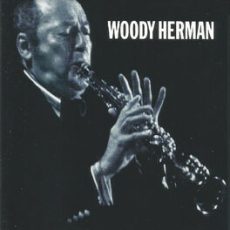
Ronald “Ronnie” Zito was born on February 17, 1939) in Utica, New York, into a musical family including his pianist brother Torrie Zito. He began playing drums at the age of 10 and at age 14 took a year and a half of formal lessons.
He has played with Woody Herman, J.R. Monterose, Frank Rosolino, Peggy Lee, Cher, Roberta Flack and Eartha Kitt. Zito was Bobby Darin’s personal drummer for four years.
Ronnie has recorded with David Pomeranz, Barry Manilow, Irene Cara, Frankie Valli, Roberta Flack, Jake Holmes, Cher, and Don McLean.
Drummer Ronnie Zito continues to perform and record.
More Posts: drums,history,instrumental,jazz,music
Daily Dose Of Jazz…
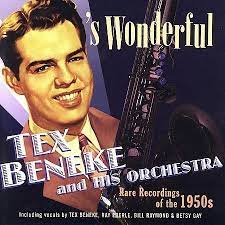
Tex Beneke was born Gordon Lee Beneke on February 12, 1914 in Fort Worth, Texas. He started playing saxophone when he was nine, going from soprano to alto and settling on the tenor saxophone. His first professional work was with bandleader Ben Young in 1935, but it was after a Gene Krupa recommendation when he joined the Glenn Miller Orchestra three years later that his career hit its stride.
Miller immediately made Beneke his primary tenor saxophone soloist and he played all but a few of the tenor solos on all of the records and personal appearances made by the Miller band until it disbanded in 1942. He appeared with Miller and his band in the films Sun Valley Serenade in 1941 and Orchestra Wives in 1942, and both film solos helped propel the singer/saxophonist to the top of the Metronome polls. He went on to perform with the 1941 Metronome All-Star Band led by Benny Goodman. In 1942, Glenn Miller’s orchestra won the first Gold Record ever awarded for Chattanooga Choo Choo.
With the orchestra disbanded due to Miller’s enlistment, Tex briefly joined Horace Heidt before joining the Navy himself, leading a Navy band in Oklahoma. He led two bands in the navy and kept in touch with Miller while they were both serving in the military. By 1945, he felt ready to lead his own orchestra. When Glenn went missing in 1944 he took over the band, shaping it as a ghost band per the desires of the Miller estate, however by 1950, he and the estate parted ways.
Post Miller, Beneke led his own groups but as swing faded from the mainstream so did opportunities. There was a small revival in the late Seventies but he was limited to small labels and competition from Miller alumni and other imitators. He would make the television circuit making appearances on The Tonight Show and Merv Griffin. 1990 saw him have a stroke which sidelined his saxophone playing but he continued to conduct and sing.
On May 30, 2000 saxophonist, vocalist and bandleader Tex Beneke, who received a star on the Hollywood Walk of Fame, transitioned from respiratory failure at a nursing home in Costa Mesa, California, aged 86. His saxophone is currently used by the Arizona Opry.
More Posts: bandleader,history,instrumental,jazz,music,saxophone,vocal
Daily Dose Of Jazz…
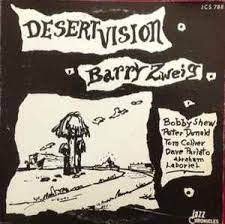
Barry Sweig was born on February 7, 1942 in Detroit, Michigan. His mother loved music and taught her son to clap on the 2 & 4 as a toddler. He received a ukulele for his fifth birthday, played violin from the age of eight until he was eighteen, but bought himself a guitar for ten dollars when he was 15. His first recording session was at age 17, at Capitol Records.
Drafted in the Army in 1964 Sweig was assigned to NORAD Band where he got the opportunity to study with guitarist Johnny Smith. After his discharge he joined Buddy Rich’s band and after recording an album with Sammy Davis Jr. that led to him joining the latter’s band. Touring with Davis ended fourteen months later and he settled in Los Angeles, California and broke into the music scene where he performed and recorded for a host of who’s who vocalists and musicians.
He played his final gig at The Lighthouse Cafe in Hermosa Beach. Guitarist Barry Sweig, who taught at UCLA, USC, and the University of Texas, El Paso, transitioned on March 15, 2020 of complications from Crohn’s disease.
More Posts: bandleader,educator,guitar,history,instrumental,jazz,music
Daily Dose Of Jazz…
Conrad Joseph Gozzo was born in New Britain, Connecticut on February 6, 1922. His father played trumpet, and he began learning the instrument around the age of 5. He played in his junior and senior high school bands, but left school around the age of 16 at the recommendation of Isham Jones to join bandleader and clarinetist Tommy Reynolds in Boston, Massachusetts.
Quickly noted for his exceptional technical ability and style, Conrad played with Reynolds for nine months, then left to play with Red Norvo in 1939. Staying in the band for two years he went on to play with trumpeter Johnnie Davis, then performed and recorded with the Bob Chester Orchestra, and with Claude Thornhill’s band.
By 1942 he had a short stint with Benny Goodman before enlisting in the U.S. Navy, where clarinetist Artie Shaw had formed a band, the Rangers No. 501. Their first assignment was San Francisco, California and then Hawaii before touring in the South Pacific, the U.K. and the mainland States. After his discharge in 1945, Gozzo briefly rejoined Goodman along with fellow trumpet players from Shaw’s band.
By the Fifties Gozzo was sitting in the lead trumpeter chair on the Glen Gray, Stan Kenton, and Harry James “remakes”, and in Dan Terry’s 1954 Columbia sessions. He recorded extensively with arrangers Van Alexander, Nelson Riddle, Billy May, Ray Conniff, Jerry Fielding and Shorty Rogers, and also with performers Dean Martin and Frank Sinatra. He played first trumpet on all of the recordings of composer Henry Mancini.
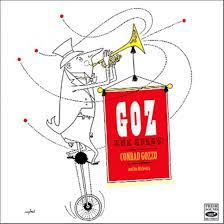
He performed on many major live television shows broadcast on the NBC network, including the Dinah Shore Show, and performed on motion picture soundtracks including The Glenn Miller Story, The Benny Goodman Story, Bye Bye Birdie, Call Me Madam, Ben-Hur and Cleopatra. He played on the two-record set on Verve, Ella Fitzgerald Sings the Harold Arlen Songbook. In 1955, Gozzo released his own album, Goz the Great!, signed with RCA Victor and played by “Conrad Gozzo and his Orchestra”, directed by Billy May. Three of the twelve tracks were written together by Gozzo and May.
Conrad Gozzo, whose nicknames were Goz and Gopher because of his resemblence to the animal when playing, transitioned on October 8, 1964 from liver disease in Burbank, California. Jazz composer Sammy Nestico dedicated Portrait of a Trumpet to Gozzo.
More Posts: bandleader,history,instrumental,jazz,music,trumpet