


Daily Dose Of Jazz…
Norman Dewey Keenan was born on November 23, 1916 in Union, South Carolina. He began playing piano before learning bass at age 15.
In the mid~1930s he worked with Tiny Bradshaw, Lucky Millinder, Henry Wells, Earl Bostic, and Cootie Williams into the Forties, and jammed at Minton’s Playhouse around the same time.
Following World War II he worked with Williams again and with Eddie Cleanhead Vinson in 1947-49. Then he became the bassist in the house trio at the Village Vanguard until 1957. After backing and recording three albums with Harry Belafonte from 1957 to 1962, Keenan worked on the TV show Hootenanny.
He began playing jazz again in the 1960s, recording with Miriam Makeba, Chad Mitchell, Count Basie from 1965-74, recording twenty-one albums with the orchestra, and Roy Eldridge in 1966. Double bassist Norman Keenan transitioned on February 12, 1980 in New York City.

More Posts: bass,history,instrumental,jazz,music

Daily Dose Of Jazz…
Julian Fuhs was born on November 20, 1891 in Berlin, Germany. After attending the Stern Conservatory he emigrated to the United States in 1910 and got his American citizenship in 1916. Returning to Berlin in 1924 he put together his Follies Band, whose American-influenced jazz and light music was extremely successful.
He made a significant contribution to the establishment of jazz in Germany in the 1920s. Fuhs was the first to use a three-part saxophone section and was considered the German counterpart to Paul Whiteman after his recording of George Gershwin ‘s Rhapsody in Blue. Fuhs was the first to record it in Europe.
In 1931, as a result of the global economic crisis, he was forced to disband his orchestra and earn his living as the owner of a bar. In 1933 he was repeatedly the victim of violent attacks because of his Jewish origins. He emigrated first to Austria, then to Czechoslovakia and France. In 1937 he returned to America, where he worked as a salesman.
Pianist and bandleader Julian Fuhs transitioned in poverty on February 4, 1975 in Miami, Florida.
More Posts: bandleader,history,instrumental,jazz,music,piano
Daily Dose Of Jazz…
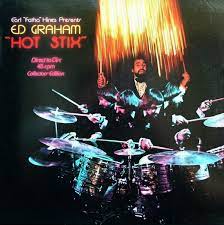
Eddie Graham was born on November 18, 1937 in New York City. Inspired by his father who played the trombone, he acquired an early interest in rhythm which prompted him to begin the study of drums at age nine. After moving with his family from New York to Miami, Florida at 14, he had a continuing television series on WTVJ with his Swing Kings. During this time his interest in Dixieland jazz was fostered by an acquaintance with drummer “Preacher” Rollo Laylan who frequently imported jazz names to Miami.
Attending the University of Miami he performed for several seasons with the Miami Symphony before migrating to California to accompany such diverse luminaries as Jack Jones, Elvis Presley, and Anita O’Day. He toured as accompanist and conductor for Roberta Sherwood, Vic Dana and Kay Stevens during the Sixties. Eddie settled in Las Vegas, Nevada on a long term contract with Latin concert pianist, Esquivel. He toured Japan with the Village Stompers, and appeared on television with ragtime pianist Big Tiny Little. As a percussionist in the Vegas showrooms, he accompanied Rich Little, Sammy Davis Jr., Presley, Johnny Mathis, and Mack Davis, while hitting the stage with his own jazz group.
The early seventies saw him in Hawaii with trombonist Trummy Young and then hooked up with Earl “Fatha” Hines as a featured artist from 1975 to 1980. On concert tours in Europe, Australia, South America and Japan, Ed has appeared with such artists as Benny Carter, Joe Venuti, Bobby Hackett, Red Norvo, Dorothy Donegan, Barney Bigard, and Stan Getz.
Graham went on to record two albums as a leader, one studio and one live, Hot Stix and S’Wonderful Jazz, respectively. He recorded with Earl Hines on Tony Bennet’s Improv record label, with Marva Josie and a collaboration with trumpeter Billy Butterfield.
In the 80’s, he was a musical director and featured soloist in Las Vegas, and a member of the Peanuts Hucko Quartet in Palm Springs, Califonia. He [layed numerous festivals and clubs around the country during this period, and was a founding member of the 21 piece Monterey Peninsula Jazz Orchestra as percussionist and soloist at Clint Eastwood’s Mission Ranch in Carmel. At eighty-five drummer Eddie Graham still occasionally plays.
More Posts: bandleader,drums,history,instrumental,jazz,music,percussion
Daily Dose Of Jazz…
Nick Travis was born on November 16, 1925 in Philadelphia, Pennsylvania and started playing professionally at age 15. In the early Forties he played with Johnny McGhee, Vido Musso, Mitchell Ayres, and Woody Herman.
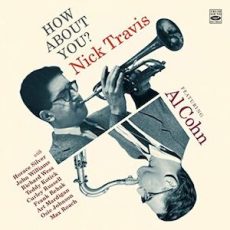
In 1944 he enlisted, however, after his service he played with Ray McKinley, Benny Goodman, Gene Krupa, Ina Ray Hutton, Tommy Dorsey, and Tex Beneke. By the 1950s he was playing with Herman once more for a short stint, Jerry Gray, Bob Chester, Elliot Lawrence, and Jimmy Dorsey. From 1953-56 he played with Gerry Mulligan, Zoot Sims, Al Cohn, with whom he featured on the one session he led for Victor Records, and was a soloist in the Sauter-Finegan Orchestra.
After this he became a session musician for NBC, Most of his work was in big bands, but he also played in small ensembles. Trumpeter Nick Travis transitioned at age 38 as a result of complications from ulcers on Oct. 7, 1964 in New York City.
More Posts: bandleader,history,instrumental,jazz,music,trumpet

Daily Dose Of Jazz…
Curtis Sylvester Lowe, Sr. was born on November 15, 1919 in Chicago, Illinois and raised in Oakland, California. He first learned to play soprano saxophone as a youth and studied briefly in Alabama before deciding to take up music full-time. Best known professionally as a tenor and baritone saxophonist, he played in traveling bands before the outbreak of World War II. Enlisting in the United States Navy in 1942, his unit band was full of noteworthy jazz musicians, including Vernon Alley, Wilbert Baranco, Buddy Collette, Jerome Richardson, Ernie Royal, and Marshall Royal.
In the 1950s Curtis worked extensively with Lionel Hampton and also played with Dave Brubeck, Little Esther, Johnny Otis, and Gerald Wilson. He led his own five-piece ensemble in 1952-1953. In 1958 he began a decade-long association with Earl Hines.
He was active locally in San Francisco, California and the Bay Area into the 1980s. Saxophonist Curtis Lowe Sr., who never recorded as a leader, transitioned at the age of 73 on October 29, 1993.
More Posts: bandleader,history,instrumental,jazz,music,saxophone