


Daily Dose Of Jazz…
Mathias Rüegg was born on December 8, 1952 in Zurich, Switzerland and began playing jazz in secondary school. Trained as a schoolteacher, he taught for a while in special-needs schools. From 1973 to 1975 he attended the Musikhochschule in Graz, Austria, studying classical composition and jazz piano. While in Vienna, Austria he performed in a nightclub as a solo jazz pianist, joined later by saxophonist Wolfgang Puschnig. The duo formed the core of an ensemble that in 1977 became the Vienna Art Orchestra (VAO).
His distinctive, often humorous compositions have drawn on a range of influences, from traditional folk music to classics. He has also led the VAO to explore the big band repertory of American jazz composers such as Duke Ellington. Besides the traditional big-band complement, his orchestrations have prominently featured such instruments as the tuba, piccolo, bass clarinet, alphorn, exotic percussion, and wordless vocals. Beyond jazz, Mathias has composed for big bands, and classical orchestras, as well as theatre music, film music, soloist and chamber orchestra.
Rüegg has conducted workshops, worked as artistic director for music festivals, and headed multimedia and music-related projects. Rüegg founded the Porgy & Bess music club in Vienna and the Hans Koller Prize for Austrian jazz.
Composer, bandleader and educator Mathias Rüegg continues to compose and direct orchestras.

More Posts: composer,director,educator,history,instrumental,jazz,music

Daily Dose Of Jazz…
Ulysses Owens Jr. was born December 6, 1982 in Jacksonville, Florida and began playing the drums at the age of 3. He played many types of music in his younger years, centering on his experience in the church. By the time he was in his early teens, he realized that he would become a jazz musician and received a full scholarship to study at the Juilliard School, in its inaugural jazz program.
After graduating from Juilliard in 2006, Ulysses traveled the world as a jazz drummer. After hearing about Jacksonville’s high dropout rate and other problems with struggling youths, he and his family designed a program to help suspended youths stay in school.
Owens was vocalist Kurt Elling’s drummer on Dedicated to You: Kurt Elling Sings the Music of Coltrane and Hartman, and on bassist Christian McBride’s The Good Feeling, both of which won Grammy Award. He has also played and recorded with pianist Joey Alexander, Gregory Porter and Matthew Whitaker. His composition The Simplicity of Life was commissioned by the string quartet ETHEL for their multimedia show ETHEL’s Documerica.
Drummer and percussionist Ulysses Owens Jr., who is co-founder and artistic director of the charity, Don’t Miss A Beat, continues to perform and compose.
More Posts: bandleader,drums,history,instrumental,jazz,music

Daily Dose Of Jazz…
Charlie Ventura was born Charles Venturo on December 2, 1916 in Philadelphia, Pennsylvania. During the 1940s, he played saxophone for the Gene Krupa and Teddy Powell bands. In 1945 he was named best tenor saxophonist by DownBeat magazine.
During the Forties he led big bands and led a band which included Conte Candoli, Bennie Green, Boots Mussulli, Ed Shaughnessy, Jackie Cain, and Roy Kral. By the 1950s he formed the Big Four with Buddy Rich, Marty Napoleon, and Chubby Jackson. He was a sideman with Krupa through the 1960s, then worked in Las Vegas with comedian Jackie Gleason. By the 1980s he slowed down until finally retiring from music.
Tenor saxophonist and bandleader Charlie Ventura transitioned from lung cancer on January 17, 1992 in Pleasantville, New Jersey at age 75. was an American from
More Posts: bandleader,history,instrumental,jazz,music,saxophone
Daily Dose Of Jazz…
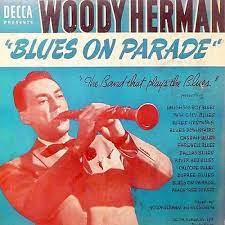
Joe Bishop was born November 27, 1907 in Monticello, Arkansas and learned piano, trumpet, and tuba when he was young. He also played flugelhorn and mellophone. He attended Hendrix College and played professionally with the Louisiana Ramblers in 1927, including in Mexico.
Bishop played with Mart Britt, Al Katz, and Austin Wylie before joining the Isham Jones band for five years. He was a founding member of Woody Herman’s band in the 1930s, but he contracted tuberculosis in 1940 and had to leave the group. He was rehired by Herman as a staff arranger later in the 1940s, and his arrangements and compositions were recorded frequently by Herman, appearing on some 50 of Herman’s albums.
As a performer, Joe played with Cow Cow Davenport and Jimmy Gordon’s Vip Vop Band, but retired from studio work due to his health in the 1950s. Joe quit music and opened a store in Saranac Lake, New York, and later retired to Texas. His compositions include Midnight Blue, Woodchopper’s Ball, and Blue Prelude with Gordon Jenkins.
Tubist, pianist and composer Joe Bishop, whose work has been covered by musicians as diverse as Ten Years After and Lawrence Welk, transitioned on May 12, 1976.

More Posts: composer,history,instrumental,jazz,music,piano,tuba
Daily Dose Of Jazz…
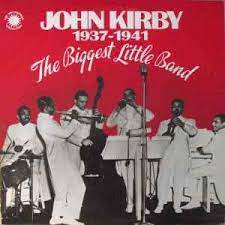
William “O’Neil” Spencer was born on November 25, 1909 in Cedarville, Ohio and began his career with local bands in the Buffalo, New York area. In 1931, he began working for Al Sears before joining up with the Mills Blue Rhythm Band from 1931 to 1936, which later became the Lucky Millinder Orchestra.
However, it wasn’t until 1937 after joining the popular John Kirby Sextet that he truly became an influential force on the jazz scene. Unfortunately, Spencer had to leave for a time in 1941 due to tuberculosis. However, during the late Thirties he recorded with numerous other groups, including Red Allen, Sidney Bechet, Jimmie Noone, Johnny Dodds, Frankie Newton, Milt Hearth, and Lil Armstrong.
He left the Kirby sextet in 1941 to work briefly with Louis Armstrong, but returned in ’42. His career, however, was cut short in 1943 when he contracted tuberculosis. Drummer and singer O’Neil Spencer transitioned on July 24, 1944 in New York City at the age of thirty-five.
More Posts: drums,history,instrumental,jazz,music