

Daily Dose Of Jazz…
James Edward Pugh, born November 12, 1950 in Butler, Pennsylvania began playing the trombone around the age of ten. He attended the Eastman School of Music from 1968 to 1972, where he played in an ensemble under Chuck Mangione.
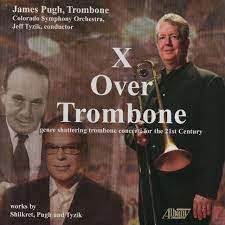
Pugh toured and recorded with the Woody Herman Band for four years from 1972 and briefly performed with Chick Corea in 1977. He then concentrated on studio session work for jazz and popular musicians. In 1984, he was co-leader for the album The Pugh–Taylor Project. He also composed for and played on the album X Over Trombone.
Trombonist and composer James Pugh continues to perform and record sessions for jazz, pop and Broadway soundtracks.

More Posts: bandleader,history,instrumental,jazz,music,trombone
Daily Dose Of Jazz…
Irvin Stokes was born November 11, 1926 in Greensboro, North Carolina. He moved to New York City in 1947 and recorded with a Charlie Singleton sextet in 1949. Throughout the 1950s he worked in the big bands of Tiny Bradshaw, Duke Ellington, Mercer Ellington, Erskine Hawkins, Buddy Johnson, Andy Kirk, and Jimmie Lunceford.
By the end of the decade Stokes was playing in Austin Powell’s ensemble, then went on to record with Bobby Donaldson and Lou Donaldson in the early 1960s. Principally with Broadway musical bands in the 1970s such as Hair, in 1978 he played on the Thad Jones-Mel Lewis Orchestra’s tour of Europe, and with Panama Francis at the end of the decade.
His credits in the 1980s included George Kelly, Illinois Jacquet, Oliver Jackson, and the Count Basie Orchestra. He was a regular performer alongside Spanky Davis at Doc Cheatham’s Sunday brunch gig at the Sweet Basil Jazz Club, continuing in this role after Cheatham’s death in 1997, when Chuck Folds took over. He also played with the Statesmen of Jazz late in the 1990s.
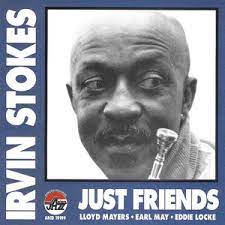
Trumpeter Irvin Stokes, who recorded two albums as a leader, Just Friends and Broadway w/Oliver Jackson, retired from music.
Bestow upon an inquiring mind a dose of a Greensboro trumpeter to motivate the perusal of the genius of jazz musicians worldwide whose gifts contribute to the canon…
Irvin Stokes: 1926 | TrumpetMore Posts: history,instrumental,jazz,music,trumpet
Daily Dose Of Jazz…
David Theak was born on November 10, 1970 in Sydney, New South Wales, Australia and was raised in a house of impromptu parties. His childhood found him listening to his downstairs neighbor teaching piano every afternoon which led to lessons and a piano for Christmas. His bandmistress at Mona Vale PS introduced him to the saxophone but paid his dues on the baritone horn for a couple of years. After a brief stint at the Conservatorium High School, he returned to the local high school with some enthusiastic music teachers. They encouraged us to improvise and created opportunities for us to play in jazz and rock bands.
he following years saw David practicing, composing, gigging, releasing his own albums and organizing tours of Australia & Europe for his quartet, theak-tet, but with limited opportunities in the 90’s, he became involved with a musician led organization, the Jazzgroove Association, which received NSW and Federal government funding that allowed presentation of new music every week as well as create a record label and form an original creative jazz orchestra, The Jazzgroove Mothership Orchestra.
He went on to become involved with SIMA, WAYJO and the formation of the Australian National Jazz Orchestra and ANJO Youth Big Band. David has been running a boutique international jazz festival for the past five years, is currently a Senior Lecturer in Jazz at the Sydney Conservatorium of Music, Artistic Director of the Australian National Jazz Orchestra, an advisory panel member of the Western Australian Youth Jazz Orchestra, President of the Sydney Improvised Music Association and Artistic Director of the Sydney Con Jazz Festival.
Jazz saxophonist, composer, bandleader, educator, festival director and jazz protagonist, David Theak, who continues to compose, perform and tour, is the artistic director of the Jazzgroove Mothership Orchestra and collaborates with a who’s who of international jazz musicians.
More Posts: bandleader,composer,educator,history,instrumental,jazz,music,saxophone
Daily Dose Of Jazz…
Joe Rushton was born in Evanston, Illinois on November 7, 1907. He started out playing clarinet and all of the other standard saxophone varieties, and was occasionally recorded with these other instruments. Settling on the bass saxophone, through the early to mid Forties he worked with Ted Weems, Jimmy McPartland, Bud Freeman, Floyd O’Brien, Benny Goodman, and Horace Heidt.
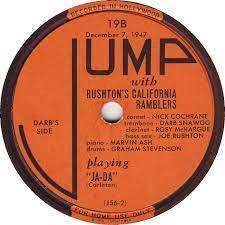
Joining Red Nichols’s Five Pennies in 1947 became a musical relationship and collaboration that went well into the early 1960s. He recorded six sides for Jump Records in 1945/47, but otherwise appears on record only as a sideman.
Bass saxophonist Joe Rushton, who is one of the best-known jazz performers to concentrate on bass saxophone, aside from Adrian Rollini, which he played from 1928. transitioned on March 2, 1964, in San Francisco, California at the age of 56.
More Posts: bandleader,history,instrumental,jazz,music,saxophone

Daily Dose Of Jazz…
Don Lusher was born on November 6, 1923 in Peterborough, Cambridgeshire, England and started playing the trombone at six years old in his local Salvation Army band, the third generation of his family to do so.
During World War II, he served as a gunner signaller in the Royal Artillery. After the war, he became a professional musician, playing with the bands of Joe Daniels making £12 a week, Lou Preager, Maurice Winnick, the Squadronaires, Jack Parnell and the Ted Heath Big Band.
Lusher spent nine years as lead trombone with Ted Heath’s Orchestra and toured the United States with him five times. After several attempts to revive the band, Don took over the leadership in 1976. He led the ‘Ted Heath Tribute Orchestra’ throughout the 1980s and 1990s until the sold-out final concert at the Royal Festival Hall in December 2000. He led the trombone section during many of Frank Sinatra’s European tours. In 1975 he gave the first performance of Gordon Langford’s Rhapsody for Trombone at London’s Royal Albert Hall, and went on to perform it around the world.
Lusher formed his own ensemble, the Don Lusher Big Band, performed with the Manhattan Sound Big Band, played with Alexis Korner and various session musicians in the big band-rock fusion group CCS, and was a founder member of the Best of British Jazz group from the 1970s onwards.
After spending some years as a Professor of the Royal College of Music he became Professor of Trombone at the Royal Marines School of Music, in Portsmouth, England in 1997, retiring in 2004.
In 2001, he recorded an album British Jazz Legends Together on the Decca label featuring Kenny Ball, Acker Bilk, John Chilton and the Feetwarmers, John Dankworth, Humphrey Lyttelton, and George Melly.
He was awarded the status of Freeman of the City of London, received an OBE for services to the music industry, and was twice president of the British Trombone Society. Trombonist Don Lusher, who with his big band played its final concert in 2007, transitioned in Cheam, England on July 5, 2006 at 82.
More Posts: bandleader,history,instrumental,music,trombone